After three decades in curbing, Curb Depot founder Ryan Wolfrath has watched new operators skip coverage to save a few hundred dollars at startup, then lose a full season’s profit to one property damage claim. The policies that matter most for a curbing business aren’t the ones agents push first.
Here’s what to prioritize.
General Liability: The Non-Negotiable Policy
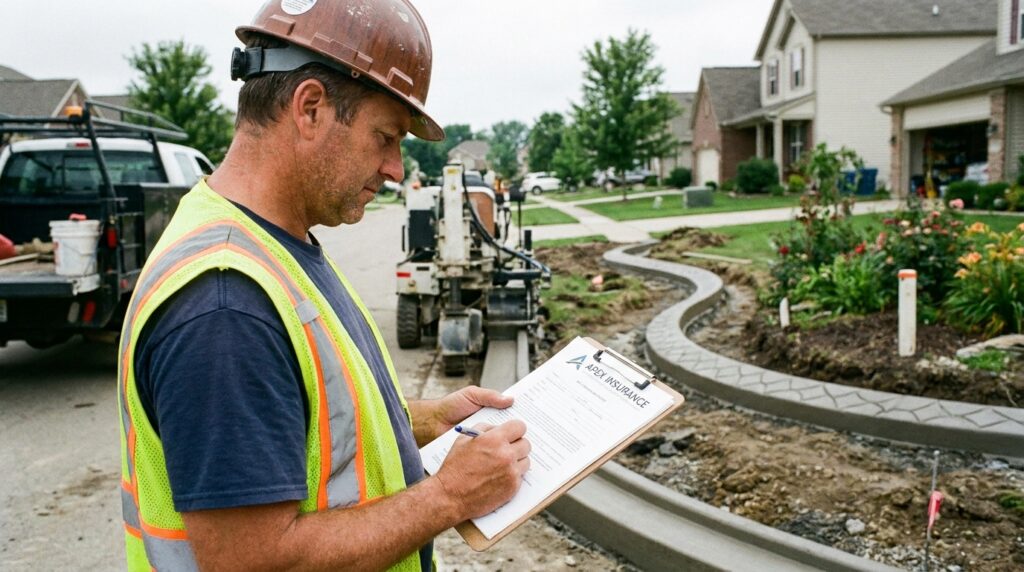
General liability covers property damage and bodily injury on the job site. For a curbing contractor, the most common claims involve concrete splatter on a client’s siding, driveway staining from release agents, or a tripping hazard from freshly poured curb.
What It Covers
- Third-party property damage (concrete on a car, dented siding from equipment)
- Bodily injury to non-employees (a homeowner trips over your cable)
- Legal defense costs if you’re sued, even if the claim is frivolous
What It Costs
Most landscape and concrete contractors pay $600 to $1,400 annually for a $1M/$2M policy. Premiums depend on your state, annual revenue, claims history, and number of employees. A solo operator with under $100,000 in revenue typically falls at the lower end.
Many general contractors and HOAs require proof of liability insurance before they’ll let you on site. Without it, you lose access to the higher-paying commercial and subdivision work that grows a curbing business fastest.
Commercial Auto and Inland Marine Coverage
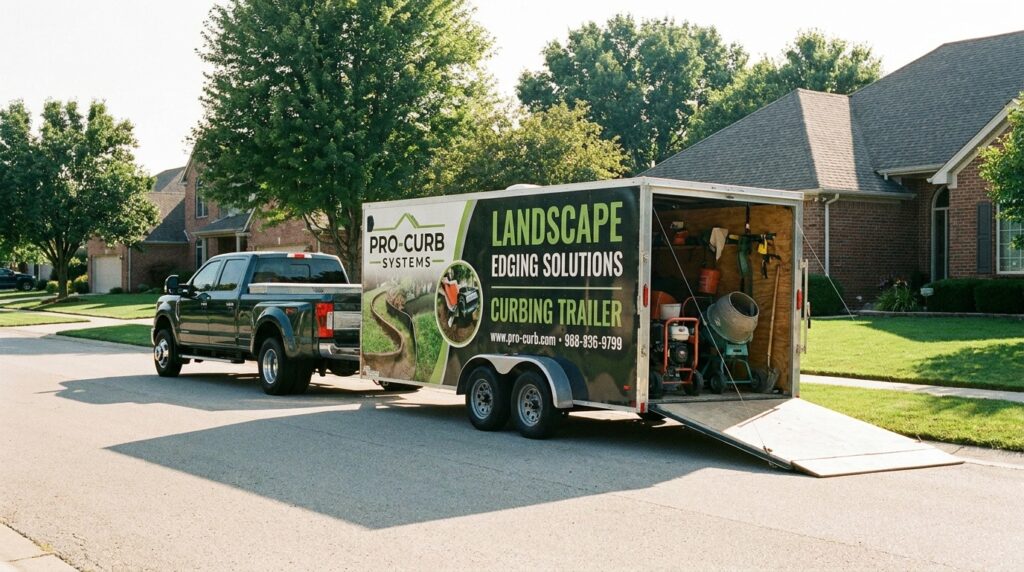
Your personal auto policy won’t cover an accident that happens while you’re towing a curbing trailer to a job. Commercial auto insurance fills that gap.
Commercial Auto
This policy covers your truck and trailer while they’re being used for business. If you’re pulling a 23-foot curbing trailer loaded with equipment, a standard personal policy excludes the claim. Commercial auto runs $1,200 to $2,500 per year depending on vehicle value and driving record.
Inland Marine
Inland marine insurance covers your equipment while it’s in transit or stored on a job site. If your curbing machine is stolen from a trailer overnight, your commercial auto policy won’t cover the replacement. Inland marine does. For a curbing operation with $15,000 to $50,000 in equipment, expect premiums of $500 to $1,500 annually. Understanding your full startup cost helps you set the right coverage level from day one.
Workers’ Compensation and When You Need It
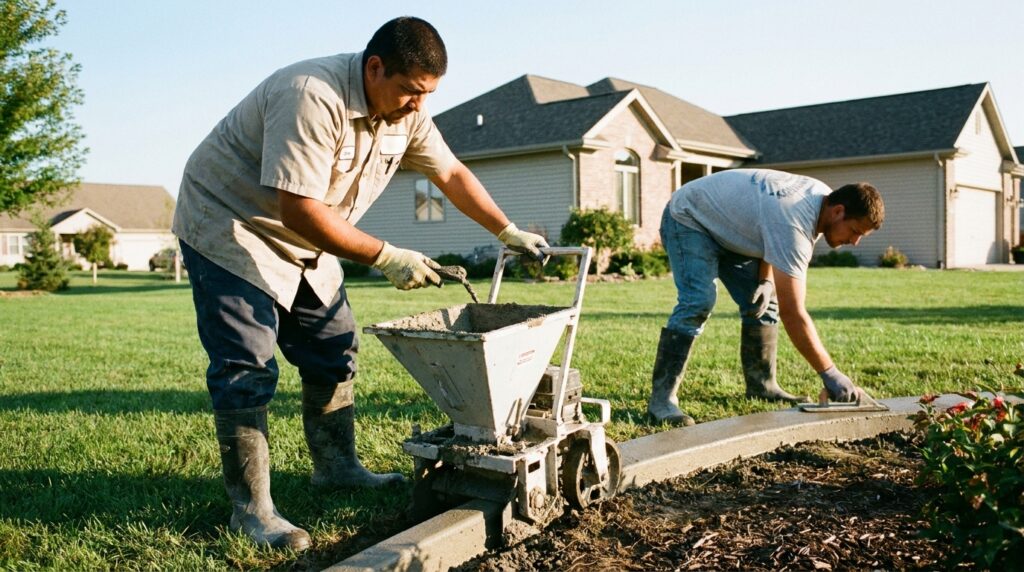
Workers’ compensation requirements vary by state. Some states require coverage as soon as you hire your first employee. Others set the threshold at three or more employees. A few exempt sole proprietors entirely.
- Worker’s comp is mandatory in most states once you have employees. Penalties for non-compliance include fines, project shutdowns, and personal liability for injury costs.
- Cost varies by classification. Concrete and landscape work falls into a higher risk category. Expect to pay $3 to $8 per $100 of payroll depending on your state and claims history.
- Solo operators can often skip workers’ comp legally, but voluntarily purchasing a policy protects your own income if you’re injured on the job.
If you’re building a curbing business and plan to hire crew, factor workers’ comp into your startup budget from day one. Running the profitability numbers with insurance included gives you a realistic picture of your margins.
Frequently Asked Questions
Do I need insurance before my first curbing job?
General liability should be active before you pour your first curb. Many residential customers and most commercial clients require proof of insurance before work begins. Starting without it exposes your personal assets to every claim from day one. Curb Depot’s training covers insurance timing as part of the business launch process.
How much does curbing business insurance cost per year?
A solo curbing operator typically pays $2,000 to $5,000 annually for a basic package that includes general liability, commercial auto, and inland marine. Adding workers’ compensation for employees increases that total. Costs depend on your state, revenue, equipment value, and claims history.
Does my homeowner’s policy cover curbing equipment stored at home?
Most homeowner’s policies exclude business equipment from coverage. If your curbing machine, trailer, or stamps are stolen or damaged at your home, you’ll need a separate inland marine or business property policy. Check your homeowner’s policy exclusions before assuming your equipment is protected.
Cover Your Business Before the First Job

Insurance feels like an unnecessary cost when you’re starting out and every dollar matters. The math changes the moment a concrete splatter claim costs you $5,000 or a stolen machine costs you $7,200. General liability protects your clients. Commercial auto and inland marine protect your equipment. Workers’ comp protects you and your crew.
Get these policies in place before your first pour. If you’re planning to launch a curbing business, contact Curb Depot for training that covers the full business setup, including the insurance conversation.
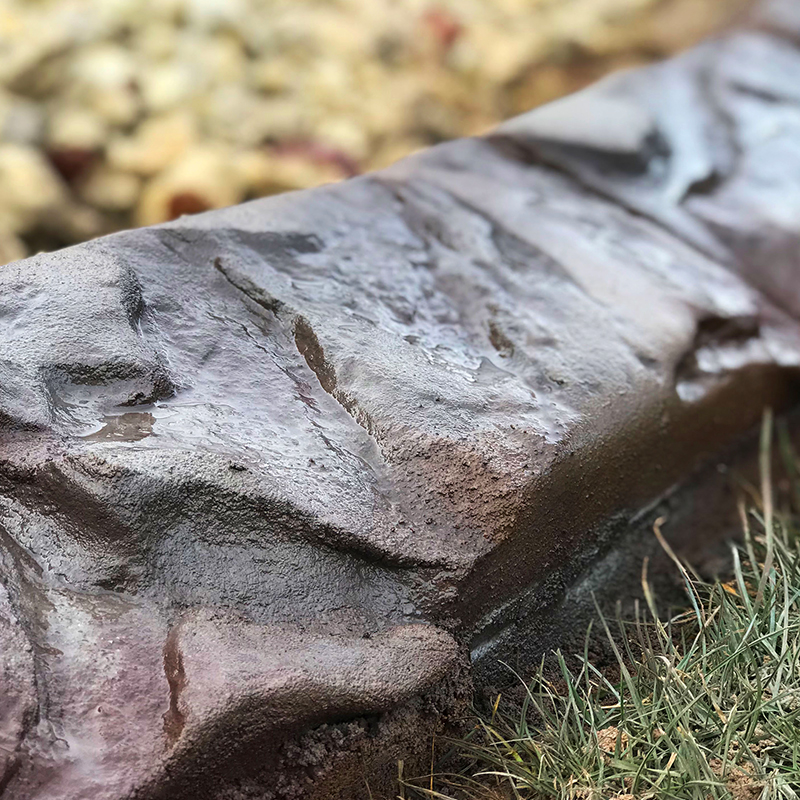
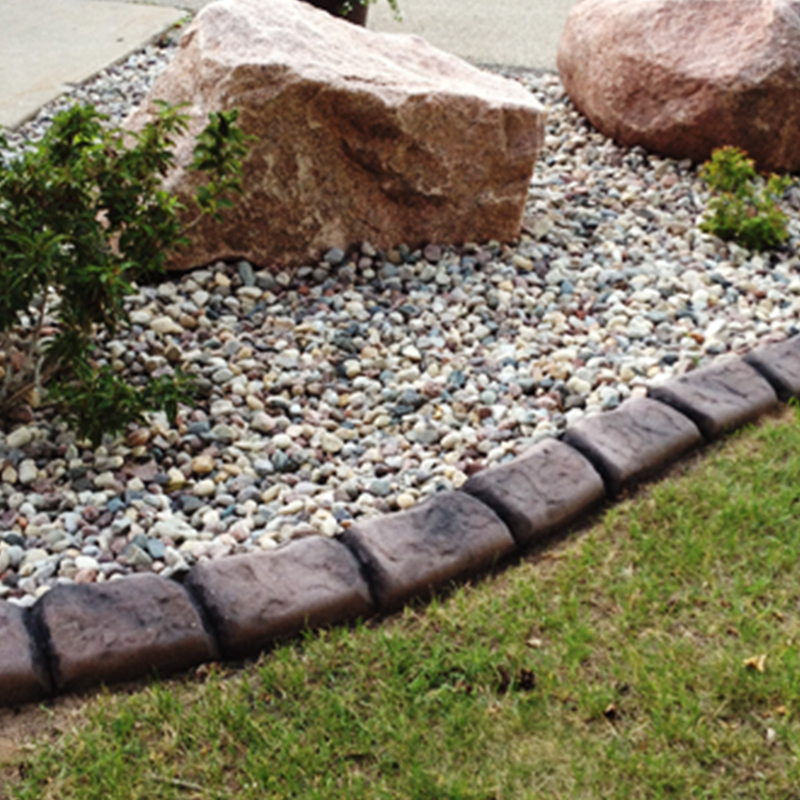
Earn More With Natural Stone.

Click to Register

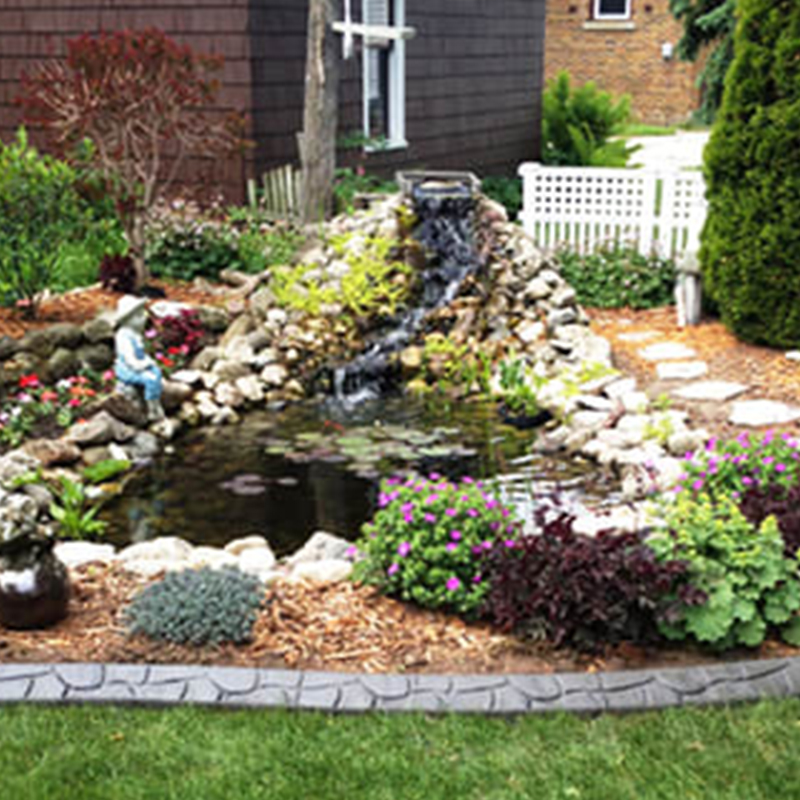
Create beautiful curb with unique stamps.

Looking to sell your equipment?
Let us help.




Ready to Order Your New Curbing Trailer? Request More Info.
Give us a call at (920) 740-2218 or simply fill out the form below to learn more about getting all the tools and training to get started. We make the process easy to start earning money in landscape curbing.