The hardest part of scaling is timing. Most operators pull the trigger based on how tired they feel rather than what the booking data shows. The sections below cover the revenue and booking benchmarks that signal real capacity issues, how to separate burnout from genuine demand, and the equipment, hiring, and training steps required to put a second crew on the road. Curb Depot supplies the equipment packages and structured training programs that operators use to build a second crew without sourcing components separately or training from scratch.
Signs That You’re Ready for a Second Crew
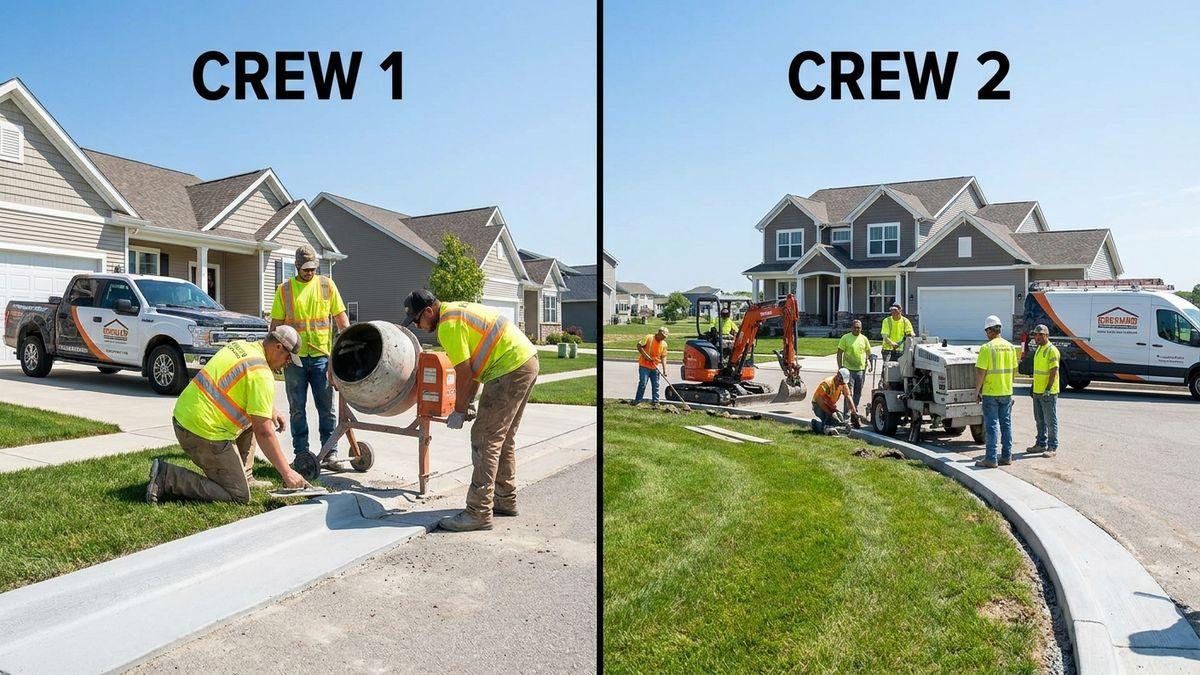
Adding a crew before the numbers support it is how profitable curbing companies lose ground. These benchmarks help you read the signals correctly.
Revenue and Booking Indicators
A healthy single crew running four to five days a week should generate between $150,000 and $250,000 annually, depending on your market and average job size. If you’re consistently booking three or more weeks out, turning down at least two qualified leads per week, and your close rate hasn’t dropped, those are capacity signals rather than marketing signals.
Track the dollar value of declined jobs for 60 days against what curbing operators in your market typically earn. If that number exceeds the monthly cost of a second crew, the math supports expansion.
Burnout vs. Demand
A full calendar doesn’t always mean you have enough demand for two crews. If you’re personally running the machine, selling, quoting, and handling callbacks, fatigue can make a normal workload feel unsustainable. Before hiring, separate the tasks only you can do from the tasks someone else could learn. If delegating the machine work alone frees 15 or more billable hours per week, a second operator changes the business more than a second crew does.
Equipment, Hiring, and Training for Crew Two
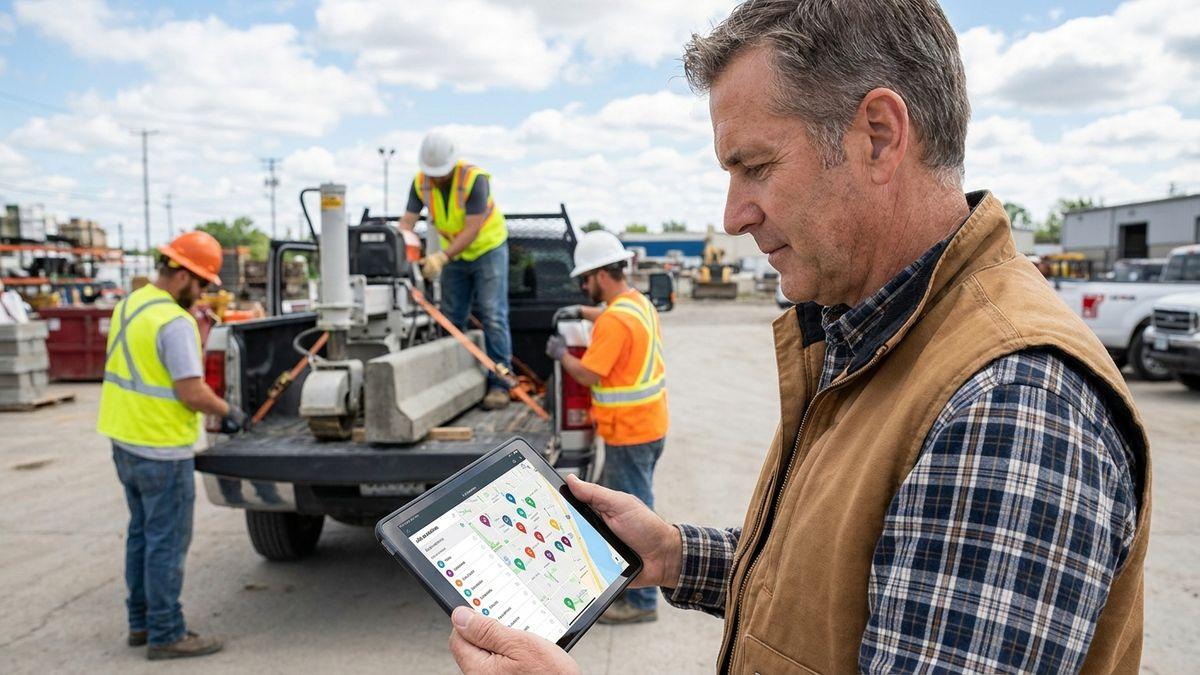
The second crew needs its own equipment, a trained operator, and a vehicle setup that can run independently from day one.
Equipment Costs to Budget For
A second curbing machine, molds, a mixer, hand tools, and a tow-behind trailer typically run between $14,000 and $50,000, depending on whether you choose a basic startup package or a full business package. Curb Depot’s equipment packages bundle the machine, molds, stamps, and ground-prep tools so you aren’t sourcing components separately. Factor in a work truck or van if your current fleet cannot support a second rig on the road daily.
Hiring and Training the Operator
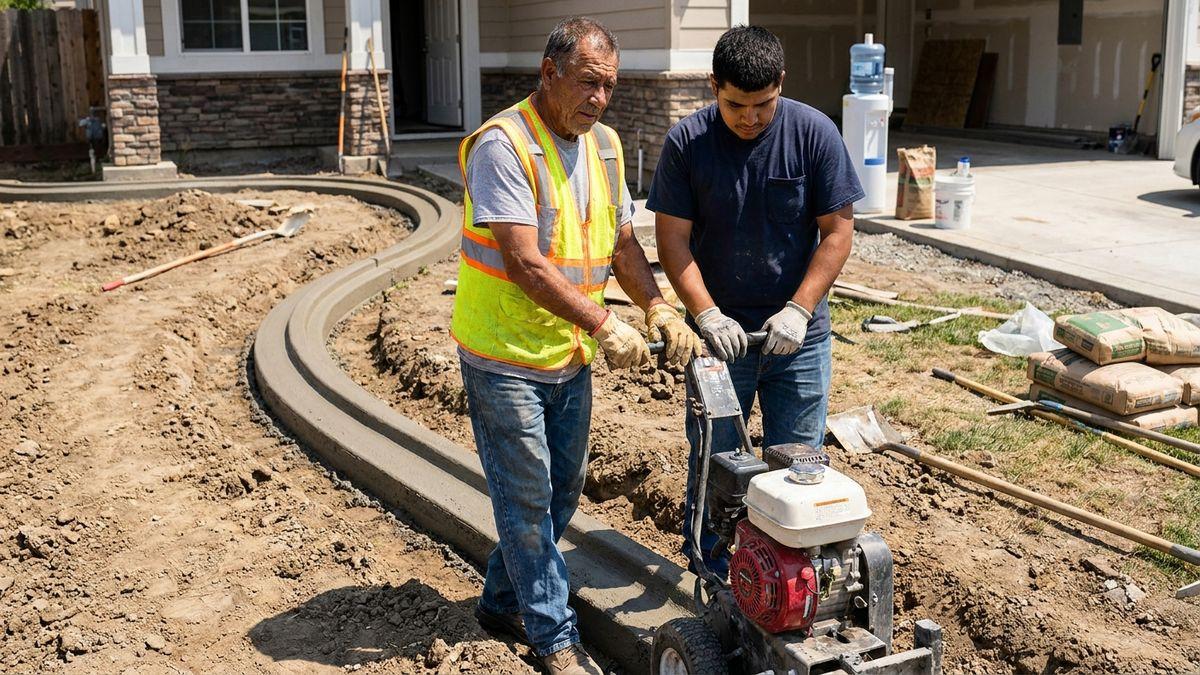
Look for candidates with concrete, masonry, or general construction experience. The learning curve on a curbing machine is shorter than most contractors expect, typically two to four weeks of supervised installs before the operator can run a crew independently. Curb Depot’s Basic Curb Training compress that timeline further by covering machine operation, mix consistency, stamping technique, and job-site cleanup in a structured format.
Frequently Asked Questions
When should I add a second curbing crew?
Consider adding a second crew when you’re consistently booked three or more weeks out, turning away at least two qualified leads per week, and the dollar value of declined jobs exceeds the monthly cost of running a second unit. Track these numbers for 60 days before making the investment.
How much does it cost to start a second curbing crew?
A second crew setup typically costs between $14,000 and $50,000, depending on the equipment package you choose. This includes a curbing machine, molds, mixer, hand tools, and trailer. Add a work vehicle if your current fleet cannot support two crews running simultaneously.
How long does it take to train a new curbing machine operator?
Most operators with concrete or construction experience can run a curbing machine independently within two to four weeks of supervised installations. Structured training programs shorten that timeline by covering machine operation, mix ratios, stamping, and cleanup in a focused curriculum.
Put the Second Crew on the Road
Scaling a curbing business with a second crew isn’t about doubling everything overnight. It’s about reading your booking data, investing in the right equipment, hiring someone who can run a machine without you standing behind them, and building a schedule that keeps both crews profitable.
Start with the 60-day lead-tracking exercise, run the numbers against your equipment costs, and make the call based on data rather than gut feeling. When the numbers add up, Curb Depot supplies the complete second-crew setup, from the Harpten machine and trailer down to molds, stamps, and consumables, along with financing through Western Equipment Finance and structured training to get your new operator running independently within two to four weeks. Send Curb Depot a message or call (920) 740-2218 to talk through equipment packages and operator training.
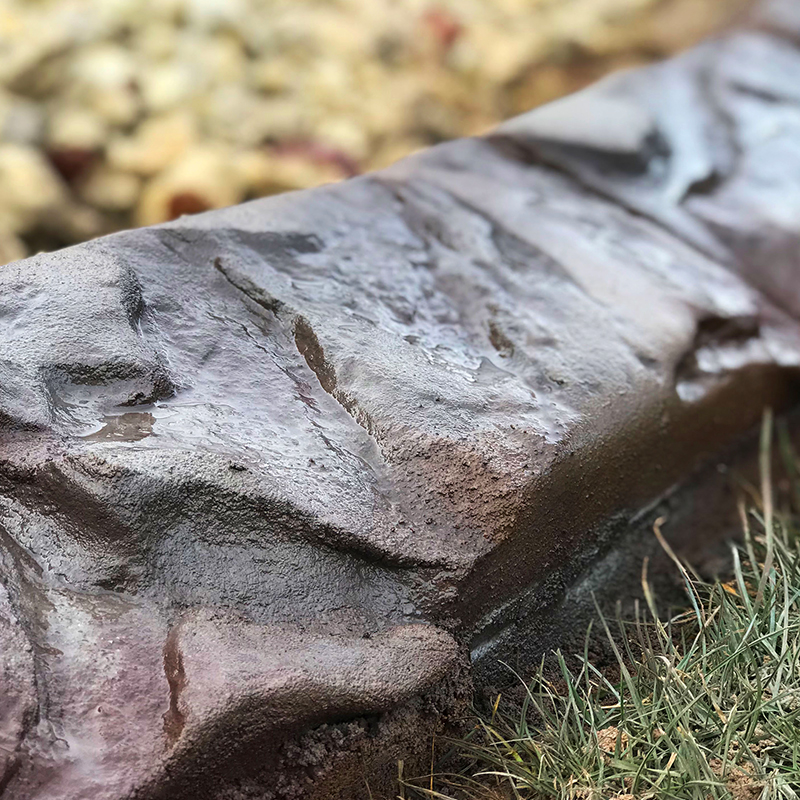
Earn More With Natural Stone.

Click to Register

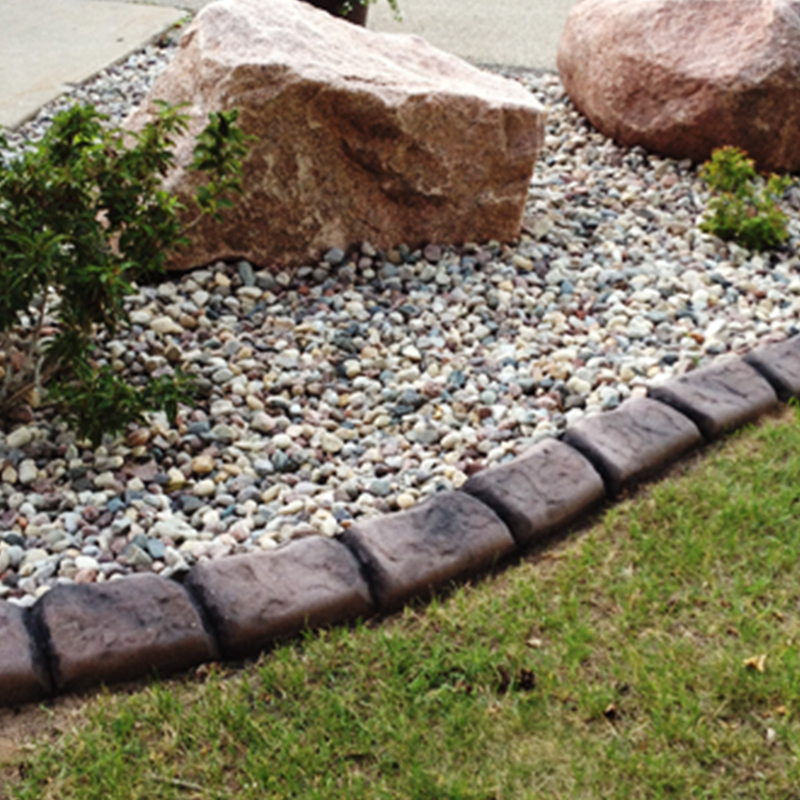
Create beautiful curb with unique stamps.

Looking to sell your equipment?
Let us help.



Ready to Order Your New Curbing Trailer? Request More Info.
Give us a call at (920) 740-2218 or simply fill out the form below to learn more about getting all the tools and training to get started. We make the process easy to start earning money in landscape curbing.