
You’re at a subdivision site on Monday, measuring 2,000 linear feet for a developer’s 30-lot project. By Thursday, you’re in a homeowner’s backyard designing a 150-foot stamped border around flower beds. Same machine, same skills, completely different conversations and profit expectations.
New Construction: Working With Builders and Developers
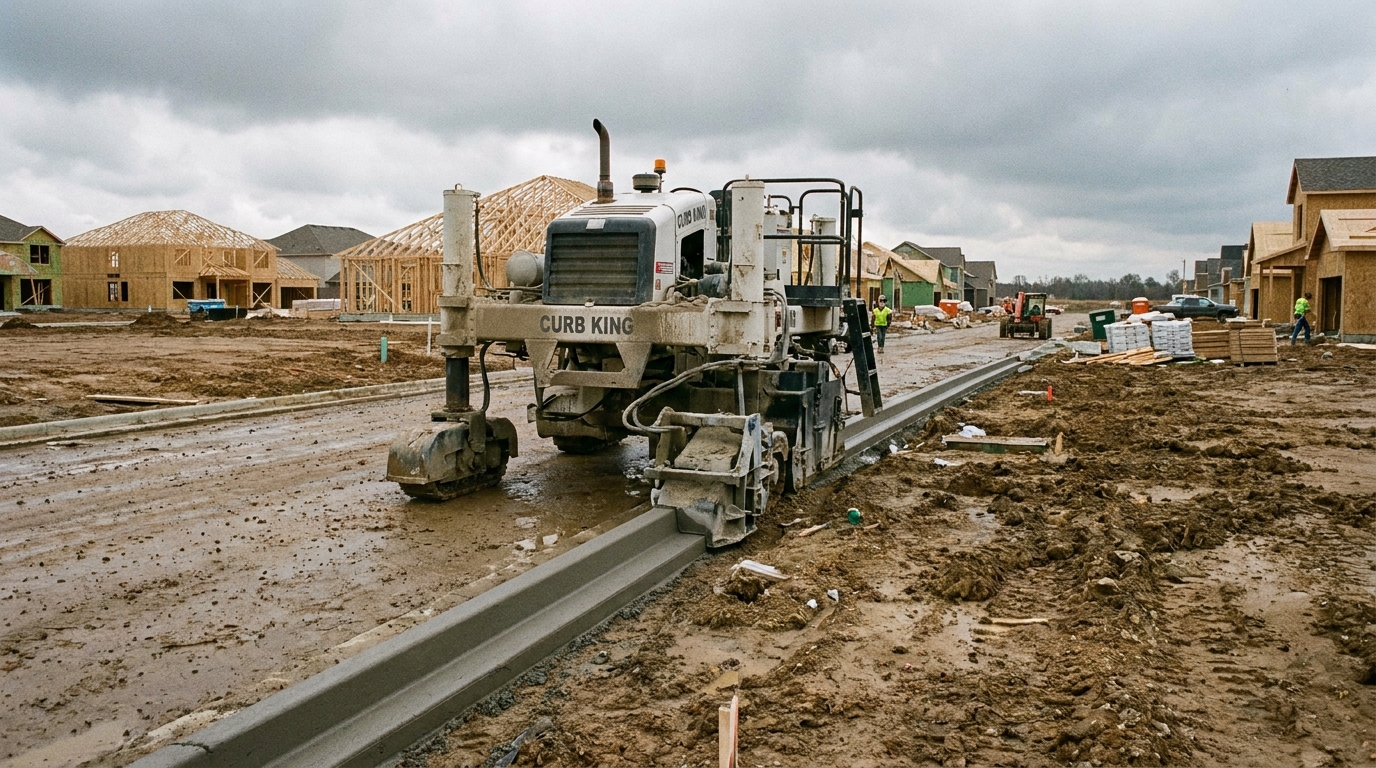
New construction curbing is high-volume, lower-margin work. Builders want speed, consistency, and competitive pricing. They rarely care about decorative stamps or color options.
How To Get Builder Contracts
- Contact general contractors and subdivision developers directly. Bring a one-page pricing sheet, proof of insurance, and photos of completed subdivision work.
- Offer volume pricing. A builder who gives you 30 lots at once will expect $5 to $7 per linear foot instead of the $8 to $14 you’d charge homeowners.
- Be reliable. Builders cut contractors who miss deadlines. Show up when scheduled and finish on time, every time.
What To Expect
New construction jobs run larger in linear footage but pay less per foot. The trade-off is predictable volume. A single subdivision contract can fill 3 to 6 weeks of your calendar with no marketing cost. The work is repetitive, which means faster installs and lower labor cost per job. This kind of consistent pipeline is what makes curbing a strong business opportunity.
Retrofit: Selling Directly to Homeowners
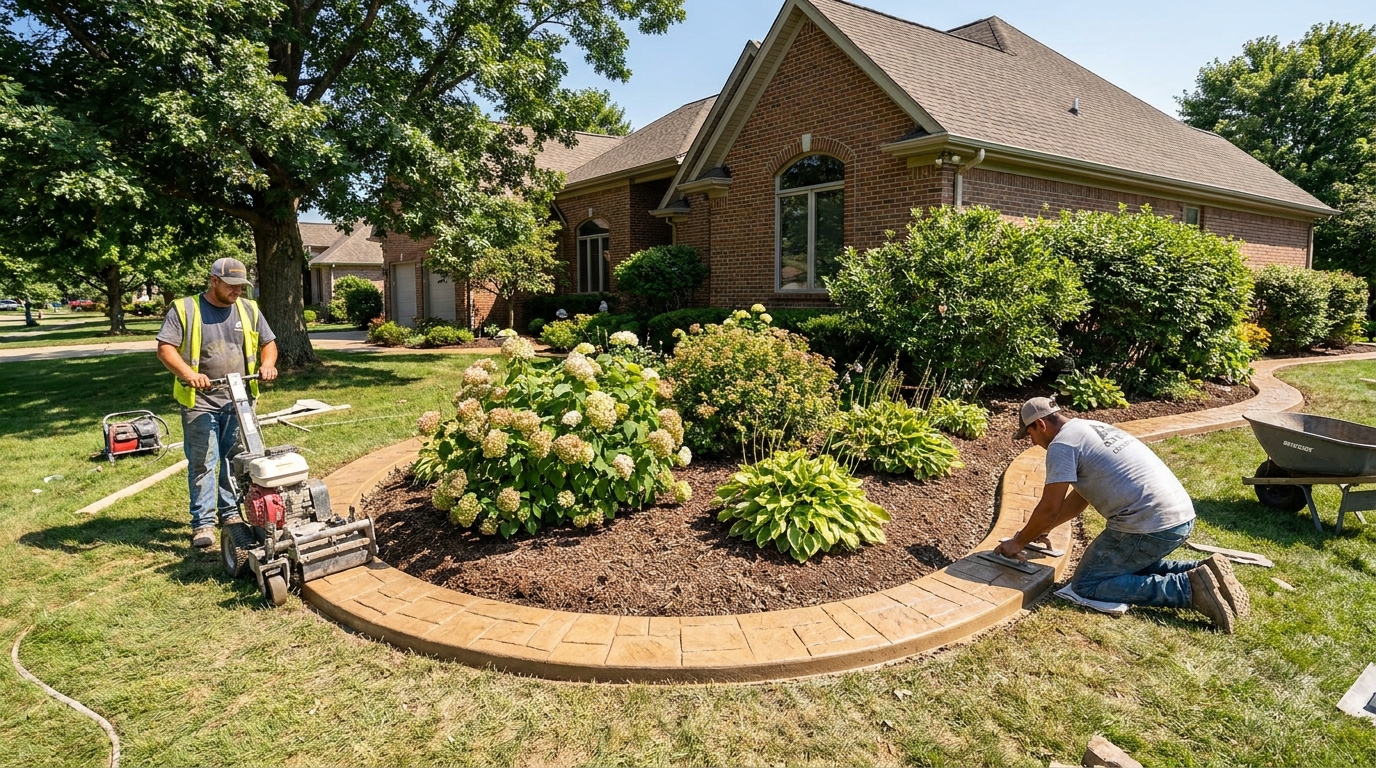
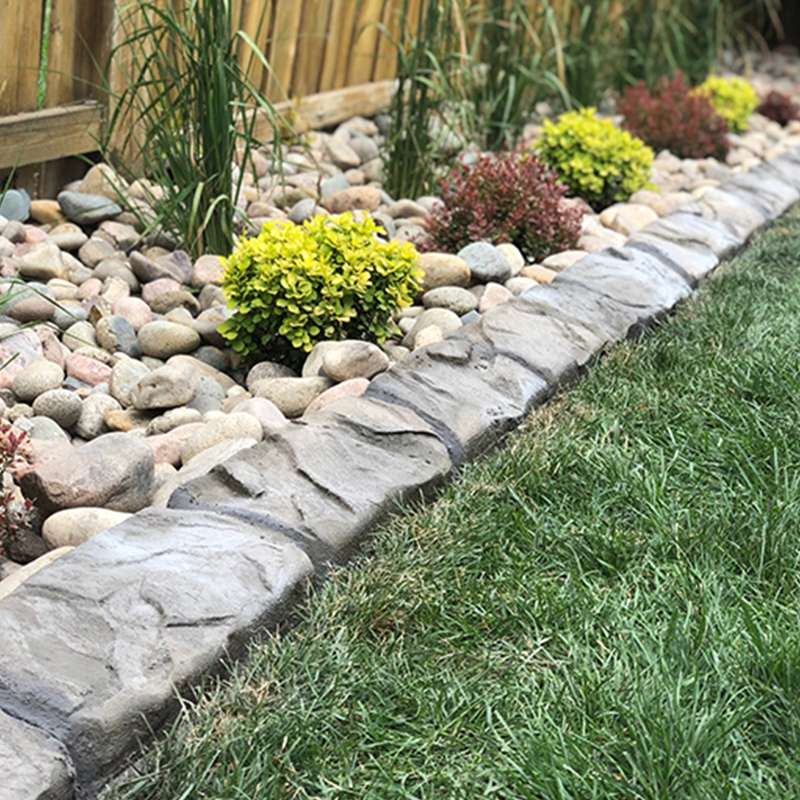
Retrofit work is lower volume but higher margin. Homeowners pay $8 to $14 per linear foot and choose premium finishes like natural stone stamps and integral color that increase your revenue per job.
- Sales cycle. Retrofit jobs require estimates, follow-ups, and occasionally competing with other bids. Budget 2 to 3 hours of sales time per closed job.
- Design flexibility. Homeowners want options. Offering stamped patterns, colored concrete, and mower-style profiles lets you upsell from basic curb to premium finishes.
- Seasonal demand. Retrofit inquiries peak from March through June as homeowners plan spring landscaping. Marketing in late winter fills your spring calendar before competitors start advertising.
Retrofit customers also generate referrals. A single well-installed job visible from the street can bring 2 to 3 additional neighborhood inquiries. Building a strong portfolio is one of the most effective ways to grow your curbing business.
How To Position Your Business for Both Markets
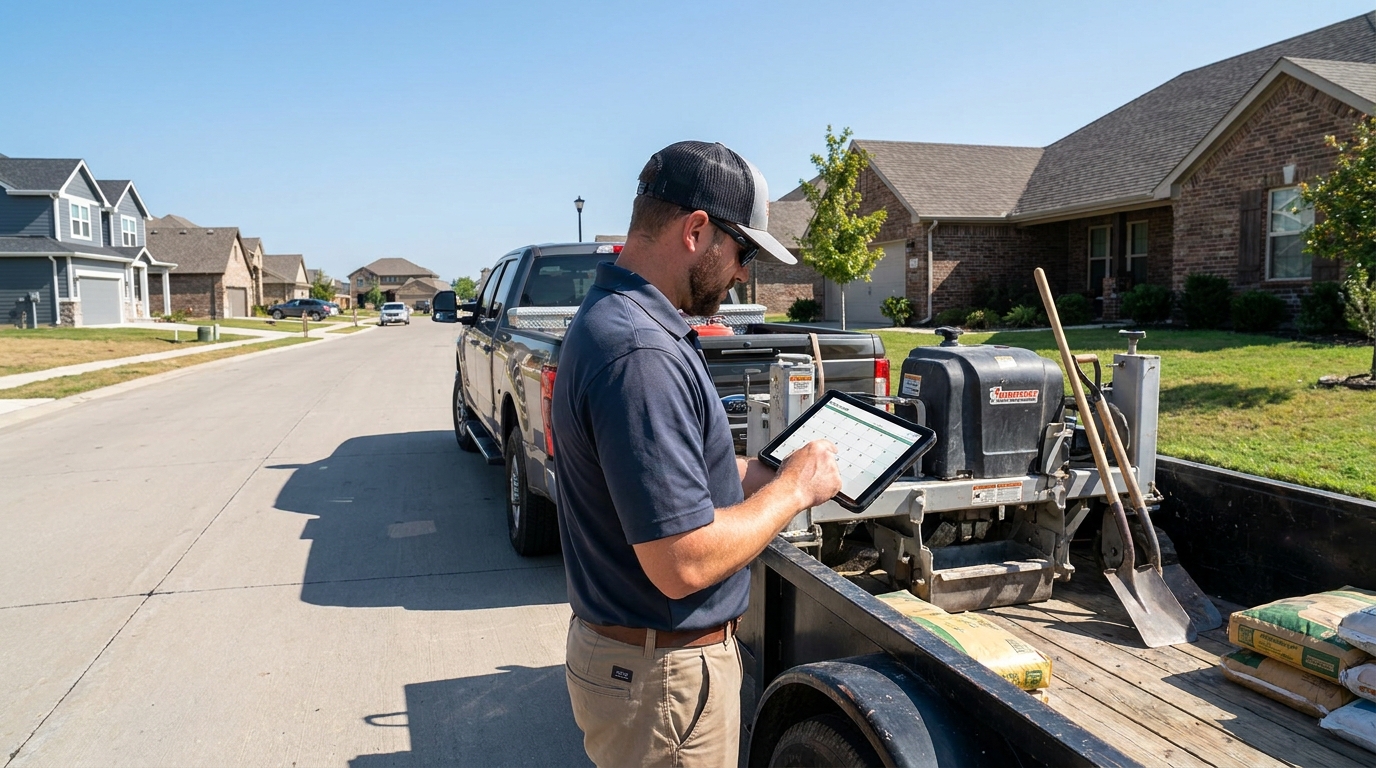
Running both new construction and retrofit requires separating your pricing, marketing, and scheduling.
- Price separately. Keep a builder rate card ($5 to $7 per foot for basic profiles) and a retail rate card ($8 to $14 per foot with premium options). Don’t let builder pricing leak into retail quotes.
- Schedule strategically. Use new construction as your baseline income and layer retrofit jobs around builder deadlines. Retrofit jobs are more flexible in scheduling, making them ideal gap-fillers.
- Market differently. Builders respond to direct outreach, trade shows, and referrals from subcontractors. Homeowners find you through Google, yard signs, and neighborhood referrals.
The strongest curbing businesses use builder volume to cover fixed costs and retrofit margins to generate profit. Running the profitability numbers for both markets shows how each revenue stream contributes to your bottom line. Mastering both protects your income when either market slows.
Frequently Asked Questions
Which curbing market is more profitable per job?
Retrofit work for homeowners is more profitable per linear foot, typically $8 to $14 versus $5 to $7 for new construction. New construction makes up the difference with higher volume and lower marketing cost per job. Most successful curbing businesses run both to balance revenue and profit margins year-round.
How do I find new construction curbing opportunities?
Contact general contractors and subdivision developers directly with a pricing sheet and proof of insurance. Attend local builder association meetings and trade shows. Curb Depot’s training programs cover how to build builder relationships and position your business for subdivision contracts alongside retail homeowner work.
Can one curbing machine handle both residential and commercial jobs?
A single curbing machine handles both markets. The equipment, mold profiles, and installation technique are the same for a 2,000-foot subdivision run or a 150-foot backyard job. The difference is in pricing, scheduling, and customer relationships.
Two Markets, One Business
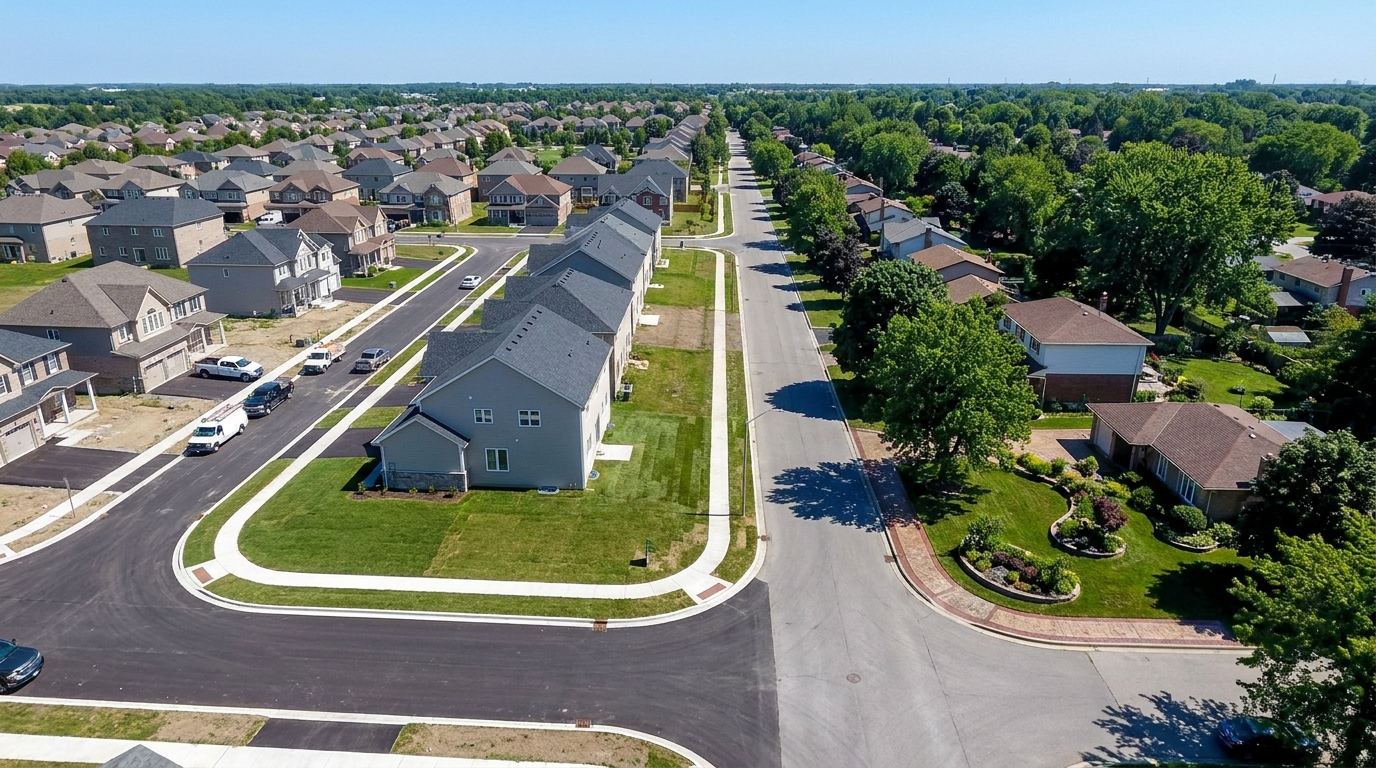
New construction provides volume and predictable schedules. Retrofit provides margins and design variety. Running both protects your business when either market slows and gives you leverage to negotiate better terms with builders when you don’t depend on their volume to survive.
The contractor who wins in both markets separates pricing, schedules strategically, and markets to each audience on its own terms. Contact Curb Depot for training, equipment packages, and guidance on building a curbing business that serves both markets profitably.
Earn More With Natural Stone.

Click to Register

Create beautiful curb with unique stamps.

Looking to sell your equipment?
Let us help.






Ready to Order Your New Curbing Trailer? Request More Info.
Give us a call at (920) 740-2218 or simply fill out the form below to learn more about getting all the tools and training to get started. We make the process easy to start earning money in landscape curbing.