Contractors weighing fiber reinforcement against steel cable usually want to know one thing: which one prevents callbacks? The answer depends on whether your biggest risk is curing cracks or ground movement. Each method handles one of those problems better than the other.
How Each Reinforcement Method Works
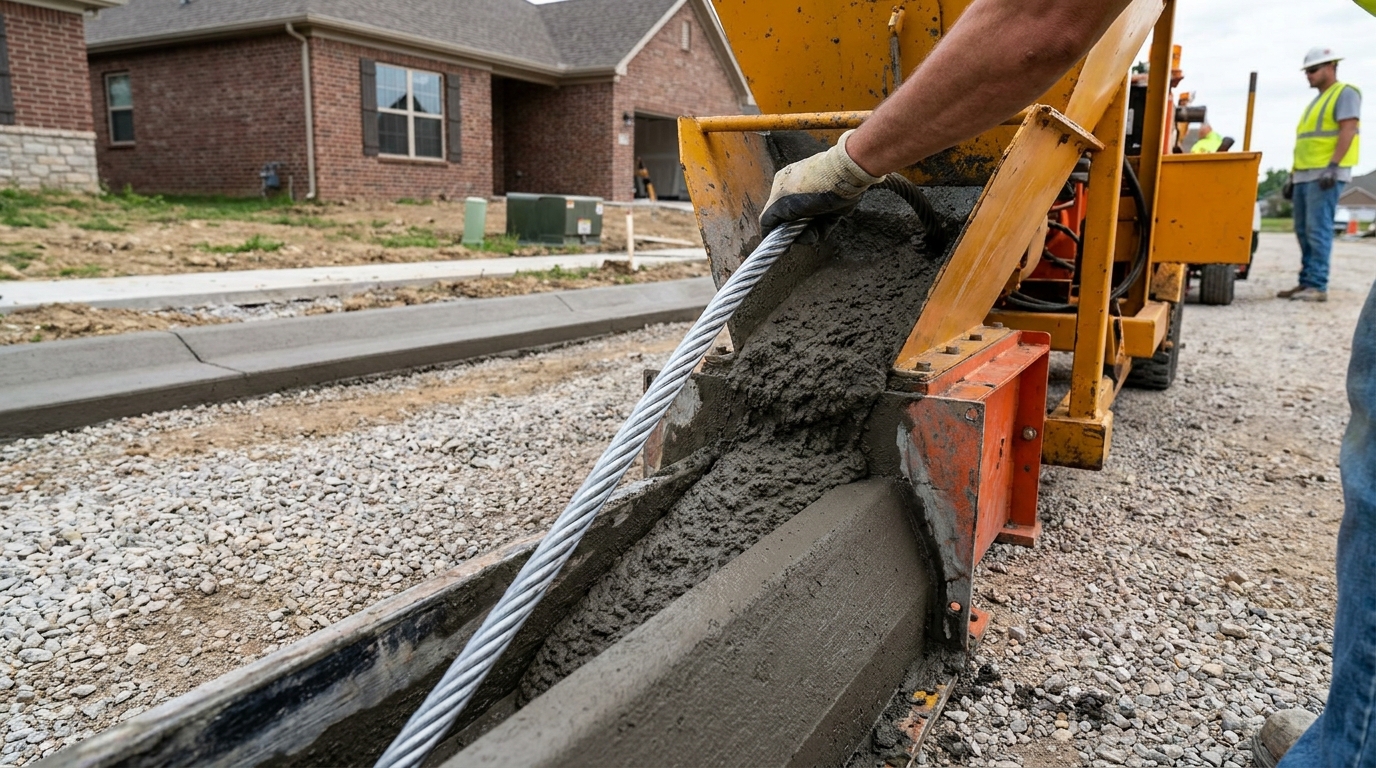
Understanding the mechanics of each method explains why they perform differently in the field.
Steel Cable Reinforcement
Steel cable runs continuously through the center of extruded curbing. It doesn’t prevent cracks from forming. Instead, it holds both sides of a crack together so the curb doesn’t split apart or shift. This matters most in areas with expansive clay soil, tree root pressure, or freeze-thaw cycles. Curb Depot carries both stainless and galvanized cable in 5,000 and 10,000-foot spools.
Polypropylene Fiber Reinforcement
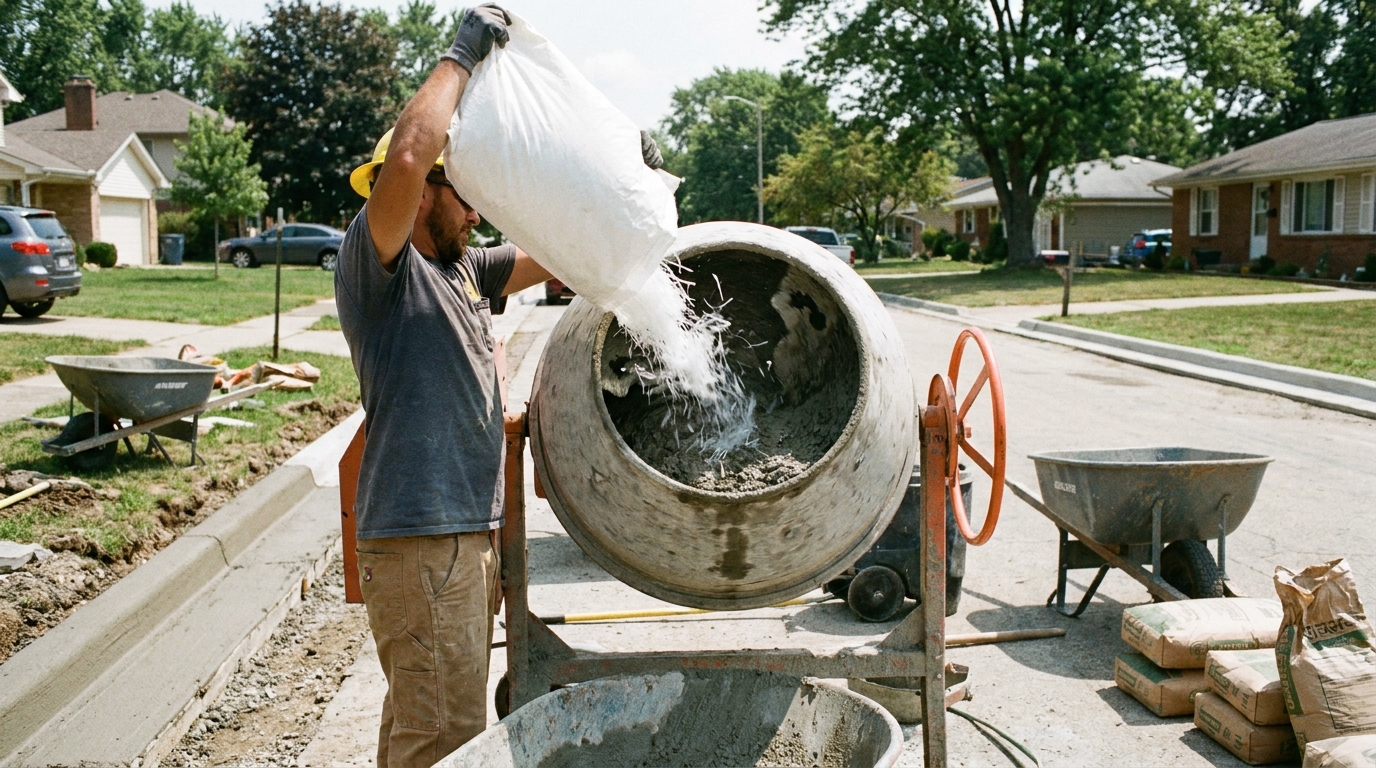
Fiber reinforcement mixes directly into the concrete before it enters the machine. Thousands of small polypropylene strands distribute throughout the mix, reducing the micro-cracks that form during curing as concrete shrinks. Fiber doesn’t provide structural holding power. If a crack forms from ground movement, fiber won’t keep the two sides aligned the way cable does. Its strength is in crack prevention during the first 48 hours when shrinkage stress is highest.
Strength, Durability, and Performance Comparison
This is where the two methods separate clearly.
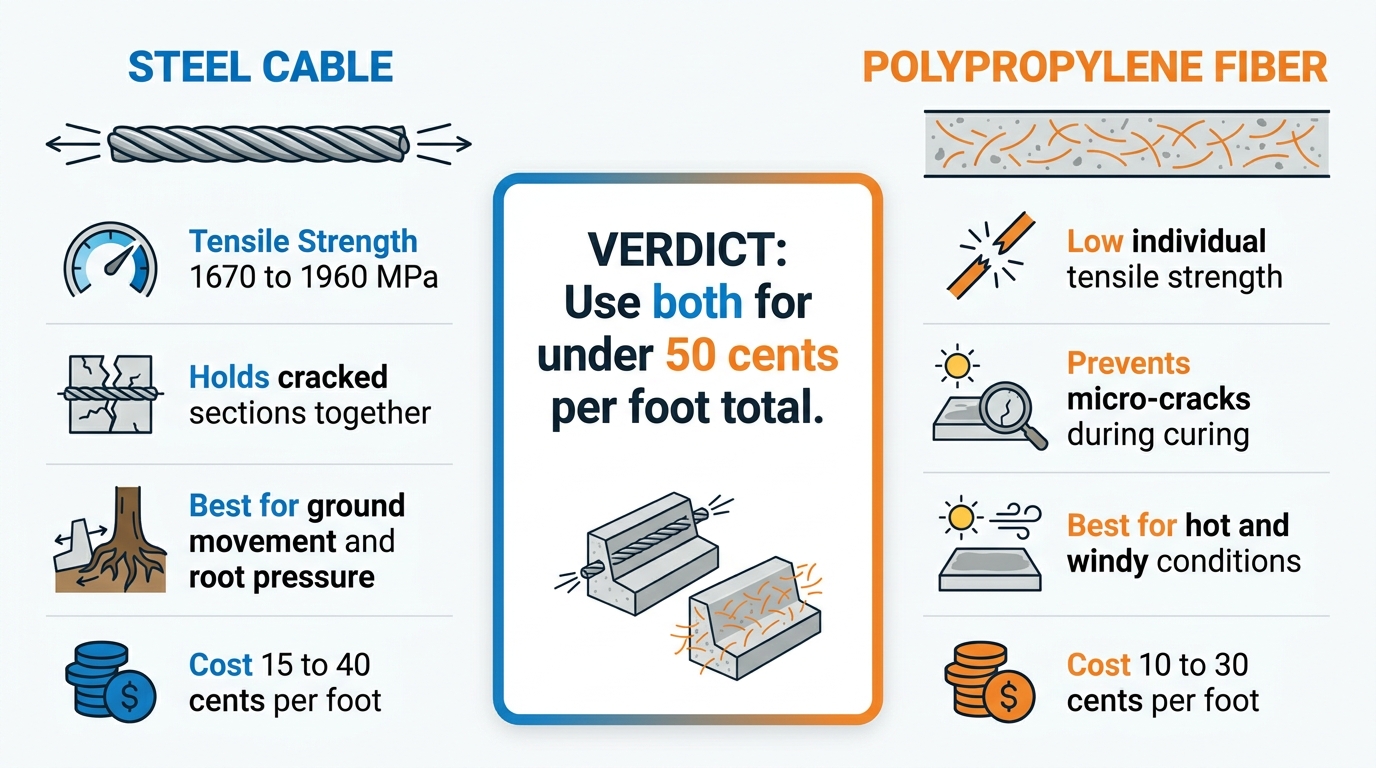
- Tensile strength. Steel cable ranges from 1,670 to 1,960 MPa depending on grade. Polypropylene fiber has low individual tensile strength but distributes stress across thousands of contact points within the mix.
- Crack prevention. Fiber excels at preventing surface micro-cracks during curing. Cable does not prevent cracks but keeps them from becoming structural failures.
- Corrosion resistance. Fiber is chemically inert and won’t degrade from moisture, salt, or soil chemistry. Steel cable can corrode in high-moisture environments unless you use stainless steel.
- Cost. Fiber adds $0.10 to $0.30 per linear foot in material cost. Steel cable runs $0.15 to $0.40 per linear foot depending on the gauge and material.
For most landscape curbing contractors, steel cable is the standard because ground movement and root pressure are the primary long-term threats. Matching cable to a properly mixed batch gives the best structural result.
Which One To Use and When
Choosing the right reinforcement depends on your market and the conditions your curbing faces.
- Use steel cable for residential landscape curbing, commercial property borders, and any installation where ground movement, root intrusion, or freeze-thaw cycling is a risk. This covers the majority of curbing jobs across the U.S.
- Use fiber as a secondary addition when curing conditions are challenging. Hot, dry, or windy days increase the risk of shrinkage cracks, and fiber in the mix reduces that risk.
- Use both for the highest-value jobs. Cable provides long-term structural integrity, and fiber reduces early-age cracking. The combined material cost adds less than $0.50 per linear foot, easily absorbed on jobs billing $8 to $14 per foot. Proper cable feed through the Harpten curbing machine prevents wavy reinforcement that weakens the curb at stress points.
Frequently Asked Questions
Is fiber reinforcement strong enough for landscape curbing?
Fiber reinforcement reduces micro-cracking during curing but doesn’t hold cracked sections together structurally. For landscape curbing exposed to ground movement, root pressure, or freeze-thaw cycles, steel cable is the stronger choice. Fiber works best as a secondary reinforcement added to the concrete mix alongside cable.
Does steel cable rust inside concrete curbing?
Galvanized steel cable resists corrosion in most conditions. In high-moisture or coastal environments, stainless steel cable provides better long-term protection. Curb Depot carries both options in 5,000- and 10,000-foot spools so contractors can match the cable type to their local climate.
How much does reinforcement add to curbing cost per foot?
Steel cable adds $0.15 to $0.40 per linear foot depending on the gauge and material. Polypropylene fiber adds $0.10 to $0.30 per foot. Using both together costs less than $0.50 per foot in additional material. On jobs billing $8 to $14 per linear foot, that cost is easy to absorb.
Pick the Reinforcement That Matches Your Market
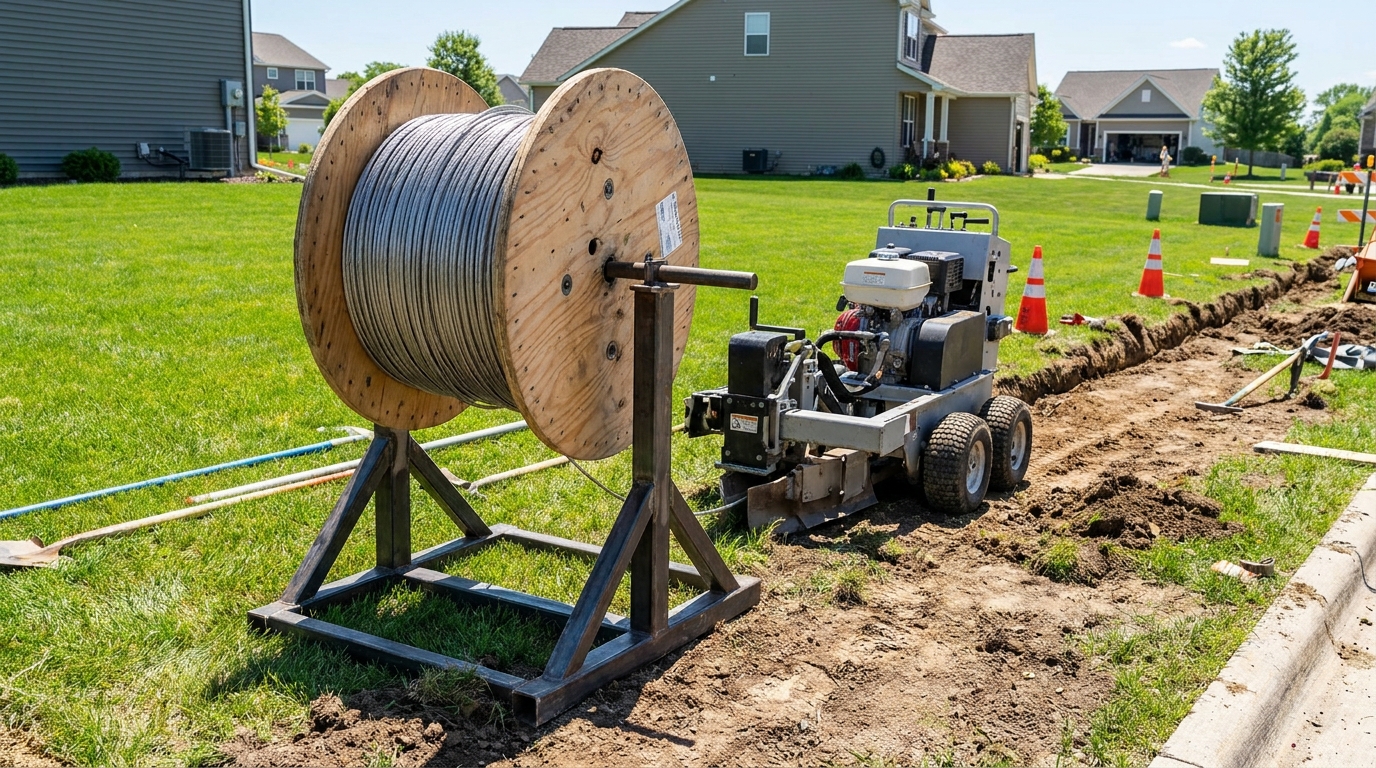
Steel cable handles the forces that cause the most expensive callbacks: ground movement, root pressure, and shifting soil. Fiber handles the curing-stage cracks that are visible but rarely structural. Using both costs less than $0.50 per linear foot and eliminates the two most common reinforcement failures.
Contact Curb Depot for cable, training on proper feed technique, and guidance on matching reinforcement to your local conditions.
Earn More With Natural Stone.

Click to Register

Create beautiful curb with unique stamps.
Looking to sell your equipment?
Let us help.


Ready to Order Your New Curbing Trailer? Request More Info.
Give us a call at (920) 740-2218 or simply fill out the form below to learn more about getting all the tools and training to get started. We make the process easy to start earning money in landscape curbing.