Only about a dozen states require a contractor license for the type of work landscape curbing involves. The rest let you start operating with a basic business registration and insurance. That gap between perception and reality keeps some aspiring curbers waiting months for licenses they never needed.
Most States Don’t Require a Specific Curbing License
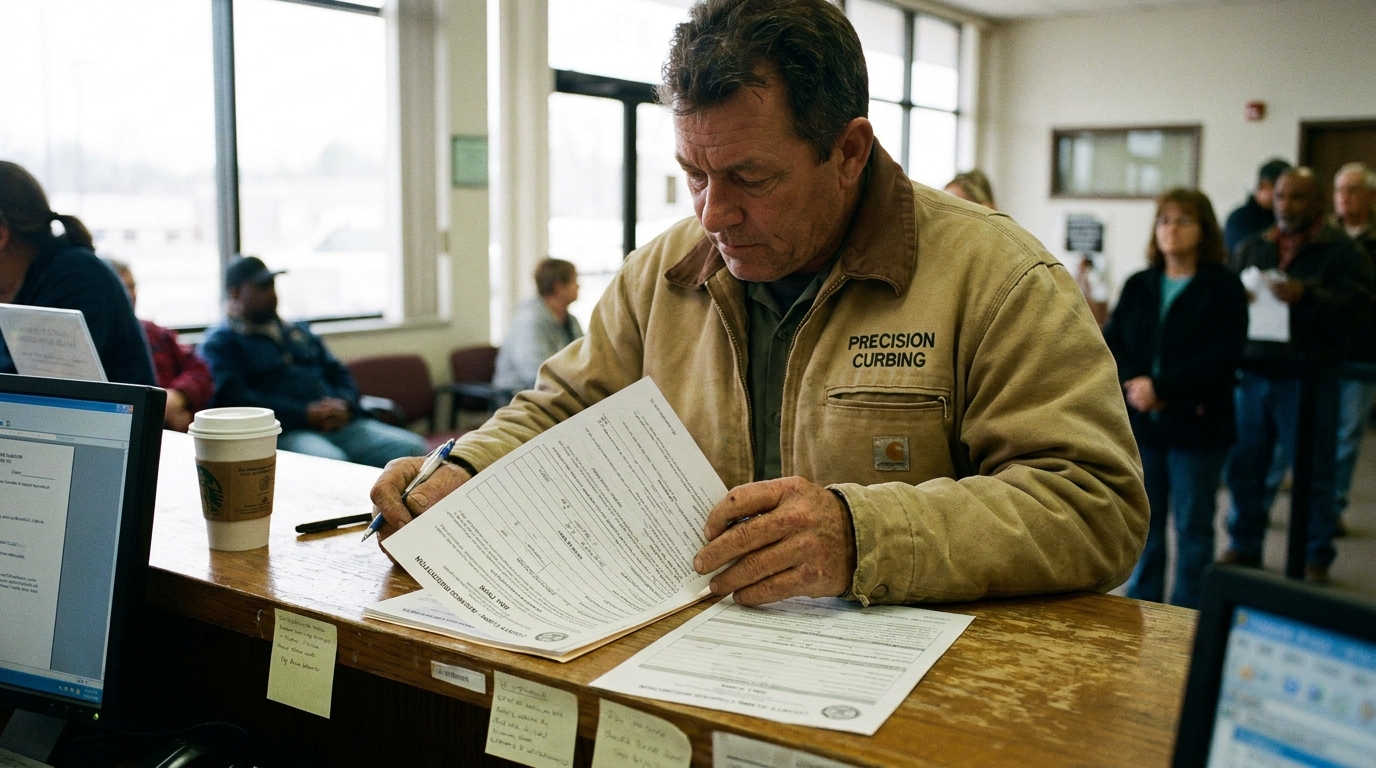
Landscape curbing falls into a gray area in most state licensing systems. It isn’t structural concrete work, which typically requires a concrete contractor license, and it isn’t general contracting either. In most jurisdictions, curbing is classified closer to landscape installation, which carries lighter requirements.
What You Typically Need
- A general business license or business registration (cost: $50 to $200 depending on your county)
- An Employer Identification Number from the IRS (free to obtain online)
- General liability insurance ($600 to $1,400 per year for most landscape contractors)
- A sales tax permit if your state taxes services
Check your county and city requirements specifically. Some municipalities require a home improvement contractor registration even when the state doesn’t. The fastest way to confirm is calling your county clerk’s office directly. Your biggest startup decisions involve equipment and training selection, not licensing paperwork.
Permits, Bonds, and Registrations You May Need
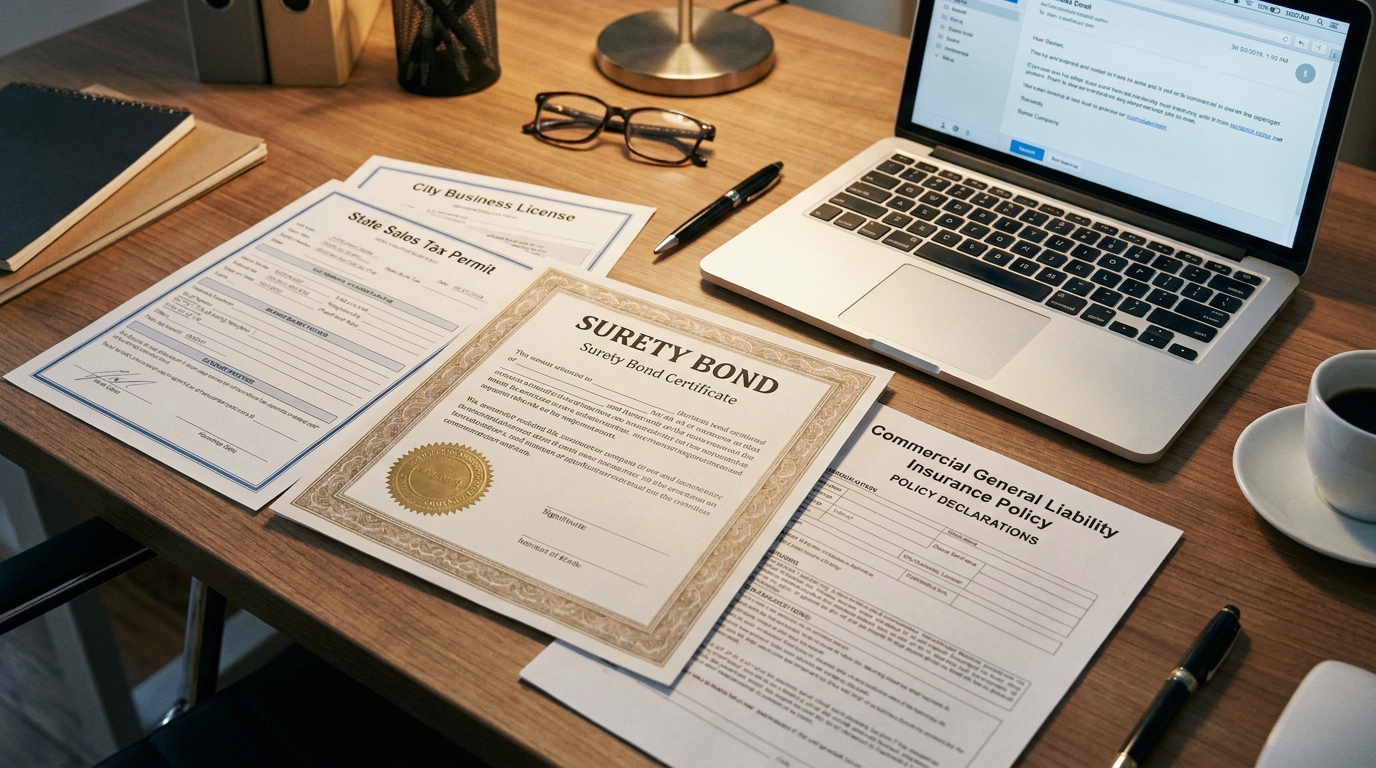
Beyond basic business licensing, a few additional requirements come up depending on where you operate.
- Contractor bonds. Some states require a surety bond before you can perform any contractor work. Bond amounts range from $5,000 to $25,000. The bond protects customers if you abandon a job or violate contract terms. Annual bond premiums typically cost 1% to 5% of the bond amount.
- Local business permits. Most cities and counties require a local business permit or occupational license. Fees range from $25 to $300 annually.
- Home improvement registration. States like Connecticut, Maryland, and Pennsylvania require registration as a home improvement contractor, even for curbing work that falls below the general contractor license threshold.
Call your county clerk’s office and your state’s contractor licensing board before your first job. Both calls take 10 minutes and confirm exactly what you need. Factor these costs into your full startup budget alongside equipment and training.
States With Stricter Licensing Requirements
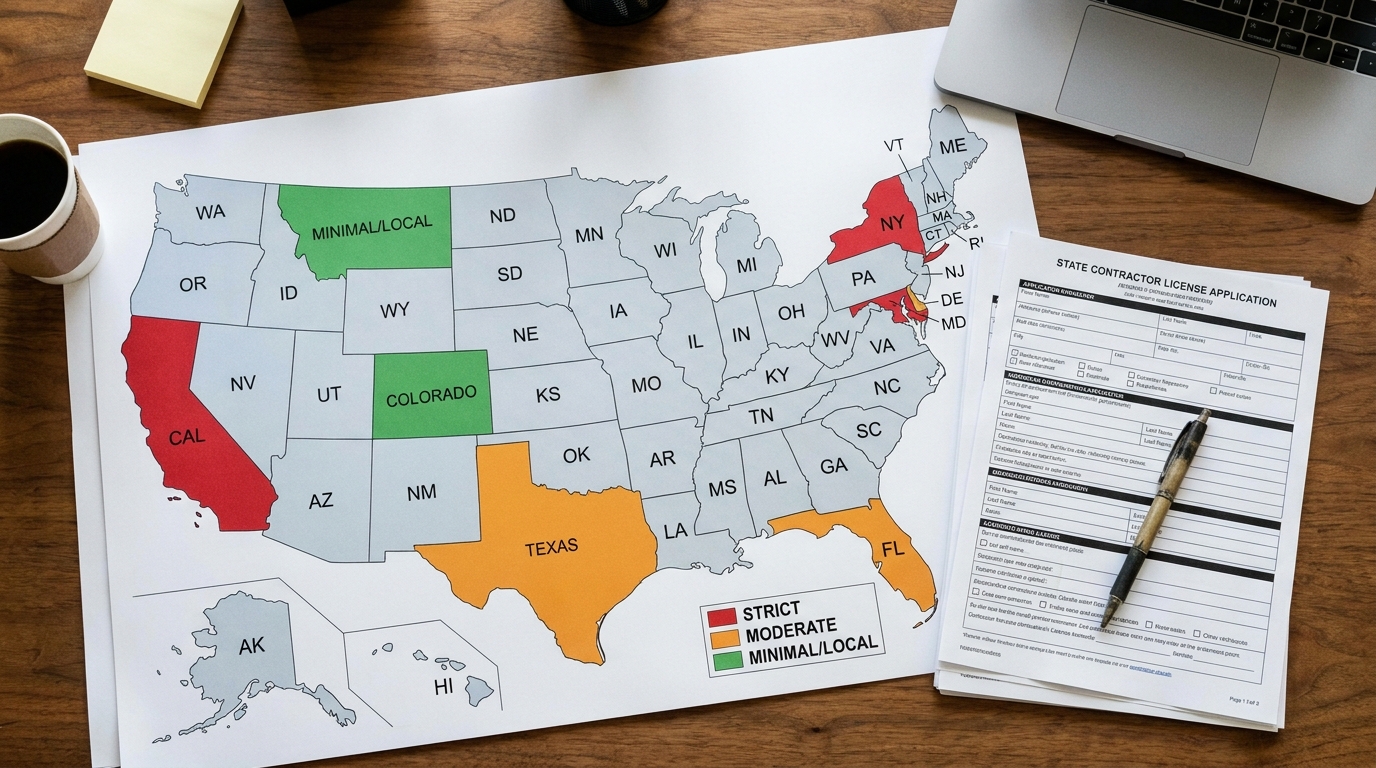
A handful of states apply broader contractor licensing rules that apply to curbing work.
- California requires a C-27 Landscaping Contractor license for work over $500. Applicants need four years of journey-level experience, a $25,000 bond, and must pass trade and business exams.
- Nevada requires a C-10 Landscape Contracting license for any work valued at $1,000 or more.
- Arkansas requires licensing for residential projects over $2,000 and commercial projects over $50,000 through the Arkansas Contractors Licensing Board.
- Arizona, Louisiana, and North Carolina also have active contractor licensing boards that may apply to landscape curbing depending on the project scope and dollar value.
If you’re launching in one of these states, budget 2 to 4 months for the licensing process. In all other states, you can typically start within a few weeks of obtaining your business license and insurance. Review the full business profitability breakdown to see how licensing costs fit into your margins.
Frequently Asked Questions
Do I need a contractor’s license to install landscape curbing?
In most states, landscape curbing doesn’t require a specific contractor’s license. A general business license, liability insurance, and any local permits are typically sufficient. States like California, Nevada, and Arkansas are exceptions that require formal contractor licensing. Check your state’s contractor licensing board website for current requirements.
How much does it cost to get licensed for a curbing business?
Basic business registration costs $50 to $200 in most counties. Add $600 to $1,400 annually for general liability insurance. If your state requires a surety bond, budget $100 to $1,250 per year in bond premiums. Curb Depot’s training covers the full startup cost breakdown, including licensing and insurance.
Can I start a curbing business while waiting for my license?
Starting work before required licensing is in place risks fines and project shutdowns. In most states, you can begin operating within days of filing your business registration and securing insurance. Only states with formal contractor licensing processes create a real waiting period. Use that time for training and equipment setup so you’re ready to pour on day one.
Get Licensed, Then Get to Work
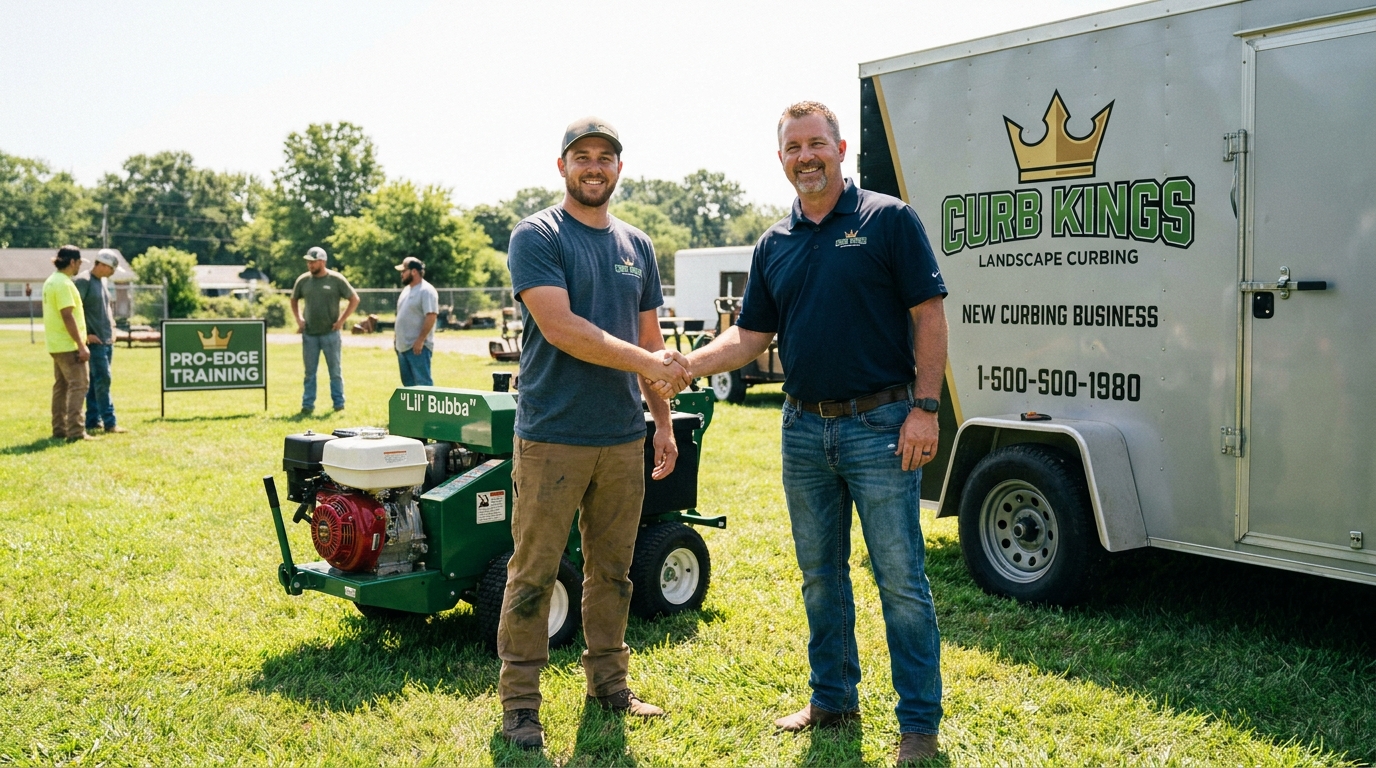
Licensing is one of the smallest barriers to starting a curbing business. In most states, a business registration, insurance, and local permits are all you need. Even in stricter states, the licensing process is a one-time investment that unlocks a low-competition market with strong margins.
Factor licensing costs into your startup budget alongside equipment, training, and insurance. Contact Curb Depot to get your training, equipment, and full business setup handled from one source.
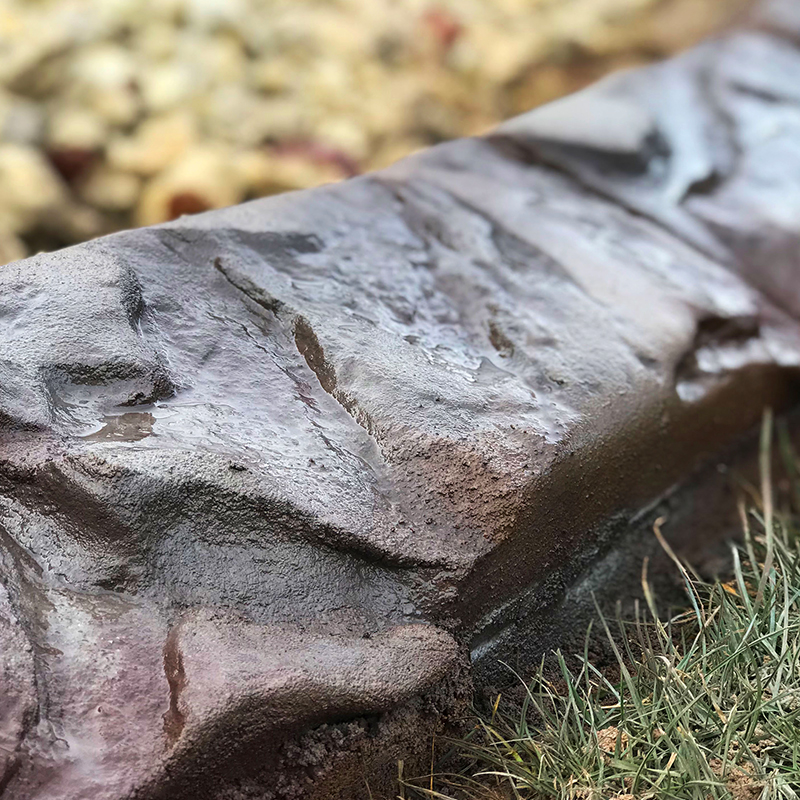
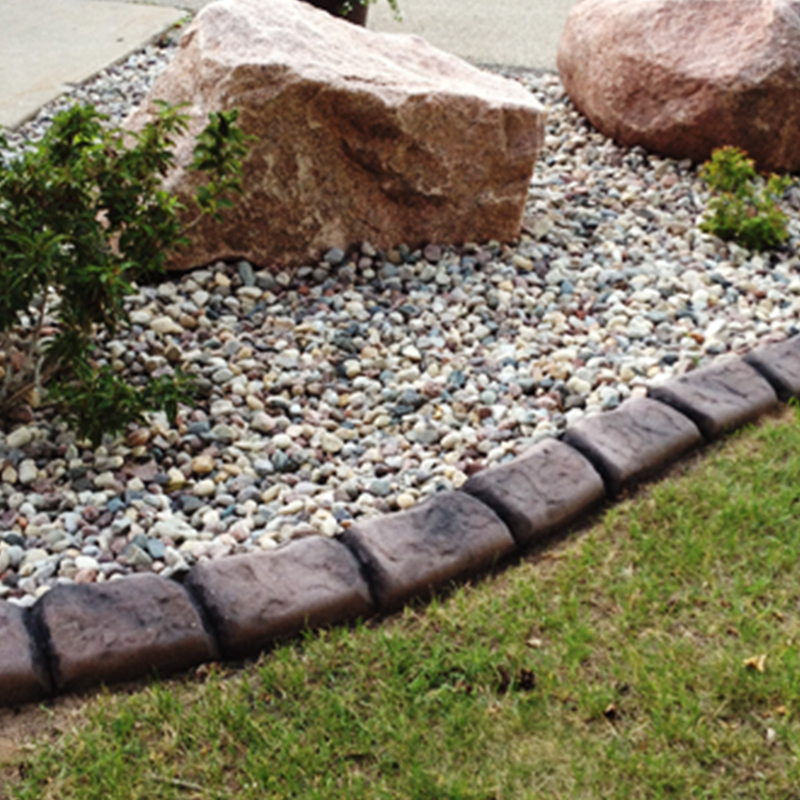
Earn More With Natural Stone.

Click to Register

Create beautiful curb with unique stamps.

Looking to sell your equipment?
Let us help.



Ready to Order Your New Curbing Trailer? Request More Info.
Give us a call at (920) 740-2218 or simply fill out the form below to learn more about getting all the tools and training to get started. We make the process easy to start earning money in landscape curbing.