
When should you start marketing for next season’s jobs? When’s the last month you can safely pour? When does equipment maintenance make the most financial sense? These timing decisions separate full-schedule operators from contractors scrambling for work mid-season. This calendar maps each quarter.
Spring and Summer: Peak Installation Season
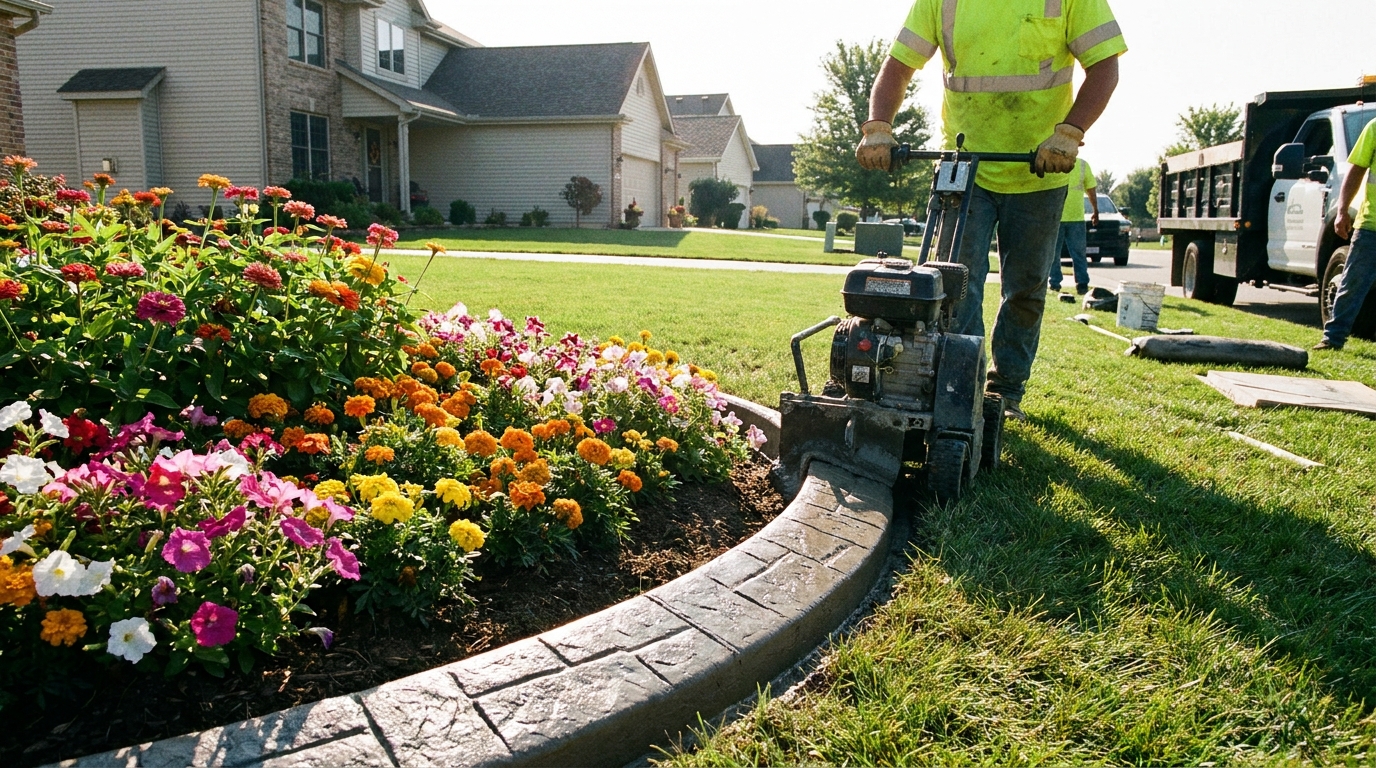
This is when you make your money. In most U.S. markets, concrete curing conditions are ideal when daytime temperatures stay between 50°F and 85°F.
Marketing Before the Season Starts
Start marketing 6 to 8 weeks before your first installation date. Door hangers, yard signs from completed jobs, and Google Business Profile posts generate leads before homeowners start calling landscapers. Contractors who market in February and March book their April and May calendars before competitors wake up. Understanding what curbing costs per linear foot helps you set pricing that closes jobs fast.
Installation Priorities
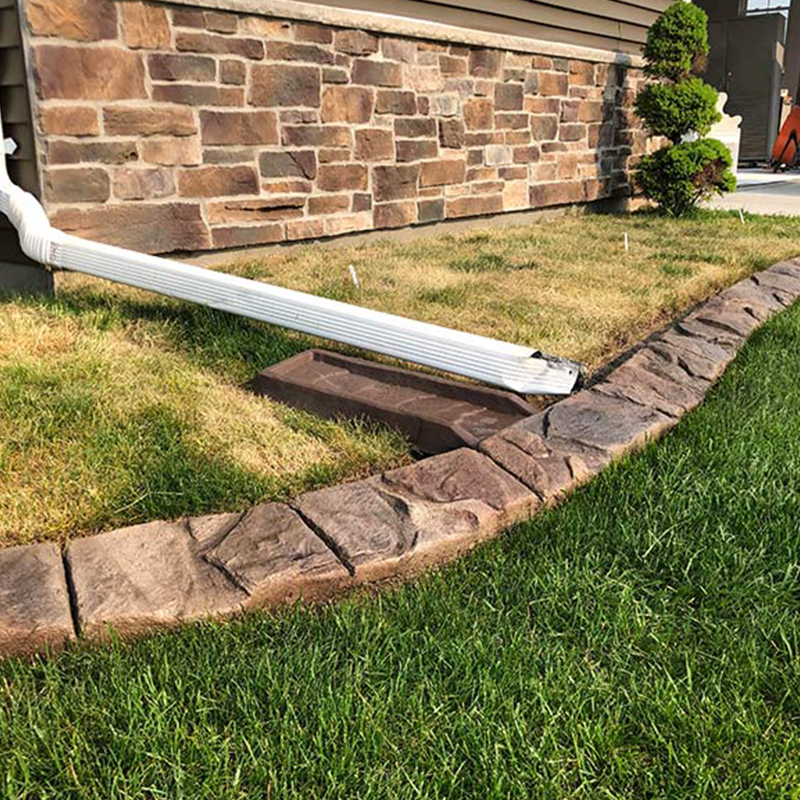
- Schedule the highest-margin jobs first. Natural stone curbing at $14 per linear foot generates nearly double the revenue of a basic slant curb at $8 per foot with similar labor.
- Batch jobs geographically. Scheduling 2 to 3 installs in the same neighborhood on the same day cuts travel time and fuel costs.
- Track weather forecasts weekly. Concrete poured in rain or extreme heat produces weaker curb and more callbacks.
Fall: Maintenance, Marketing, and Closing the Year
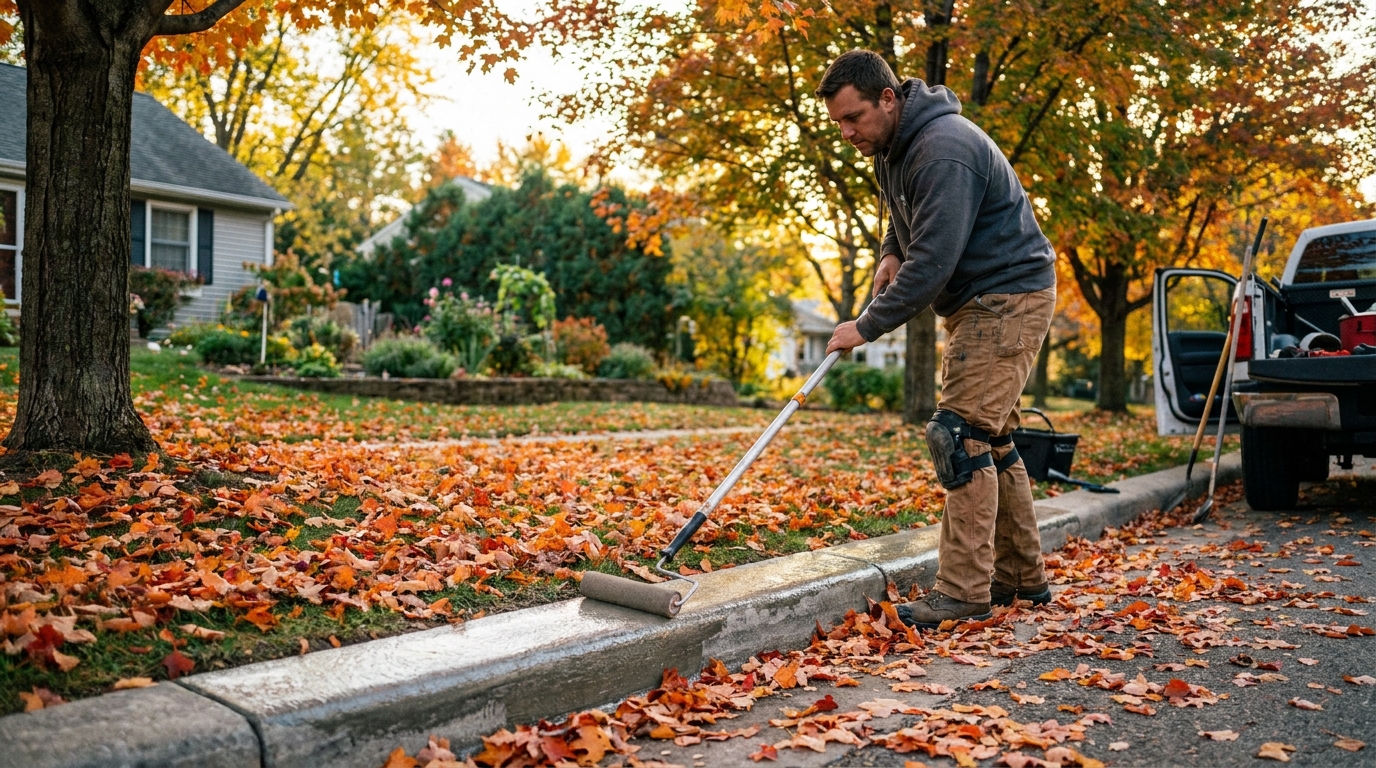
Fall is the transition period. Installations slow as temperatures drop, but two revenue opportunities remain.
- Late-season installs. In southern and mid-Atlantic states, you can pour through November. Northern operators typically stop by mid-October depending on frost dates. Avoid scheduling jobs when overnight temperatures drop below 40°F.
- Maintenance callbacks. Reach out to customers from the past 1 to 2 years. Offer sealer application, minor crack repair, or curbing touch-ups. These are fast jobs with minimal material cost and strong margins.
Update your website portfolio with summer job photos and collect reviews from satisfied customers while the work is fresh. A strong online presence is one of the fastest ways to grow your curbing business for the next season. Use November to review your financials, calculate your actual cost per linear foot, and adjust pricing for next year.
Winter: Training, Equipment Prep, and Lead Generation
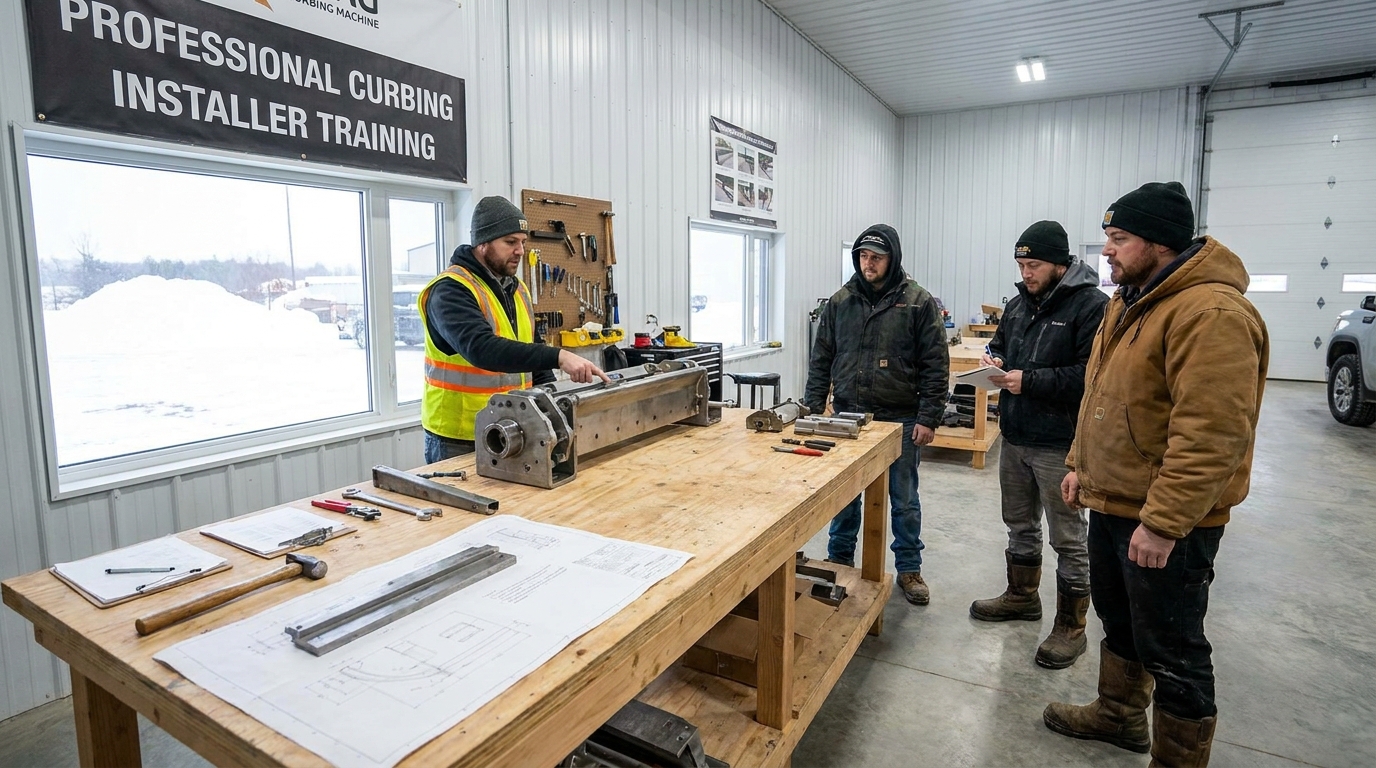
Winter is your investment period. You aren’t pouring, but the work you do now determines how fast your spring calendar fills.
- Equipment maintenance. Follow the full seasonal checklist: oil change, spark plug, belt inspection, mold surface check, and fuel system prep. Completing this in December means your machine is ready the moment temperatures allow.
- Training. Winter is the best time to add skills that increase your per-job revenue. Natural stone training takes your average from $8 to $14 per linear foot with the same labor.
- Lead generation. Run social media content showing before-and-after photos from last season. Launch early-bird pricing for customers who book before March. Attend home shows and garden expos in January and February.
Contractors who treat winter as free time lose 6 to 8 weeks of prime booking season. Those who use it to order equipment and train start spring fully booked.
Frequently Asked Questions
When is the best time of year to start a curbing business?
Late winter is the best launch window. Ordering equipment and completing training in January or February puts you in a position to start marketing in March and booking jobs by April. Curb Depot’s training schedule accommodates winter launches so new operators hit peak season ready to pour.
Can you pour concrete curbing in cold weather?
Concrete needs temperatures above 50°F during curing to reach full strength. Pouring when overnight temperatures drop below 40°F risks weak spots and surface scaling. Most northern contractors stop installations by mid-October and resume in April or May depending on local frost dates.
How do curbing businesses generate revenue during the off-season?
Smart operators fill the off-season with maintenance callbacks, sealer reapplication, and equipment servicing. Some expand into precast concrete products or indoor training work. The key is using winter for revenue-generating tasks and business development that directly increases income when installation season starts again.
Plan Your Year, Protect Your Revenue

Curbing is a seasonal business in most markets, but seasonality isn’t a weakness when you plan for it. Summer installations generate revenue. Fall maintenance and marketing capture leftover demand and build next year’s pipeline. Winter training and equipment prep set the pace for spring.
Contact Curb Depot to schedule training, order equipment, or build a seasonal plan that fits your market and climate.
Earn More With Natural Stone.

Click to Register

Create beautiful curb with unique stamps.

Looking to sell your equipment?
Let us help.








Ready to Order Your New Curbing Trailer? Request More Info.
Give us a call at (920) 740-2218 or simply fill out the form below to learn more about getting all the tools and training to get started. We make the process easy to start earning money in landscape curbing.