After enough seasons of pulling out failed curbs from wet, salted, or heavily irrigated environments, one pattern becomes clear: the reinforcement cable was galvanized even when stainless was the right call. The rust doesn’t destroy the curb on its own, but it stains the surface from the inside out, then weakens the tensile spine when freeze-thaw hits. This post covers how each corrodes over time, the costs, and the job conditions that determine which spool goes on the trailer.
What Galvanized Steel Actually Protects Against
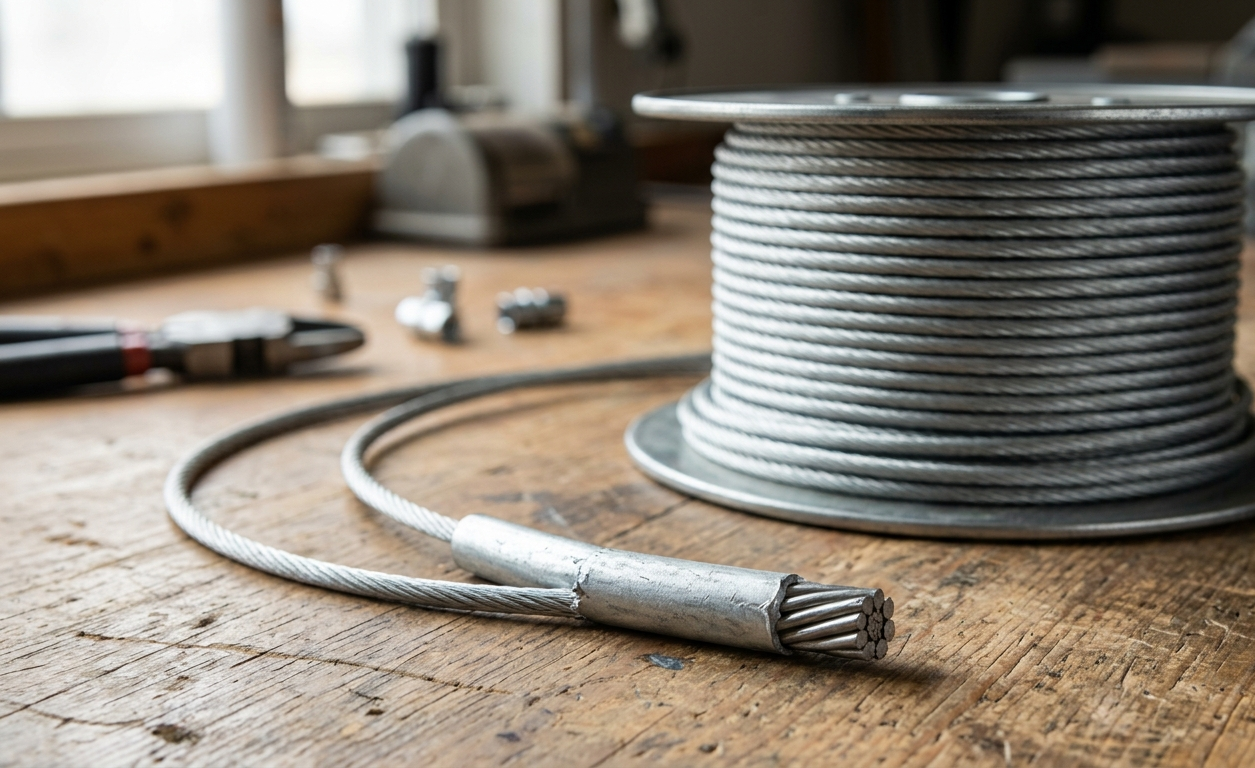
Galvanized steel cable has a zinc coating that sacrificially oxidizes before the underlying steel does. In dry, well-drained residential installs, that coating holds for 10 to 20 years before any surface rust appears at the cut ends. That’s a long service window for the price.
The weak spot is at the cuts. Every time a spool is cut to length for a section, fresh steel is exposed at the cross-section. In dry conditions, the zinc slowly self-repairs the cut edge through the ambient galvanic layer. In wet or salted conditions, the zinc gets consumed faster than it can protect, and the cut ends start rusting inward toward the middle of the run.
Why Stainless Steel Is Worth the Upcharge on Some Jobs
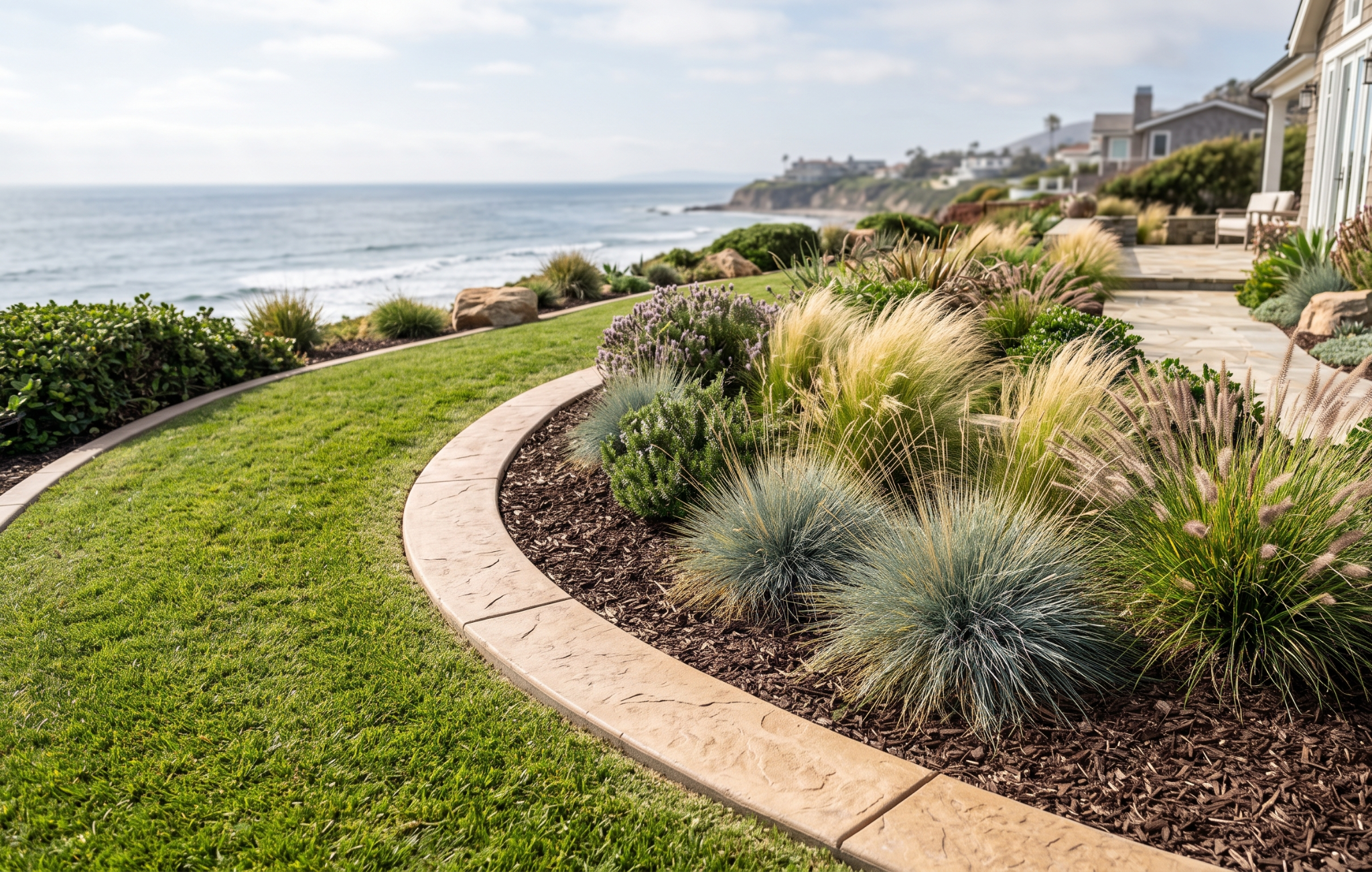
Stainless steel cable doesn’t have a sacrificial coating because the alloy itself doesn’t rust during normal service. That means cut ends are as protected as the middle of the run. In coastal air, in irrigation-heavy landscapes, and in northern jobs where road salt gets tracked into beds through winter, stainless is the only reinforcement that holds long enough to match the concrete’s own service life.
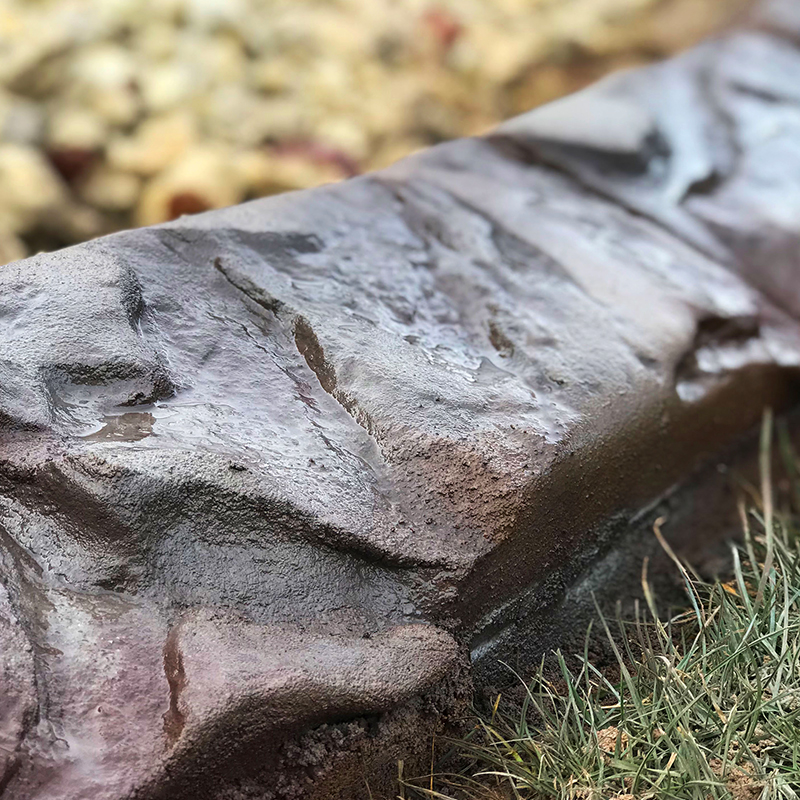
The other benefit is aesthetic. Rust bleed on a stamped natural-stone curb shows up as brown streaking on the surface within a couple of years of galvanized cable failure. Stainless eliminates that drawback entirely, which matters on premium decorative work.
The Math Across a 100-Foot Run
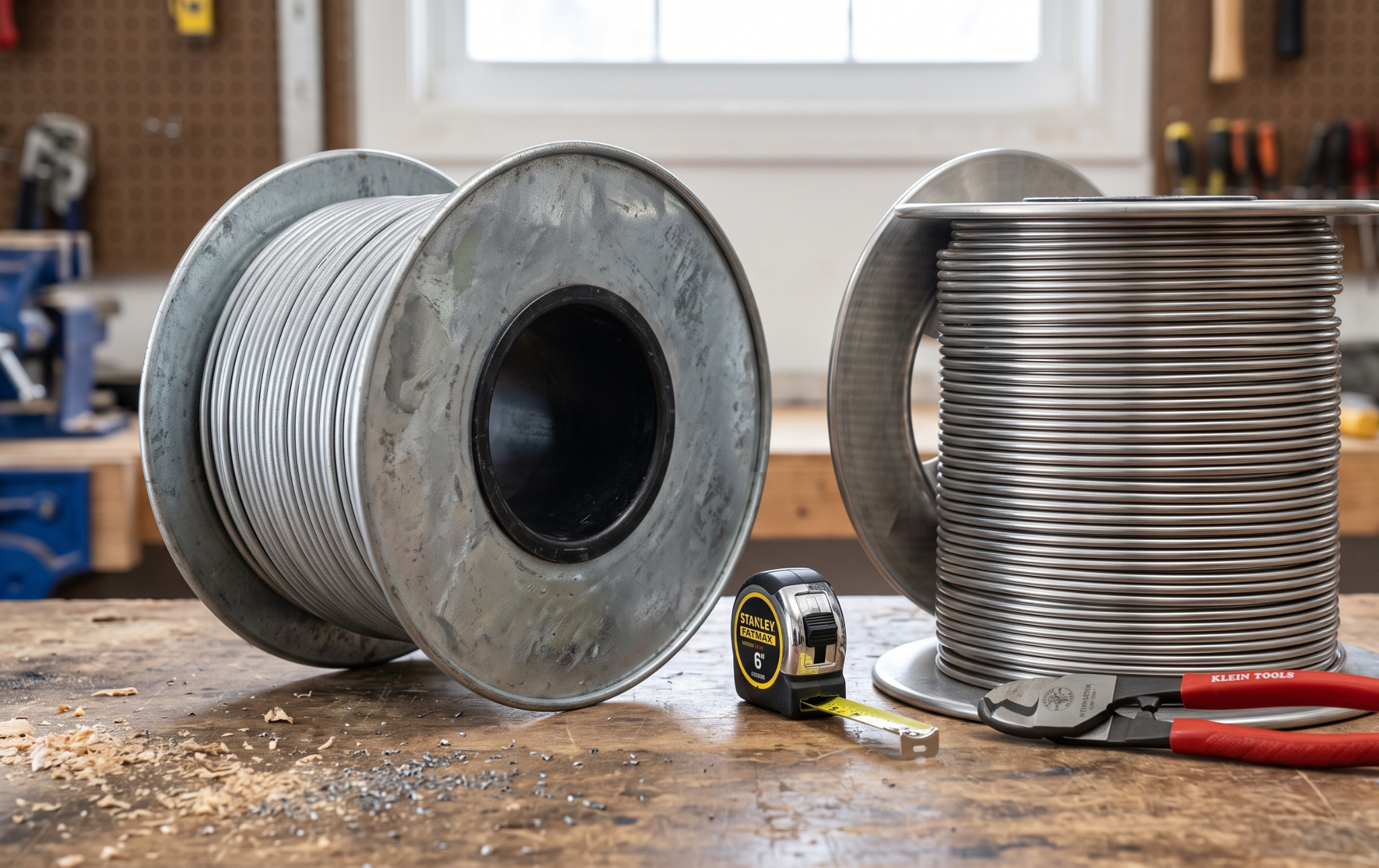
A typical curb uses roughly 100 linear feet of cable per 100 linear feet of curb, spanning one continuous run throughout the section. Curb Depot sells cable in 5,000- and 10,000-foot quantities, packed as 1,000-foot spools. Galvanized runs $0.19 per foot at 5,000 feet and $0.14 at 10,000. Stainless runs $0.26 and $0.17, a premium of 20% to 37%, depending on how much you order.
On a 100-foot residential run, that premium is about $7. At that price, the extra cost of stainless steel is too small to worry about on a single job; it only feels expensive when you’re buying full spools for inventory, not when you’re actually pouring the curb.
Order 10,000 feet of stainless at $0.17 per foot and you’re paying less per foot than a contractor ordering 5,000 feet of galvanized at $0.19. Volume erases the upcharge entirely.
For premium and coastal installs, absorbing that cost into the base price is easier than explaining a callback three years out.
Reinforcement isn’t merely a matter of cable. Our comparison of fiber vs cable in concrete curbing covers where polypropylene fiber fits alongside steel. Fiber reduces curing cracks while cable holds a cracked section together.
Job Conditions That Decide the Call
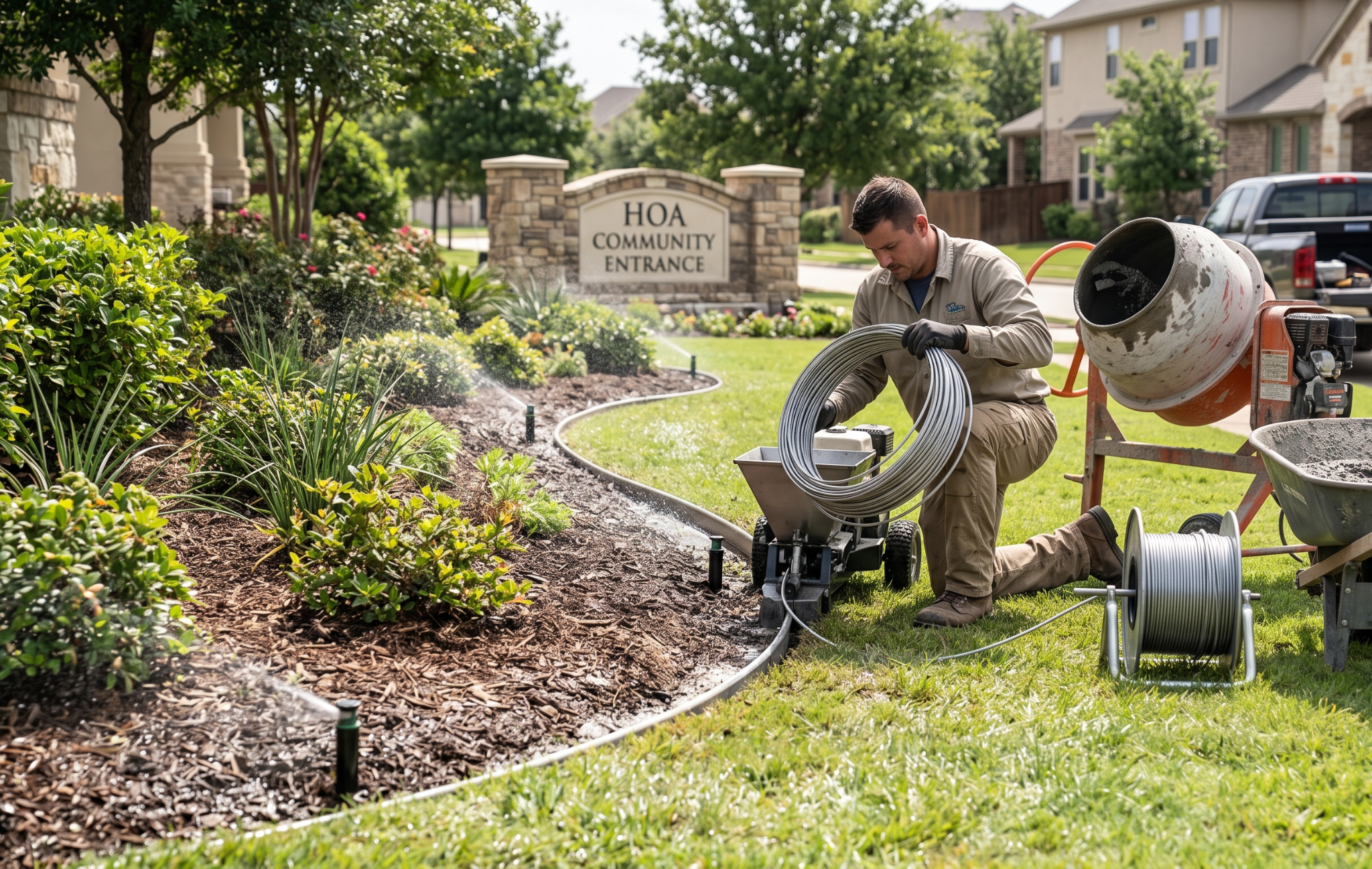
Choosing correctly between galvanized and stainless steel entails a quick assessment of the site’s environment and the type of job you’re pouring.
When to Use Galvanized Cable
- Standard residential yards: Best for typical suburban homes without high-end custom finishes
- Dry to moderate climates: Ideal for regions without heavy rainfall or harsh winters
- Subsurface irrigation: Perfect for yards using drip lines or subsurface irrigation rather than overhead sprinklers
- Basic concrete profiles: Use when the customer wants standard, non-stamped curbing
When to Use Stainless Steel Cable
- Coastal climates: Essential in areas with salty sea air that accelerates rust
- Heavy overhead irrigation: Crucial for lawns with constant, heavy sprinkler spray
- The “Snow Belt”: Highly recommended near driveways and roads where winter de-icing salt gets tracked into the soil
- Premium decorative work: Best for high-end stamped or colored curbing where rust stains would ruin the aesthetic
- Commercial or HOA jobs: Necessary for large-scale contracts where callback repairs are expensive and difficult to schedule
Taking ten seconds to evaluate these factors during your initial walkthrough prevents costly callbacks and ensures the reinforcement matches the expected lifespan of the concrete curbing.
Frequently Asked Questions
How thick should the reinforcement cable be for standard curbing?
The standard thickness of reinforcement cable for standard curbing is 1/8-inch thick. This thickness provides the tensile that strength standard curbing needs without adding unnecessary weight or cost. Thicker gauges of reinforcement cable do not meaningfully increase standard curbing strength for residential and light commercial applications and only add to the material cost per foot.
Does cable placement inside the curb affect corrosion life?
Yes, cable placement inside the curb directly affects its corrosion life. When the cable is positioned precisely at the geometric center, it is fully encapsulated by concrete, allowing the steel to reach its maximum lifespan. However, if the cable drifts toward the outer edge, it sits closer to the moisture zone, which accelerates rust and degrades the reinforcement. Ensuring consistent cable placement inside the curb is one of the highest-value habits a curbing crew can build to protect the project’s long-term durability.
Can you mix stainless and galvanized steel on the same job?
Technically, you can mix stainless and galvanized steel on the same job, but it’s rarely worth the effort. If you mix stainless and galvanized steel on the same job, the galvanized steel sections will eventually show rust bleed at the cut ends while the stainless steel sections remain clean, creating an inconsistent look across a decorative run. Instead of choosing to mix stainless and galvanized steel on the same job, select one type of steel for the entire project and match it to the environmental needs of the site.
Match the Cable to the Environment
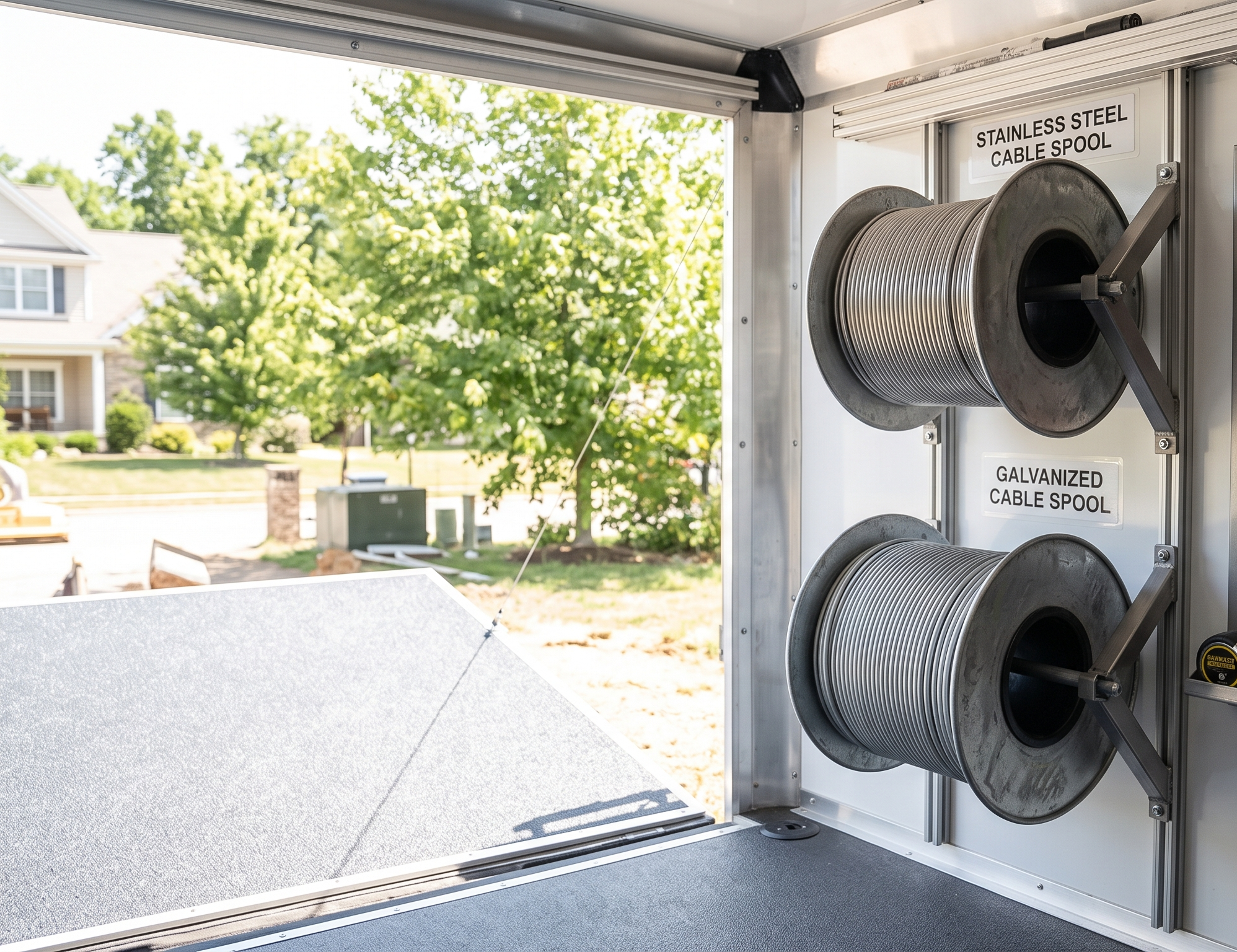
Using the right cable keeps your curbs structurally sound and free from ugly rust stains for decades. For most standard, dry-climate yards, galvanized cable does the trick. But if you’re working near coastal salt air, heavy sprinklers, or winter road salt, stainless steel is the best way to ensure the interior reinforcement matches the lifespan of the concrete.
Keep both types on hand so you’re always ready to match your reinforcement to the specific yard during your walk-through.
Ready to stock up? Browse stainless steel and galvanized cable in 5,000- and 10,000-foot quantities, or call (920) 740-2218 for more information.
Earn More With Natural Stone.

Click to Register

Create beautiful curb with unique stamps.

Looking to sell your equipment?
Let us help.


Ready to Order Your New Curbing Trailer? Request More Info.
Give us a call at (920) 740-2218 or simply fill out the form below to learn more about getting all the tools and training to get started. We make the process easy to start earning money in landscape curbing.