
Concrete curbing in extreme heat requires adjustments to the mix design, scheduling, and technique because high ambient temperatures accelerate hydration and shrink the finishing window fast. Above 90°F (common across Texas, Arizona, Florida, and Georgia from May through September), contractors who don’t adapt risk rough finishes, premature cracking, and callbacks. Curb Depot has equipped and trained curbing contractors across the southern U.S. and knows exactly where summer installs go wrong.
A contractor running a curbing route in the San Antonio area called in early July with a frustrating pattern: consistent surface cracking on jobs that were technically done right. Same machine, same mix ratios, same crew. The problem wasn’t his technique. It was timing. He was batching concrete mid-morning and finishing runs that took 20 minutes, but the surface was already skinning over before he could trowel the texture. Once he understood that 100°F ambient temps were cutting his workable window from 45 minutes to under 20, he restructured his whole operation. The cracking stopped.
Why Heat Shrinks Your Finishing Window
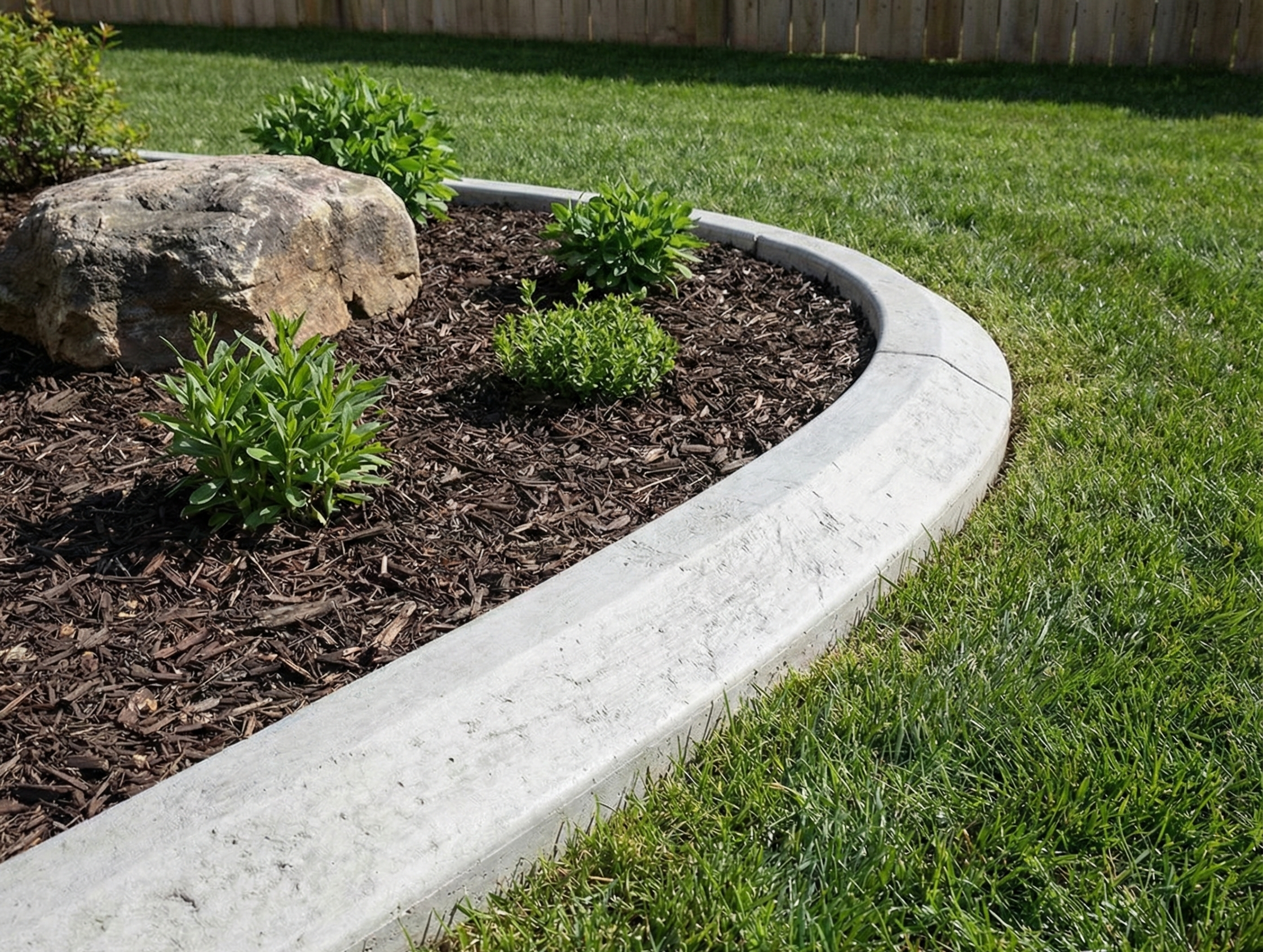
Concrete cures through a chemical reaction called hydration, and that reaction speeds up as temperature rises. At 70°F, a typical curbing mix gives you a comfortable working window. At 95°F, that same mix can begin stiffening much faster, sometimes in under 20 minutes depending on the mix design. Ground temperatures in southern states make this even more aggressive. Asphalt or sun-baked soil in Phoenix or Dallas can run significantly hotter than the air temperature, pulling heat directly into the bottom of the pour.
The result is a narrower window for troweling stamps, adding finishing texture, and cutting expansion joints. Miss it, and you’re either forcing the trowel through a stiffening surface (which tears the texture) or cutting joints into concrete that’s already hardened unevenly. Neither outcome is one you want a customer to see.
Mix Adjustments That Give You More Time
The most effective tool for extending your working window is water reduction paired with a quality admixture. Adding water to slow the set might seem logical, but it increases the water-cement ratio, which weakens the concrete and increases porosity. More porous concrete fades faster, stains more easily, and doesn’t hold edge definition the way a dense mix does.
Curb Depot’s Assurance Curbing Admixture is formulated specifically for extruded curbing mixes and improves workability without compromising the mix’s density or final strength. In summer conditions, it’s one of the most practical adjustments you can make to a batch without changing everything else about your process.
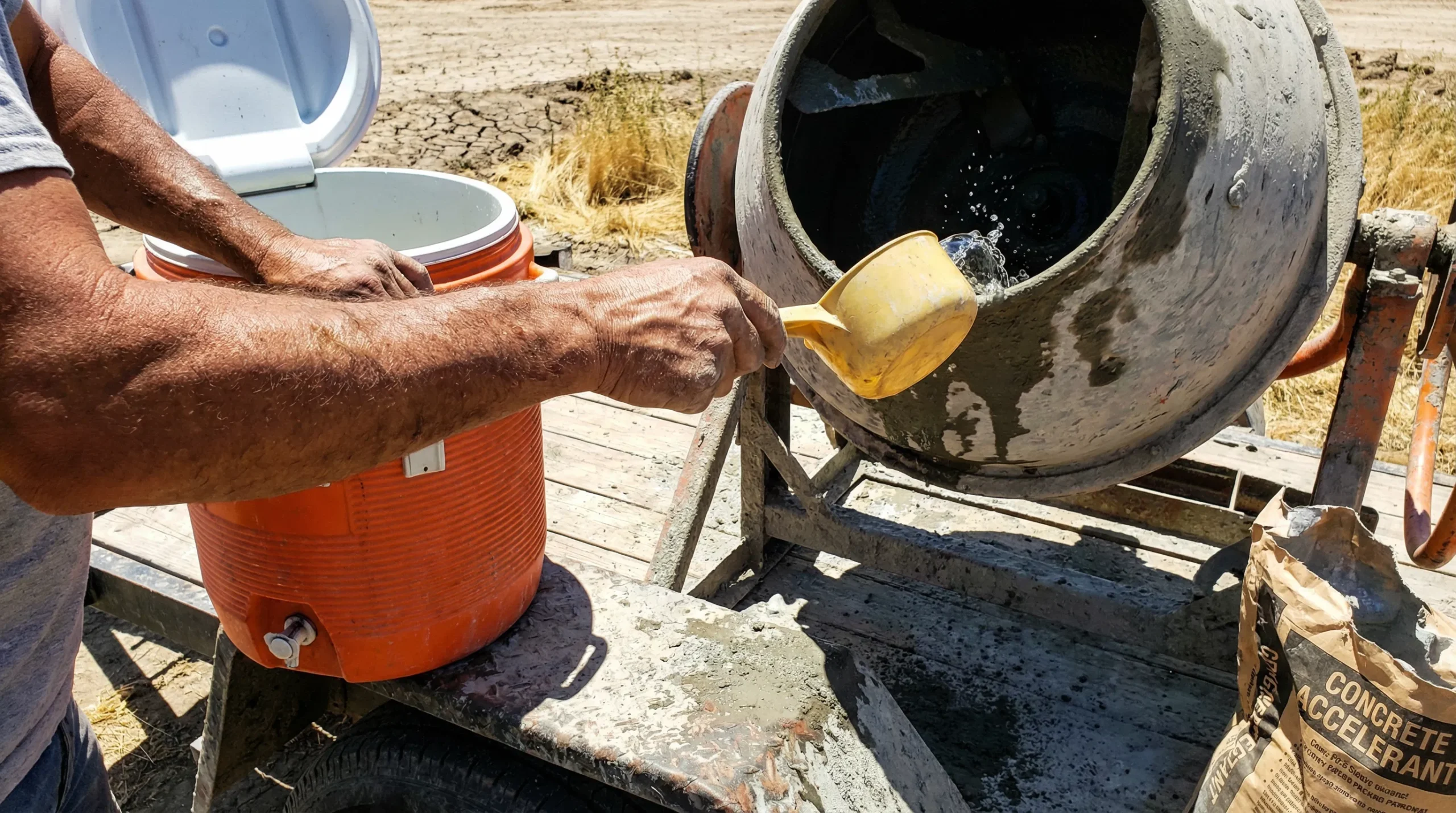
Cold water in the mix also helps. Some contractors in Phoenix and Houston keep a cooler of ice water on the trailer specifically for summer batches. Pre-wetting aggregate before mixing reduces heat absorption from materials that have been sitting in the sun.
How To Manage Curbing Jobs in Hot Weather
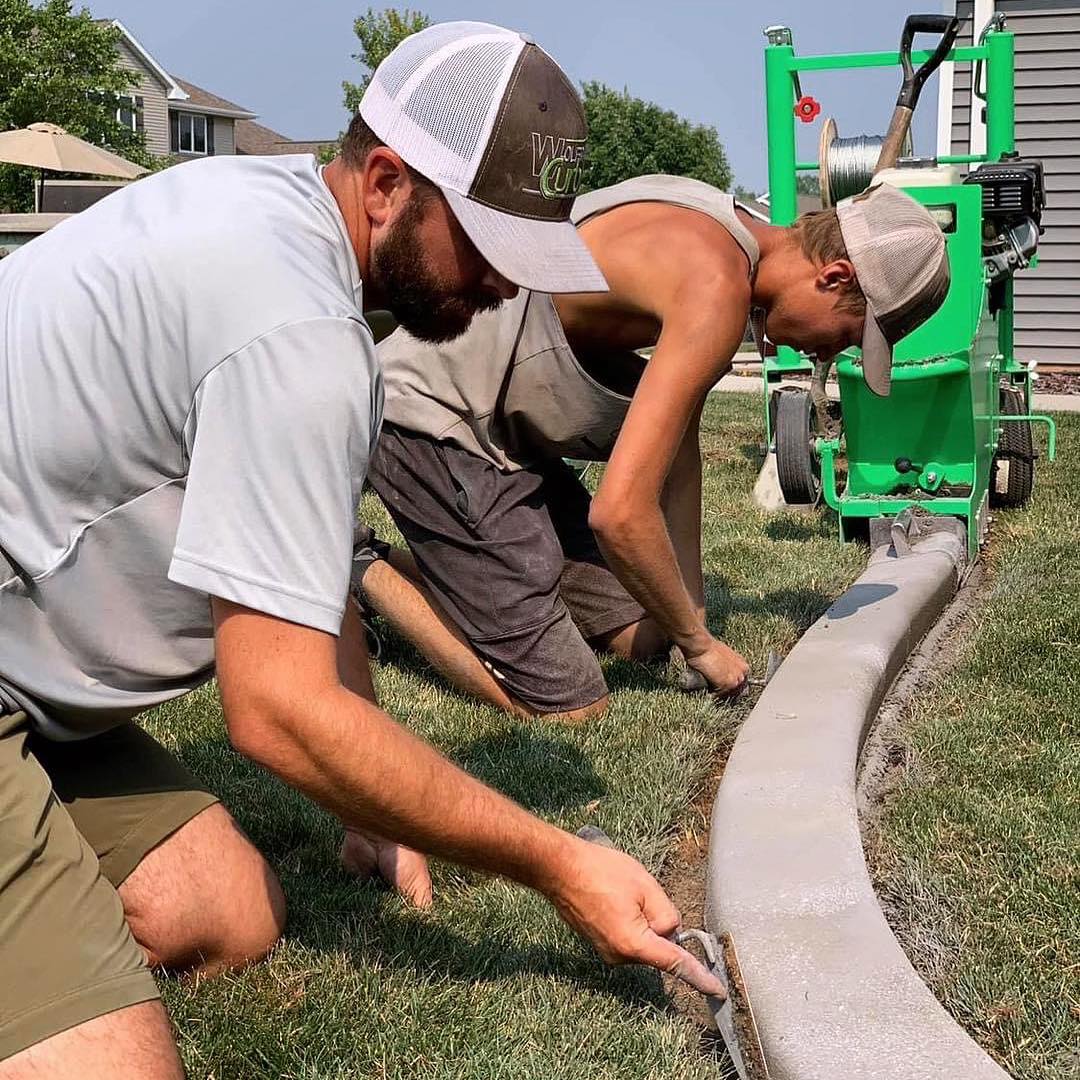
Heat affects everything from mix consistency to finishing time. These adjustments keep jobs on track when temperatures climb.
Start Earlier
The single most effective change most contractors can make is starting earlier. In Florida, Georgia, and coastal Texas, jobs that begin at 6:30 a.m. finish the majority of the pour before peak heat arrives. That means your crew is finishing concrete in 85°F instead of 100°F, a meaningful difference in working time.
Break Larger Jobs Into Shorter Runs
Breaking larger jobs into shorter runs also helps. Extrude 30 feet, finish and stamp it completely, then move to the next run. This approach keeps the material in front of you workable rather than letting a long run skin over while you’re still behind the machine.
Watch the Forecast, Not Just the Thermometer
In Arizona and the Texas Hill Country, afternoon monsoon and thunderstorm patterns can also affect scheduling. Concrete poured just before a storm front arrives, where humidity spikes and temperature drops sharply, can cure unevenly. Watch the forecast, not just the thermometer.
Crew Safety Isn’t Separate From Job Quality
Heat stress affects judgment and coordination before it produces obvious symptoms. A crew member who’s dehydrated or approaching heat exhaustion makes different decisions: slower troweling speed, inconsistent stamp pressure, skipped expansion joints. The finish suffers before the contractor realizes the crew is struggling.
Regular hydration breaks every 45 to 60 minutes, shade access near the trailer, and a clear protocol for rotating crew off the surface are practical standards for any curbing operation working in sustained heat above 90°F. Starting early also means the heaviest physical work happens before the day gets dangerous.
Summer heat doesn’t have to mean compromised work. It means adjusting the work. The Curb Depot training program covers mix design, scheduling, and installation technique so contractors in hot climates build these adjustments into their process from the start. Understanding how ambient conditions affect the long-term durability of concrete curbing is what separates contractors who build referral-generating reputations from those chasing callbacks.
Frequently Asked Questions
Should I use a retarder in hot weather curbing mixes?
Retarders can extend working time in extreme heat, but they require careful calibration. Too much retarder in a hot mix can cause the surface to remain workable while the interior stiffens at a different rate, leading to surface delamination. Most experienced contractors in southern markets get better results through early scheduling and mix temperature control rather than chemical retarders alone.
How does humidity in Florida and Georgia affect summer curbing differently than dry desert heat?
High humidity slows surface evaporation, which can actually work in your favor compared to the desert—but it also means the concrete doesn’t release moisture as quickly, which affects curing consistency. In Arizona and West Texas, the opposite problem occurs: rapid surface evaporation can dry the top of the curbing before the interior has fully hydrated, producing a brittle surface layer. Each climate requires its own approach.
What’s the best indicator that a summer installation has been compromised during the job?
Watch the surface sheen. Fresh extruded concrete has a slight moisture sheen that disappears as the surface begins to set. In extreme heat, if that sheen disappears within 10 minutes of extrusion—before you’ve had time to trowel and stamp—you’re already behind. Curb Depot trains contractors to recognize these timing signals early so they can adjust run length or batch timing on the fly.
Build Summer Into Your Standard Process
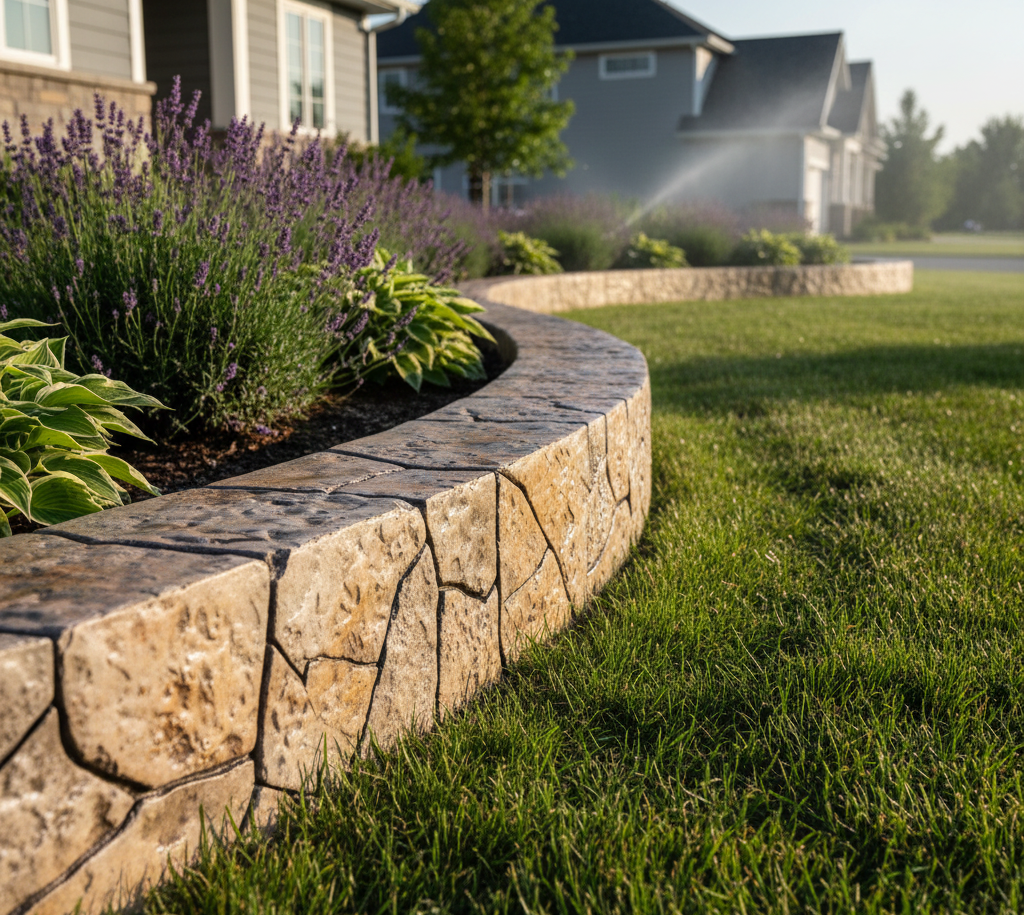
Hot weather curbing isn’t a specialty skill. It’s an adjustment to a process you already know. The contractors running the most profitable operations in Texas, Arizona, and Florida aren’t fighting summer; they’ve built it into their scheduling, their material prep, and their crew protocol. Those decisions are entirely within your control.
If you’re building a curbing operation in a southern market or looking to tighten up your summer process, explore Curb Depot’s curbing packages built for contractors at every stage, or reach out directly to talk through the right setup for your climate and market.
Earn More With Natural Stone.

Click to Register

Create beautiful curb with unique stamps.

Looking to sell your equipment?
Let us help.






Ready to Order Your New Curbing Trailer? Request More Info.
Give us a call at (920) 740-2218 or simply fill out the form below to learn more about getting all the tools and training to get started. We make the process easy to start earning money in landscape curbing.