If you just unpacked a curbing machine and are trying to understand what you’re actually looking at before firing it up on the first paying job, this is the primer to read. Read on for the mechanics of the extruder, the operator technique that shapes the final curb, and the maintenance routine that keeps it running throughout the season.
What Happens Inside the Hopper?
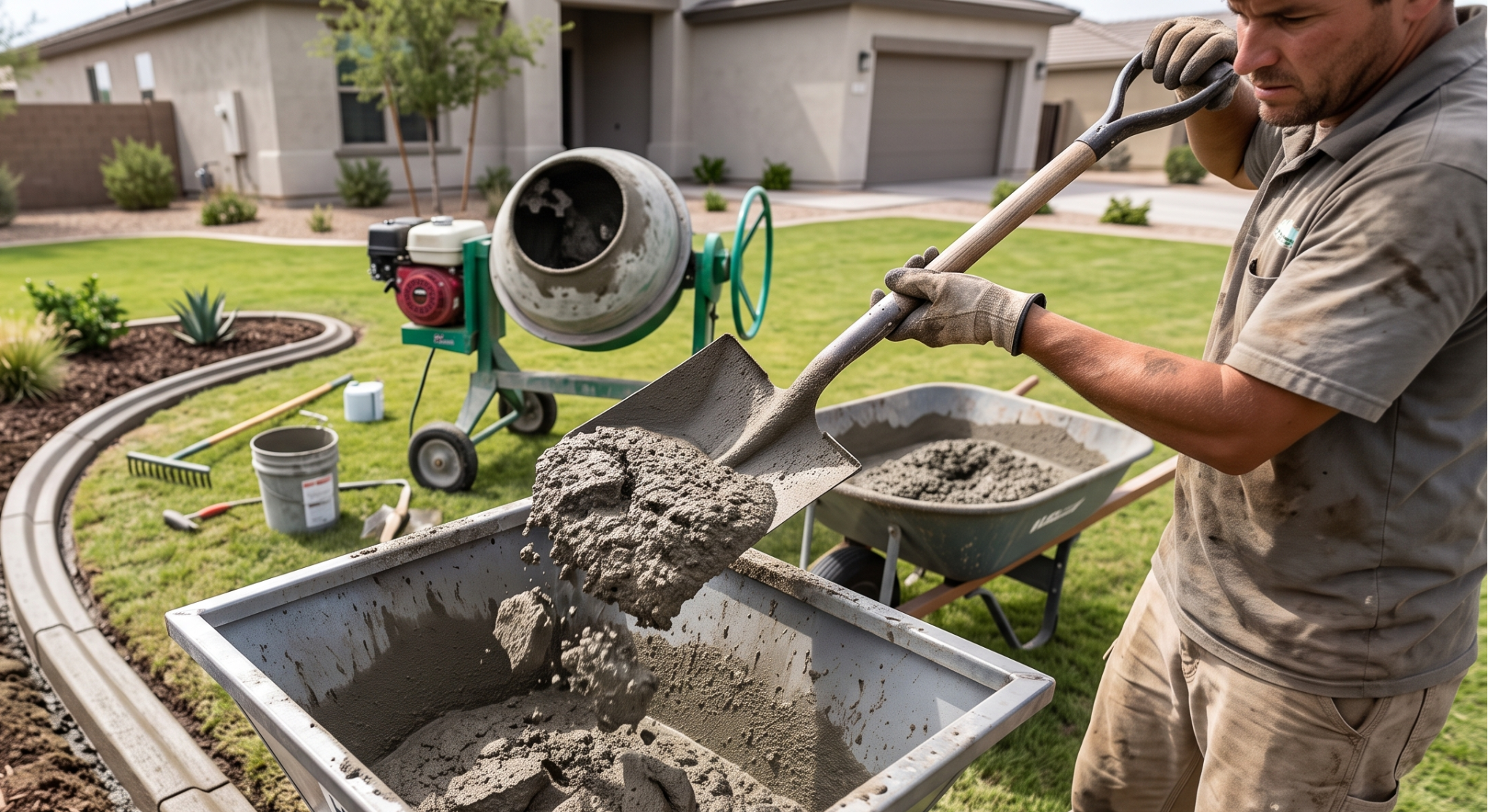
The hopper is the top-loaded holding chamber where a helper drops freshly mixed concrete a few shovel-loads at a time. The mix sits on top of the extrusion assembly and feeds downward as the plunger cycles. The consistency has to be right. If it’s too wet, the curb slumps out of shape. Too stiff and the plunger stalls or leaves voids in the pour.
Assurance Curbing Admixture, mixed into the concrete during batching, tightens the workability window so the operator has more margin between too-wet and too-stiff. The hopper also carries the cable spool bracket on most machines, feeding a continuous length of stainless or galvanized cable through the mold assembly along with the concrete.
How the Mold and Plunger Shape the Curb
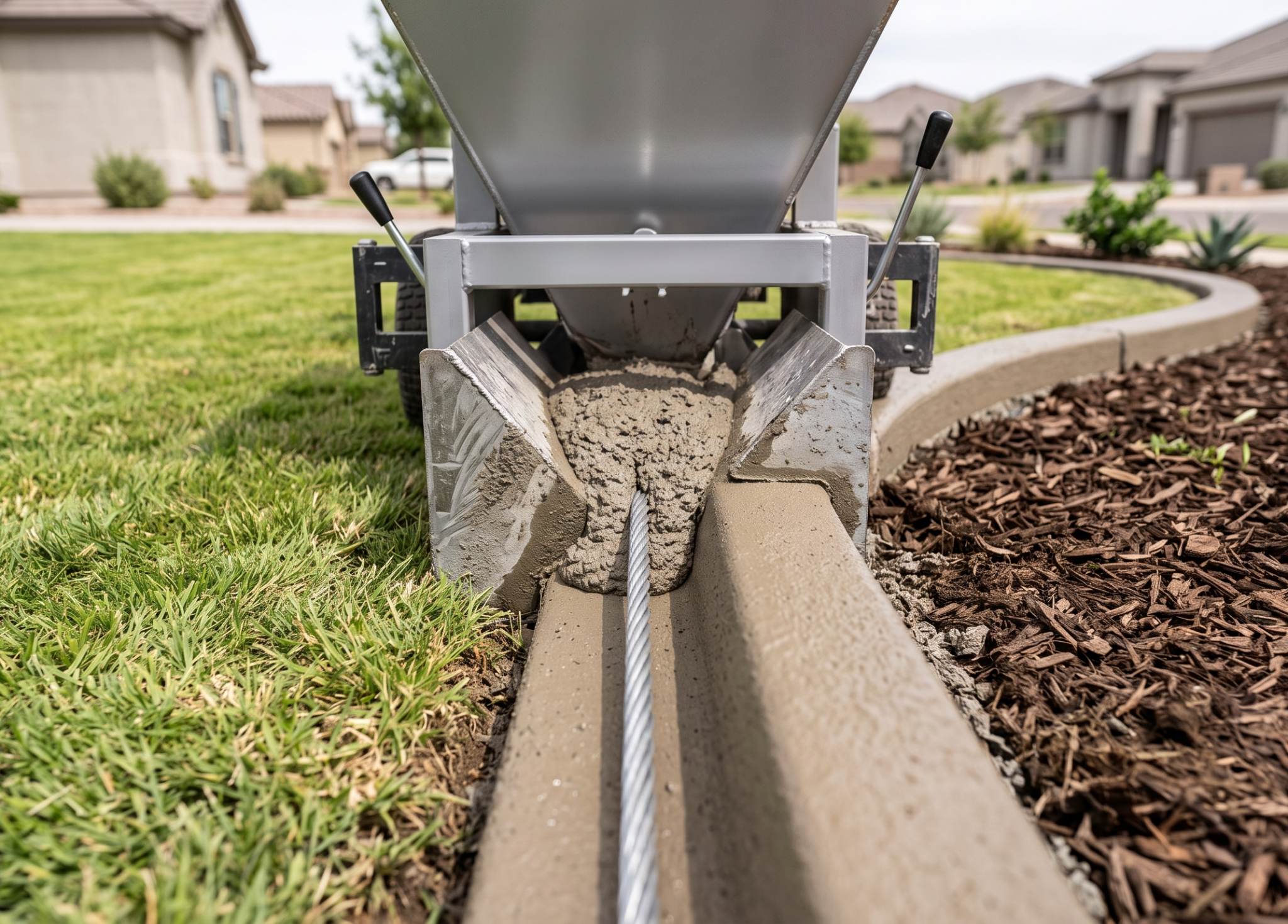
The mold sits at the bottom of the extrusion assembly and shapes the concrete into the selected profile: slant, mower, square, or whichever mold is loaded. On a Harpten, changing the mold takes about 10 seconds using the boltless quick-release system, faster than the swap on older machines.
The plunger is the mechanical heart of the extruder. It cycles vertically and pushes concrete down through the mold, compacting the mix as it goes. The Harpten’s 1-inch plunger lift produces tighter compaction and fewer voids than a shorter-lift design, which shows up in a denser, longer-lasting finished curb. As the plunger cycles, the machine leaves a continuous formed curb behind it on the ground.
How the Operator Actually Runs the Machine
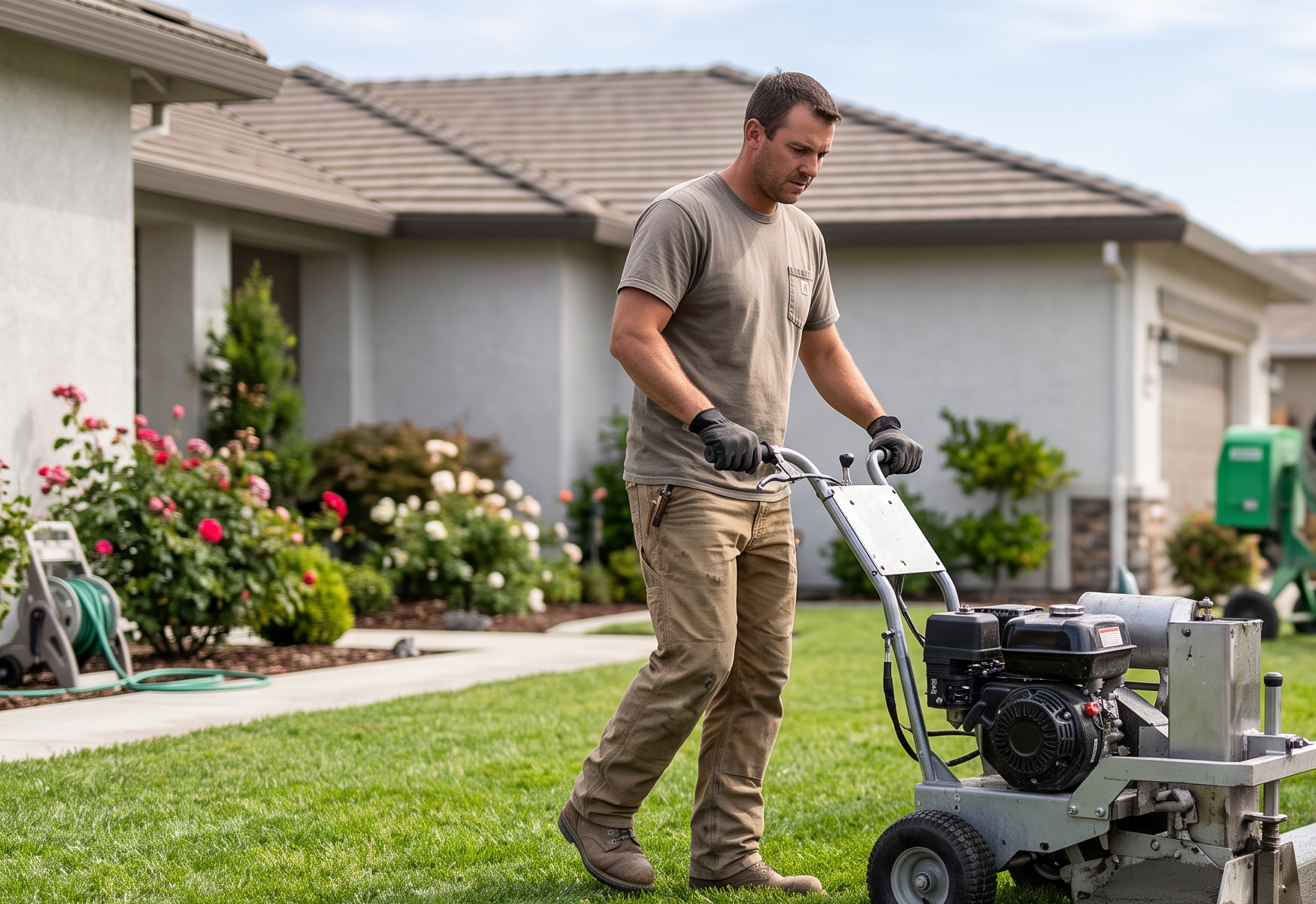
Operators use a curbing machine by walking behind it and controlling the forward pace by hand. Pushing too fast thins out the concrete and leaves voids, while pushing too slowly causes the curb to bulge. The machine’s own weight and the belt tensioner help set the base rhythm. The operator fine-tunes it by feel over the first several jobs on a new machine.
Cable placement is the operator’s second job. The cable is fed through a guide as the mix is extruded. Consistent placement toward the center of the cross-section protects the reinforcement from moisture across the curb’s service life.
Maintenance That Keeps the Machine Running
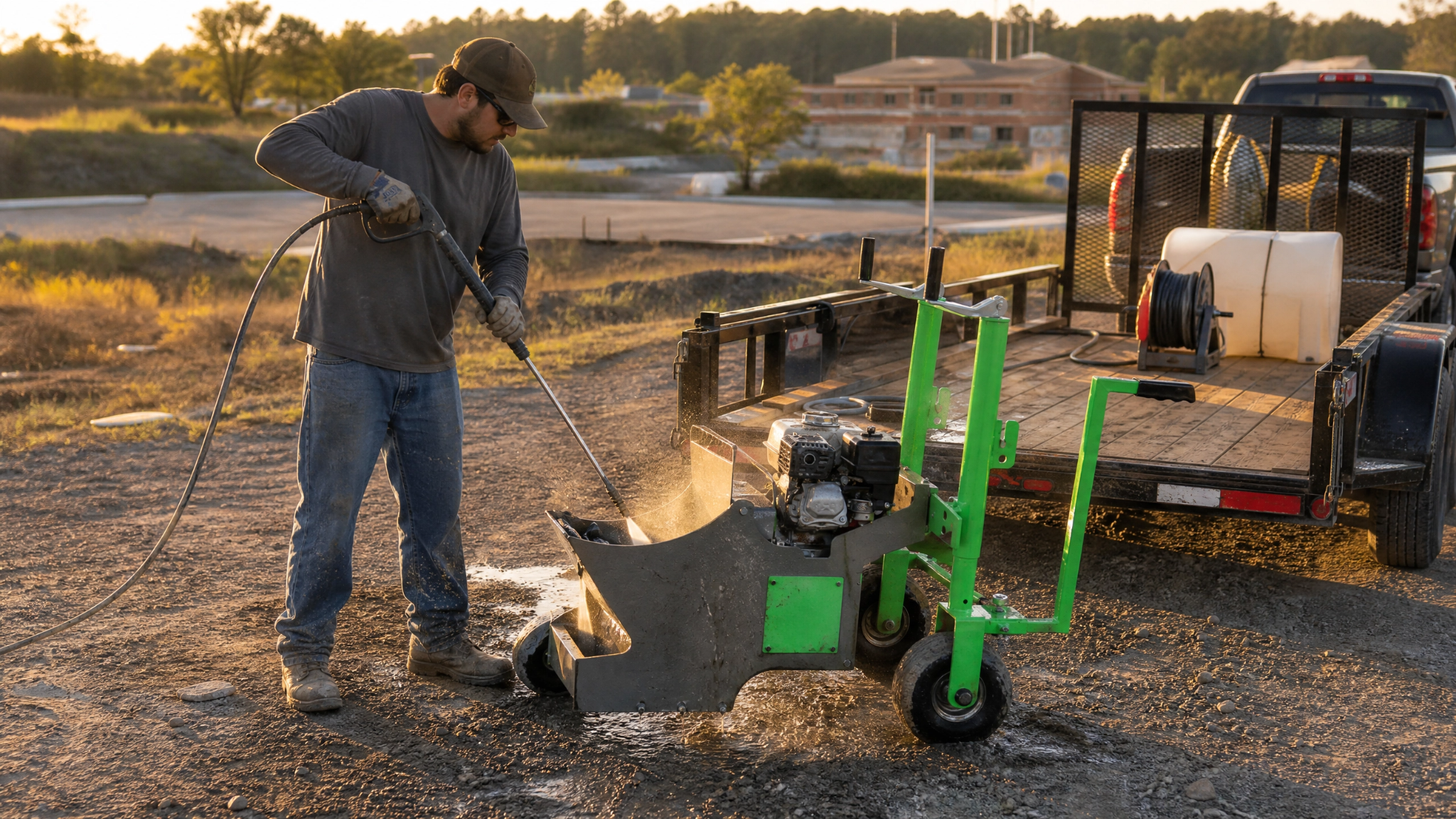
An extruder that runs six days a week throughout peak season needs curbing machine maintenance to match. Wash the hopper and mold thoroughly after every job before concrete sets. Check the belt tension weekly. Inspect the plunger and plunger arm monthly for wear.
Bearings on the auger, track, and trolley on traditional machines need periodic service; the Harpten’s no-guts design eliminates most of those wear points, which is why the machine holds up longer between service intervals.
Frequently Asked Questions
How long does it take to learn to run a curbing machine well?
Learning to run a curbing machine well takes roughly 20 to 40 hours of paid work though most new operators can produce a passable straight run within a few hours of hands-on practice. Practice usually includes producing clean curves, consistent height, and premium stamped finishes. Curb Depot’s Curbing 101 training compresses that timeline by combining classroom explanation with full job simulation and coached extrusion.
What kind of concrete mix works best in an extruder?
The kind of concrete mix that works best in an extruder is a relatively stiff low-slump blend because it holds the extruded profile without slumping out of shape after the machine passes. A standard bagged mix works when adjusted for water content; a curbing additive like the curbing Assurance admixture tightens the workable window so the operator has more leeway with temperature and humidity variance.
Can one person run the curbing machine solo?
One person can’t run the curbing machine solo on a real job. A two-person crew is standard: one operator walking the machine and one helper mixing and loading concrete into the hopper continuously. Solo operation is possible for very short demo runs, but it’s too slow to be profitable on a paying project.
Ready to Put the Harpten to Work on Your Next Job?
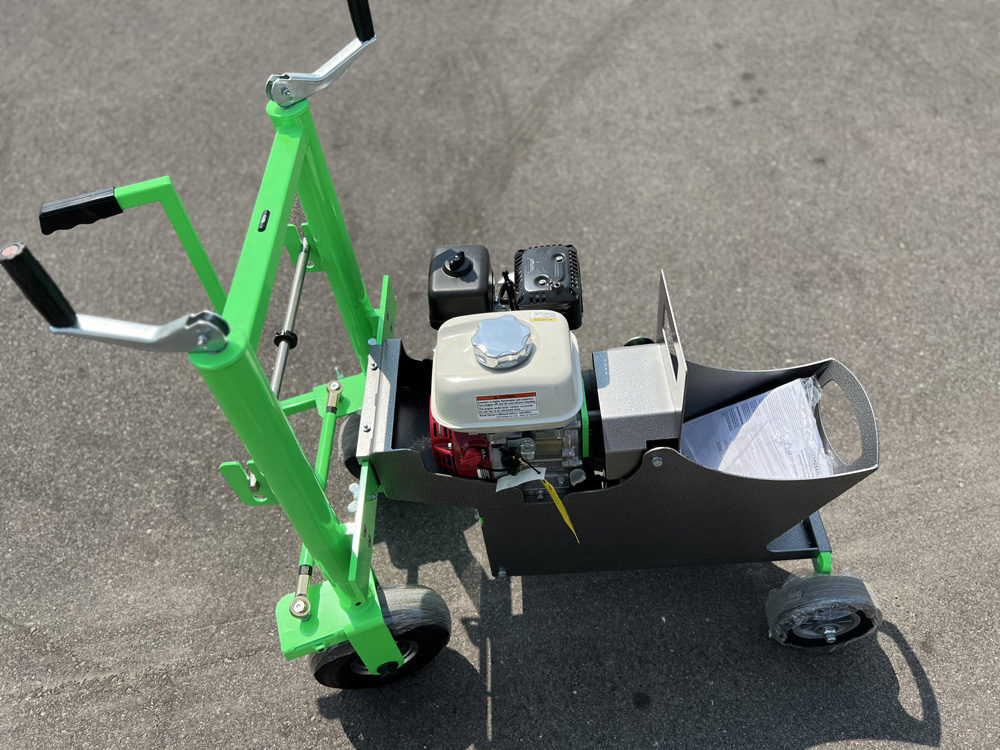
Your crew’s daily profits directly depend on your equipment and your operator’s technique. Mastering the mechanics of the extruder, keeping your reinforcement cable perfectly centered, and staying on top of daily maintenance will protect your margins and ensure you deliver a clean, durable product to every homeowner. Consistent, high-quality curbing starts with reliable gear.
To add a Harpten curbing machine to your trailer or ask about our hands-on training programs, get in touch through the Curb Depot contact page or call us directly at (920) 740-2218.
Earn More With Natural Stone.

Click to Register

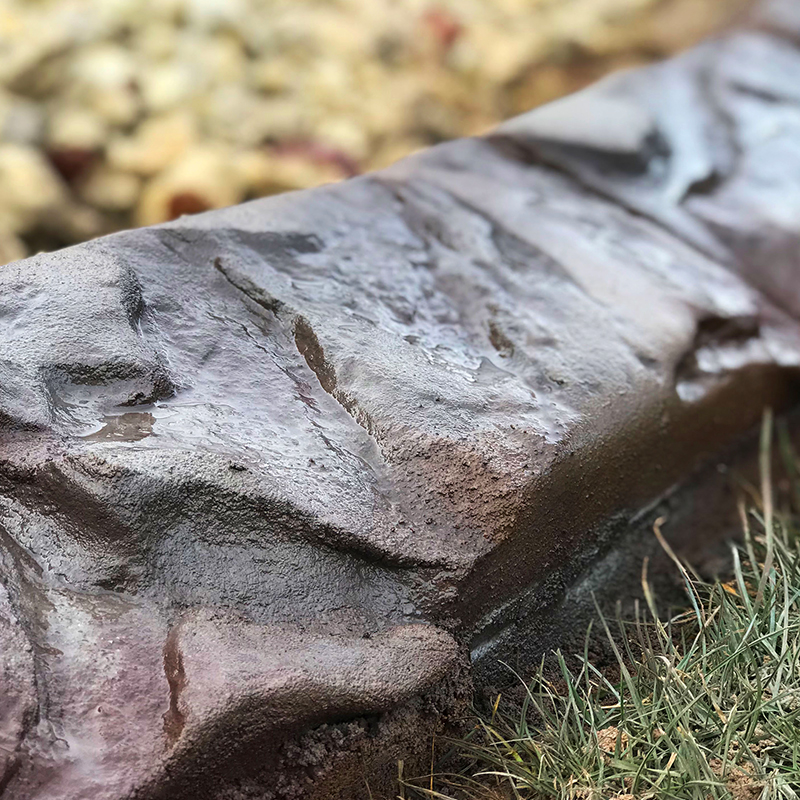
Create beautiful curb with unique stamps.

Looking to sell your equipment?
Let us help.






Ready to Order Your New Curbing Trailer? Request More Info.
Give us a call at (920) 740-2218 or simply fill out the form below to learn more about getting all the tools and training to get started. We make the process easy to start earning money in landscape curbing.