Sealer failure is the fastest way to shorten a curbing job’s visible lifespan. Unsealed curbs become stained from grass clippings and irrigation runoff, fade in direct sun, and let moisture into the surface where freeze-thaw does the rest. The good news is that the failure is entirely preventable, and the choice takes about two minutes to explain on a walk-through. This guide walks through the chemistry, the recoating math, and the client conversation that helps you sell sealing as an add-on service.
How Acrylic Sealers Actually Perform
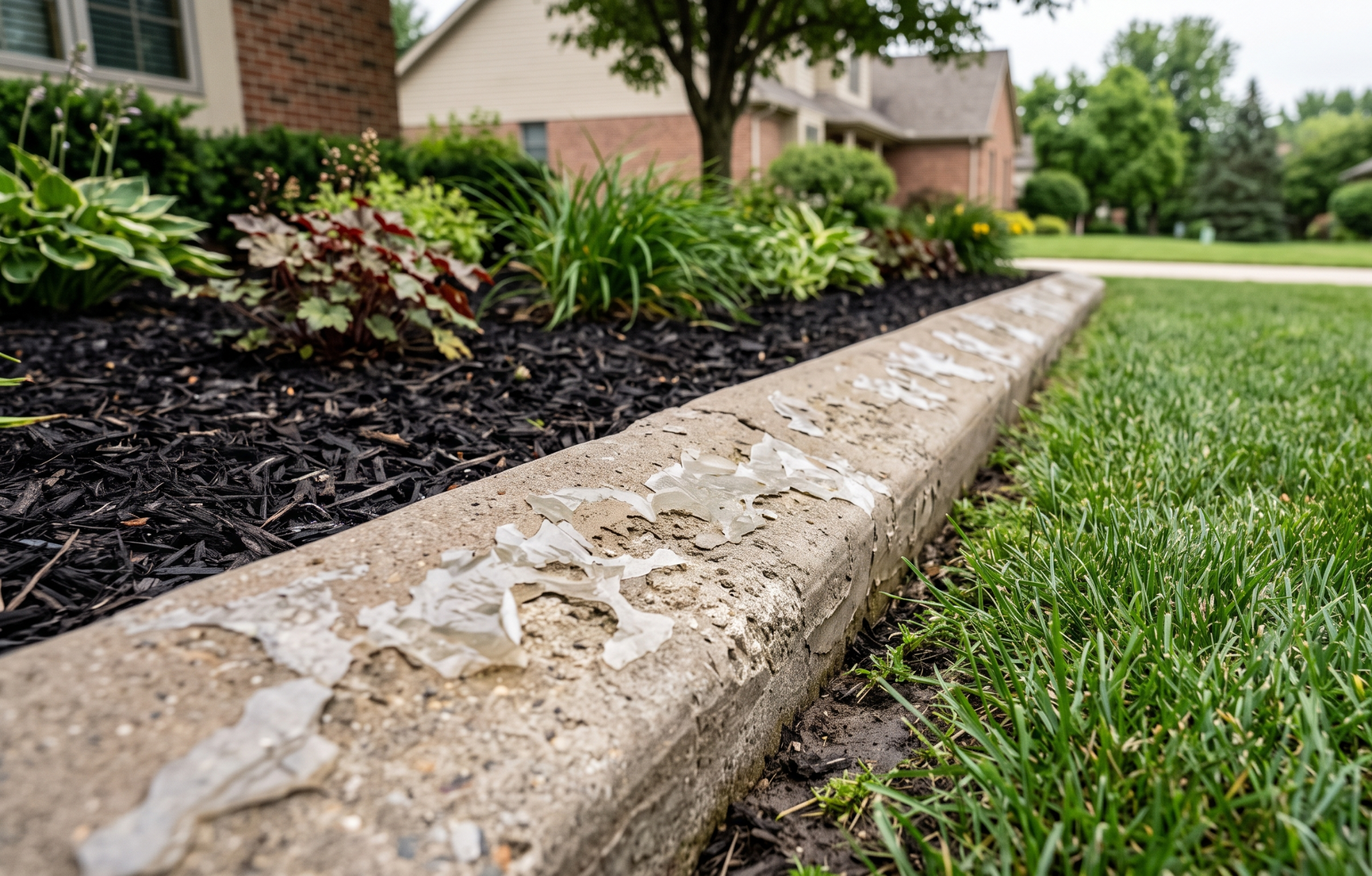
Acrylic sealers are the standard choice for entry-level projects. While they are highly affordable upfront, they require regular maintenance to keep the concrete protected.
The Pros: Fast and Affordable
- Low upfront cost: They are the cheapest option per square foot to apply.
- Quick curing: Both water-based and solvent-based formulas dry and cure rapidly.
- Color enhancement: They quickly deepen the color of fresh, integrally colored concrete, bringing out its natural richness.
The Cons: Frequent Maintenance and UV Damage
- Short lifespan: UV rays break down acrylic within one to three years in direct sunlight, leaving the surface looking flat and faded.
- Moisture issues: As the protective film wears thin, the concrete absorbs more water.
- Freeze-thaw damage: In cold climates, trapped moisture expands when it freezes, popping the sealer off in unsightly patches.
- Contractor callbacks: This rapid wear cycle often leads to unhappy customers and unpaid service calls that eat up your afternoons.
The Bottom Line: Acrylic is a great, budget-friendly option for quick turnarounds or shaded yards, but you must make sure your clients understand that they’re signing up for a regular maintenance cycle.
What Polyaspartic Does Differently
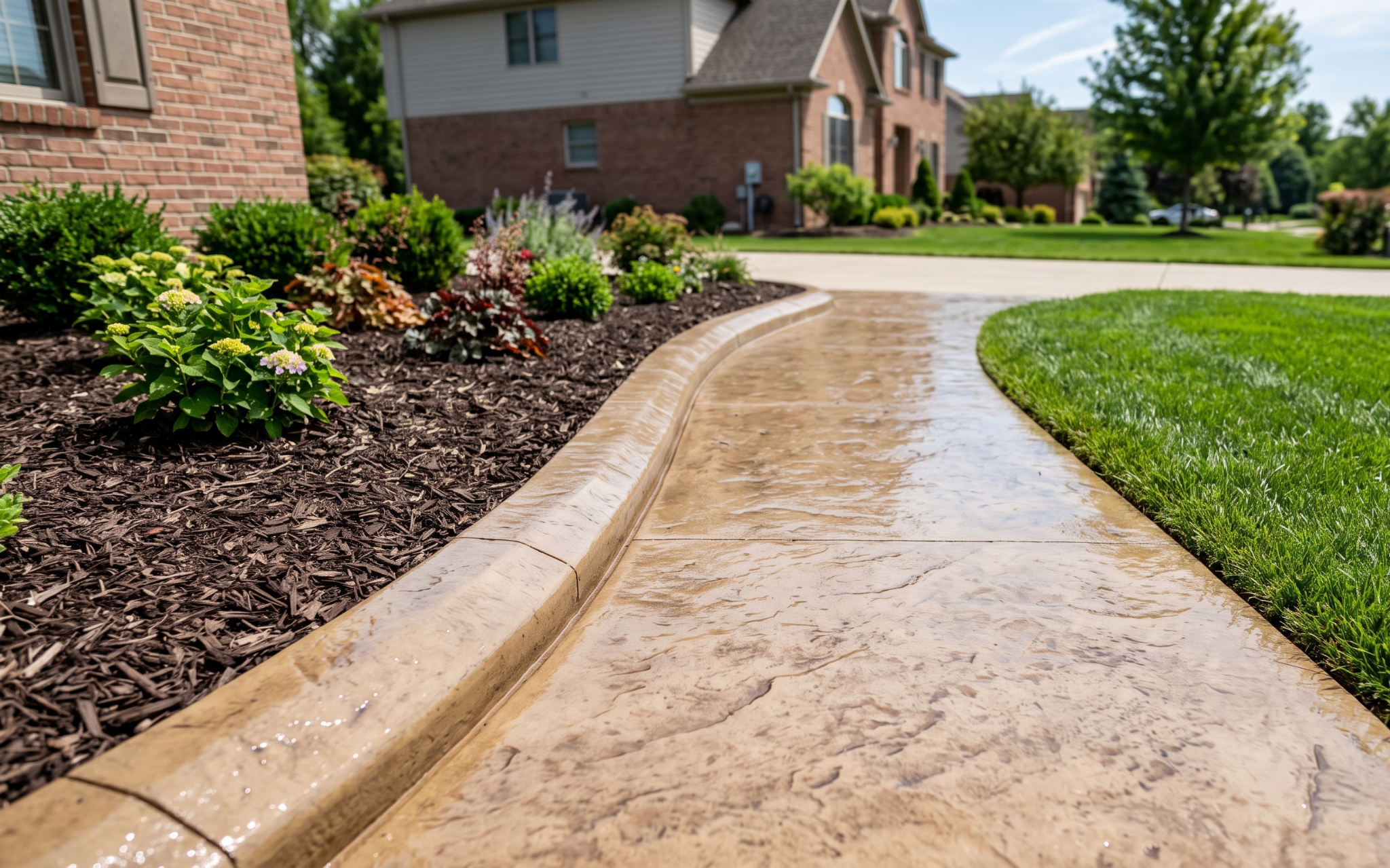
Sealing concrete landscape curbing with polyaspartic costs more upfront, but it provides incredibly tough, long-lasting protection.
The Pros: Over Five Years of Protection
- Chemical cross-linking: Instead of laying down a soft film, it bonds chemically to the concrete, making it highly resistant to UV rays and wear.
- Fewer recoats: It easily lasts five or more years before needing a refresh, depending on the local climate.
- Superior barrier: It holds its gloss, resists stains from grass clippings and fertilizer, and blocks out water to protect the curb through freezing winters.
The Cons: Premium Pricing and Precise Application
- Higher material cost: It costs several times more per gallon than standard acrylic.
- No room for mistakes: It cures so quickly that you have to apply it fast to avoid leaving visible lap marks.
- Strict prep required: The concrete surface must be completely clean and dry, or the sealer will fail to bond.
The Bottom Line: While polyaspartic demands more skill and a higher initial investment, its durability makes it the easiest sell for any homeowner who wants a beautiful, worry-free landscape for years to come.
The Recoating Math That Seals the Deal
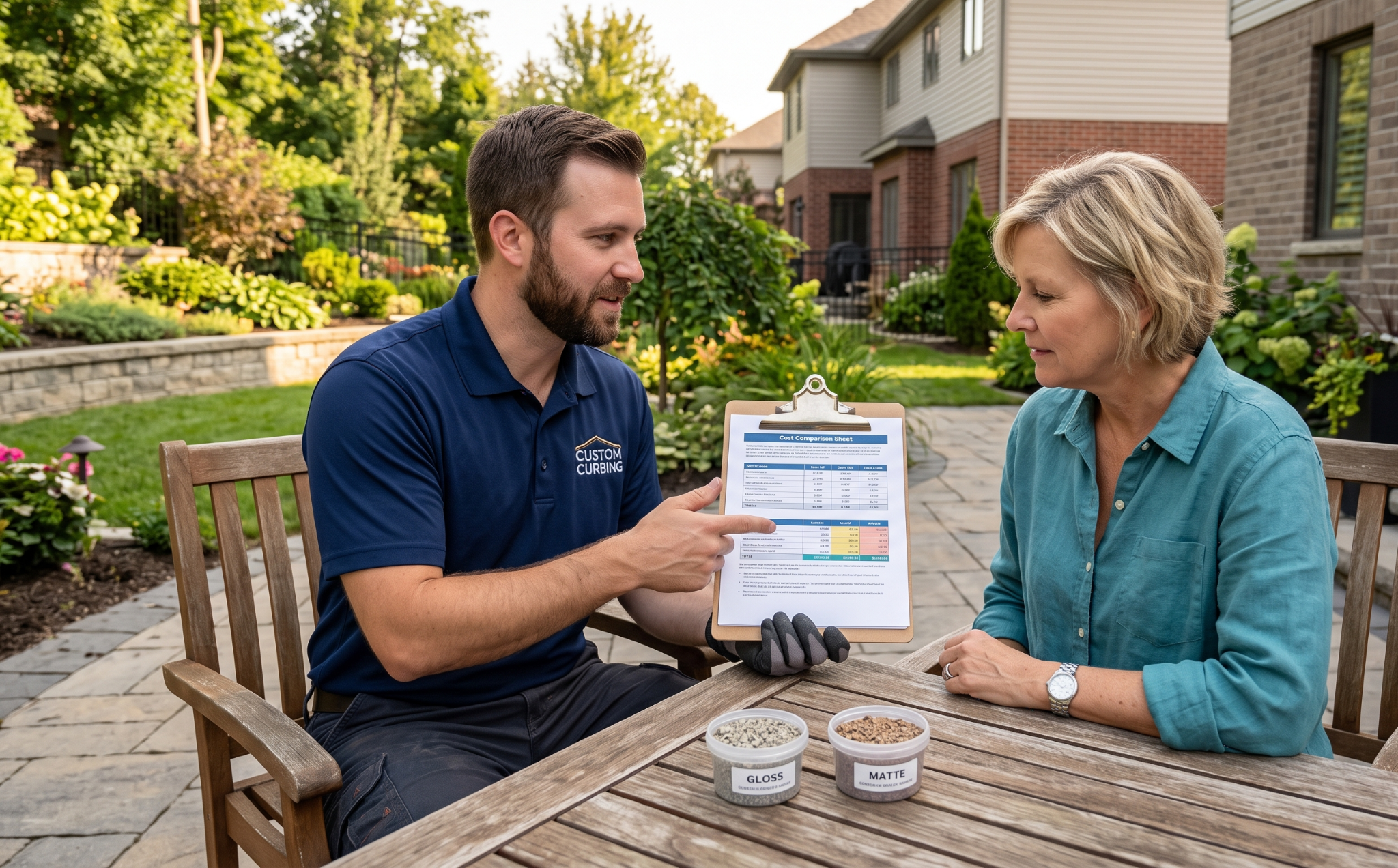
Present both options to the customer with the ten-year cost. On a typical 200-foot curb run, acrylic requires four to six applications across ten years including labor call-backs. Polyaspartic requires one initial application and one refresh. While polyaspartic costs more upfront, avoiding ten years of repeated labor makes it the cheaper option in the long run.
Frame it that way on the sales call. Most homeowners have never been given the ten-year picture on a sealer, but once they see it, the upgrade becomes more compelling.
Which Sealer Fits Which Job?
When selling to a homeowner, don’t focus on the upfront price per gallon. Instead, show them the total cost of ownership over ten years. Breaking down the math makes the premium choice an easy decision:
Option A: The Standard Acrylic Plan
- Applications needed: 4 to 6 coats over 10 years.
- The reality: Because acrylic breaks down quickly under UV light and freeze-thaw cycles, the homeowner has to pay for labor and materials over and over again.
- The hidden cost: For the contractor, this frequent cycle means a high risk of unpaid callbacks to fix peeling patches. For the homeowner, it means constant scheduling and accumulating service fees.
Option B: The Premium Polyaspartic Plan
- Applications needed: Only 2 coats over 10 years (the initial application plus one quick refresh around year five).
- The reality: Polyaspartic’s heavy-duty chemical bond shrugs off sun and water, keeping the curb protected with a fraction of the effort.
- The savings: While the material costs more on day one, cutting out three to four entire application visits saves so much labor that polyaspartic almost always ends up being the cheaper long-term number.
How to Use This on a Sales Call
Many homeowners ask how long concrete curbing lasts, but they rarely realize how much the sealer they choose impacts that timeline. By changing the conversation from “what does this cost today?” to “what will this cost you over the next decade?”, you remove the pressure and let the math close the upgrade for you.
Frequently Asked Questions
Can polyaspartic sealer be applied over an existing acrylic-sealed curb?
You can apply a polyaspartic over an existing acrylic-sealed curb only after the acrylic is fully stripped or has weathered off completely. Polyaspartic bonds to bare concrete and to itself, but not reliably to a soft acrylic film. Skipping the strip step traps the acrylic under the polyaspartic and causes delamination when the softer layer eventually fails underneath the harder one.
How long should a curb cure before applying any sealer?
Allow a curb to cure for at least 28 days before applying a sealer regardless of type. Any earlier and the residual moisture gets trapped in the curb, which then blisters the sealer within the first year. Some fast-cure polyaspartic products carry shorter approved curing windows per the manufacturer’s spec sheet, so verify the specific product before scheduling the seal date.
Does polyaspartic yellow the way some polyurethane sealers do?
No, polyaspartic doesn’t yellow the way some polyurethane sealers do. Polyaspartic is engineered as a UV-stable topcoat, unlike aromatic polyurethane which yellows under sunlight over time. That UV stability is one of the main reasons polyaspartic outperforms cheaper sealers on decorative stamped curbing where color fidelity matters most to the customer and to the finished landscape.
Sell the Sealer as Part of the Job
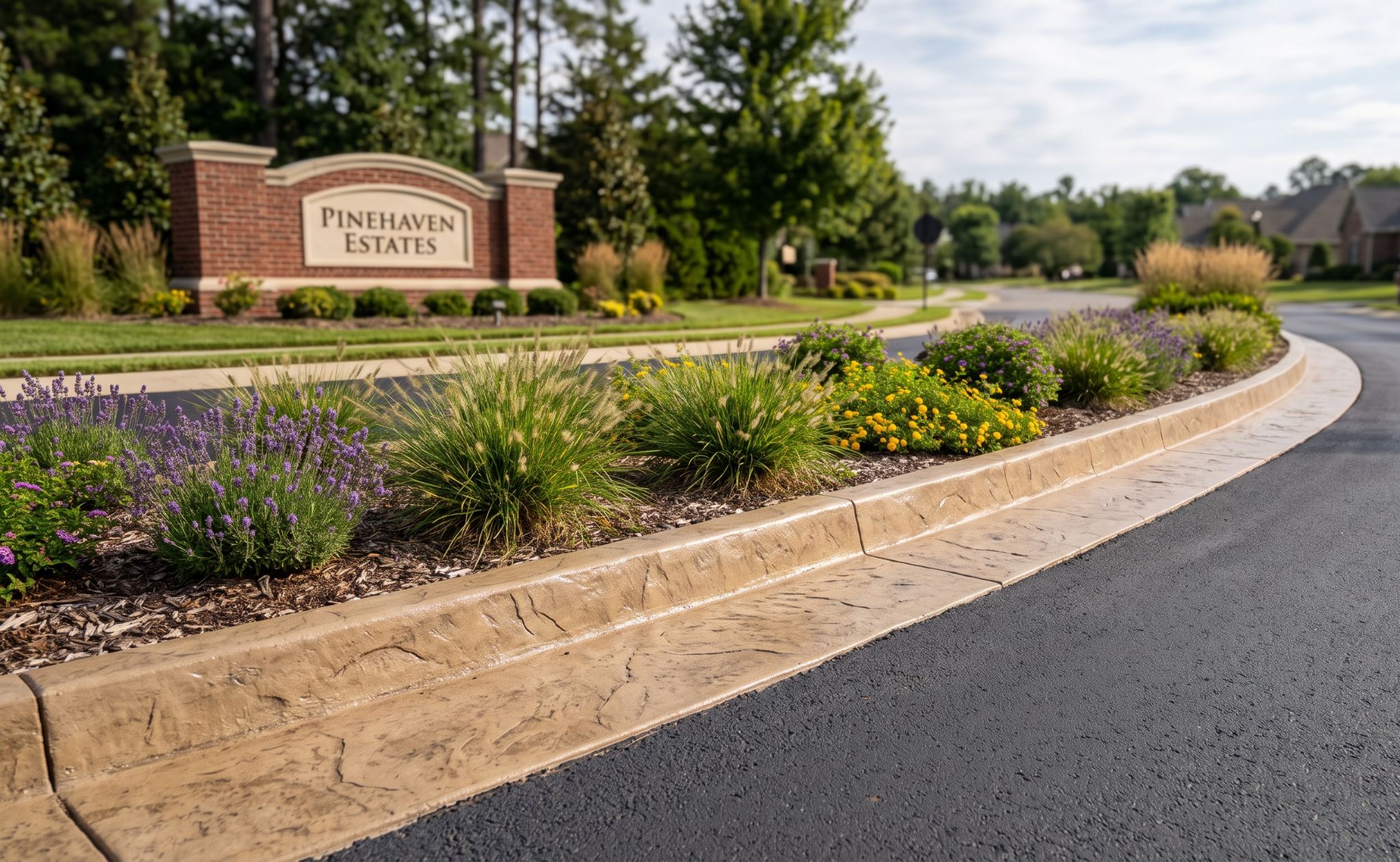
Every curbing quote is really a two-part decision: the initial pour and the sealer. When you list the sealer as a separate line item and show the 10-year math, you make the maintenance upgrade an easy choice. Contractors who take two minutes to explain the difference between acrylic and polyaspartic close high-end sealing services at a much higher rate than those who just slap on whatever cheap product they have left in the truck.
Ready to scale your business, upgrade your machinery, or master the hands-on skills needed to run a highly profitable curbing crew? We have the equipment, training, curbing consumables, and contractor support to help you succeed. Call us directly at (920) 740-2218 for inquiries.
Earn More With Natural Stone.

Click to Register

Create beautiful curb with unique stamps.
Looking to sell your equipment?
Let us help.

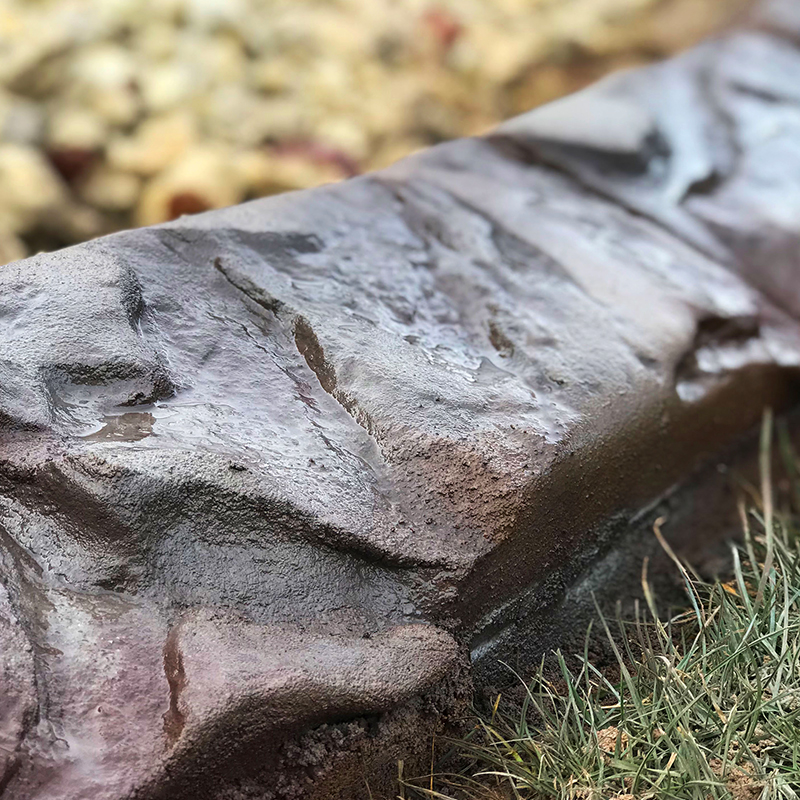

Ready to Order Your New Curbing Trailer? Request More Info.
Give us a call at (920) 740-2218 or simply fill out the form below to learn more about getting all the tools and training to get started. We make the process easy to start earning money in landscape curbing.