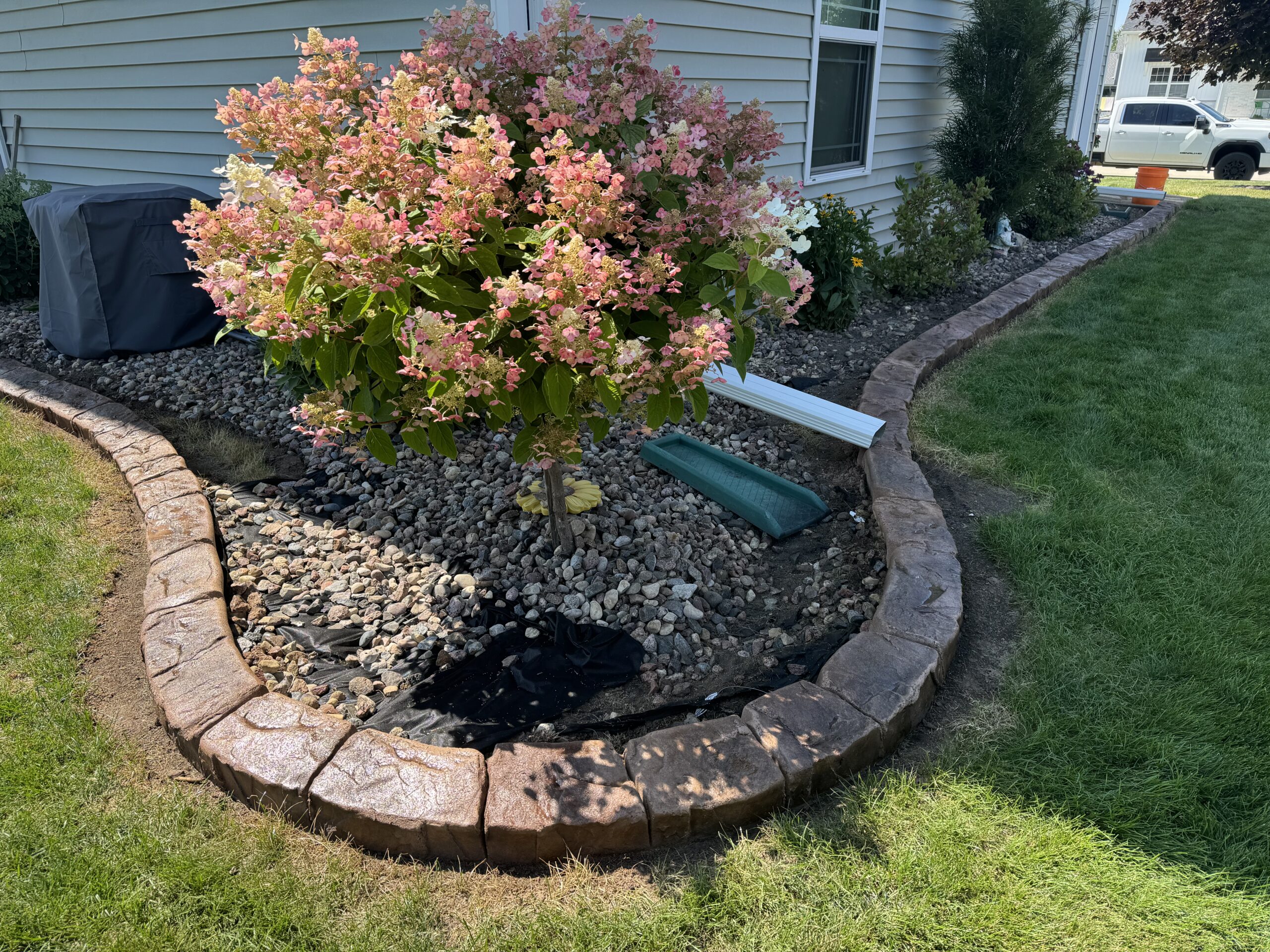
Sealing concrete landscape curbing protects integral color from fading, prevents surface spalling in freeze-thaw conditions, and can be the difference between curbing that lasts 10-15 years and curbing that lasts 25-30 years or more. For curbing contractors, sealing is one of the easiest recurring revenue streams. Curb Depot recommends applying a quality sealer 28-30 days after installation, then resealing every 2-3 years.
Most concrete curbing doesn’t fail because of structural problems. It fails because of surface neglect. The most common cause of premature curbing deterioration is color loss and spalling (surface flaking) that set in when curbing goes unsealed year after year. The fix costs $50 to $100 in sealer material and a few hours of labor every couple of years, which means it’s a high-margin add-on for contractors and an easy sell to customers who want to protect their investment.
Why Most Curbing Fails Before Its Time
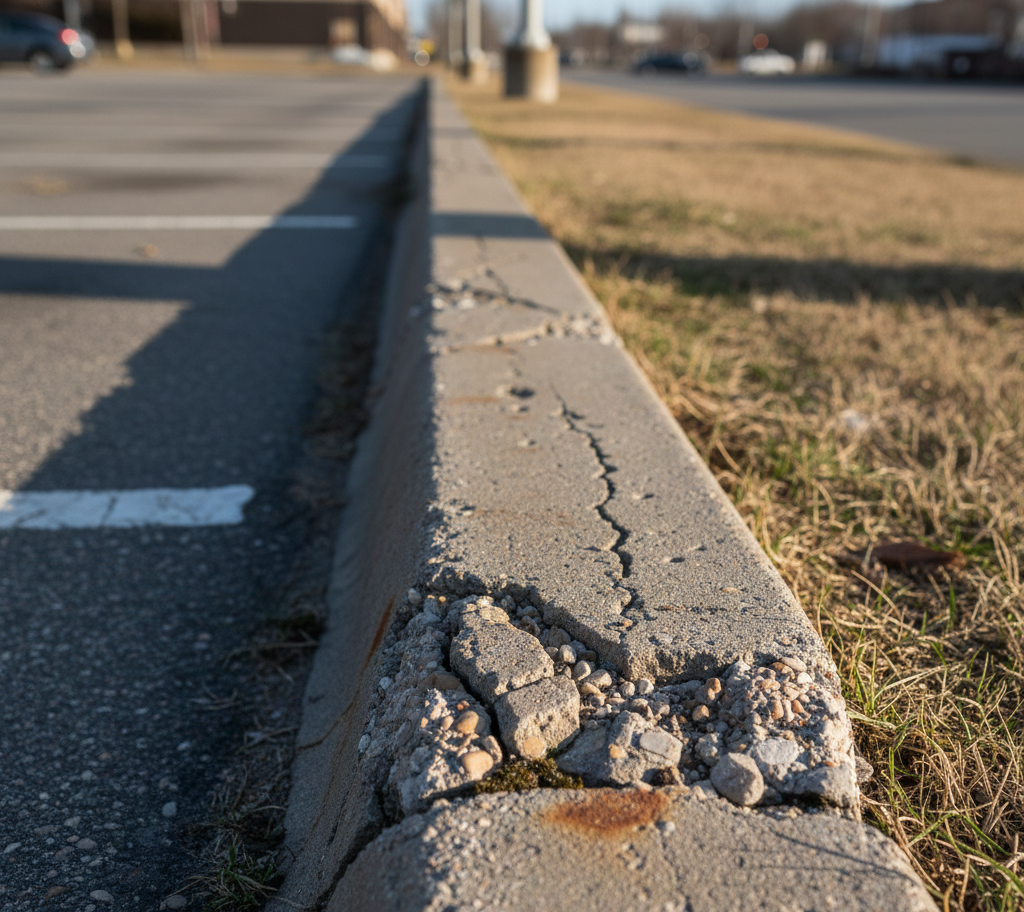
The color in concrete landscape curbing comes from integral pigment, a dye mixed directly into the concrete before it’s extruded. That color isn’t a surface coating. Without a protective barrier on top, UV rays break down the surface of the concrete and accelerate fading. Within a few seasons, a rich terracotta or charcoal curb can look washed out and chalky.
The other threat is moisture. In most of the country, temperatures swing above and below freezing dozens of times each winter. Unsealed concrete is porous, which means it absorbs water. When that water freezes, it expands—and that expansion is what causes spalling. Once spalling starts, it compounds quickly.
Good concrete sealers block both pathways. They keep UV from degrading the surface and prevent moisture from penetrating the concrete in the first place. For contractors, offering sealer as a maintenance add-on protects your finished work—and your reputation—years after installation. It’s also a built-in callback: every 2-3 years, you’re back on the customer’s property with a reason to upsell additional curbing or repairs.
When Is the Right Time to Seal Concrete Curbing?
Most contractors don’t emphasize timing enough when they talk to customers. Fresh concrete needs time to fully cure before any sealer is applied. That window is 28-30 days after installation. Sealing too early traps moisture inside the concrete and can cause the sealer to bubble, peel, or fail to bond entirely.
After that first application, the rule of thumb is every 2-3 years. A simple field test tells you more than a calendar: pour a small amount of water on the curbing surface. If it beads up, the sealer is still doing its job. If it soaks in, it’s time to reseal. That bead test takes 30 seconds and removes all guesswork.
How To Seal Concrete Curbing the Right Way
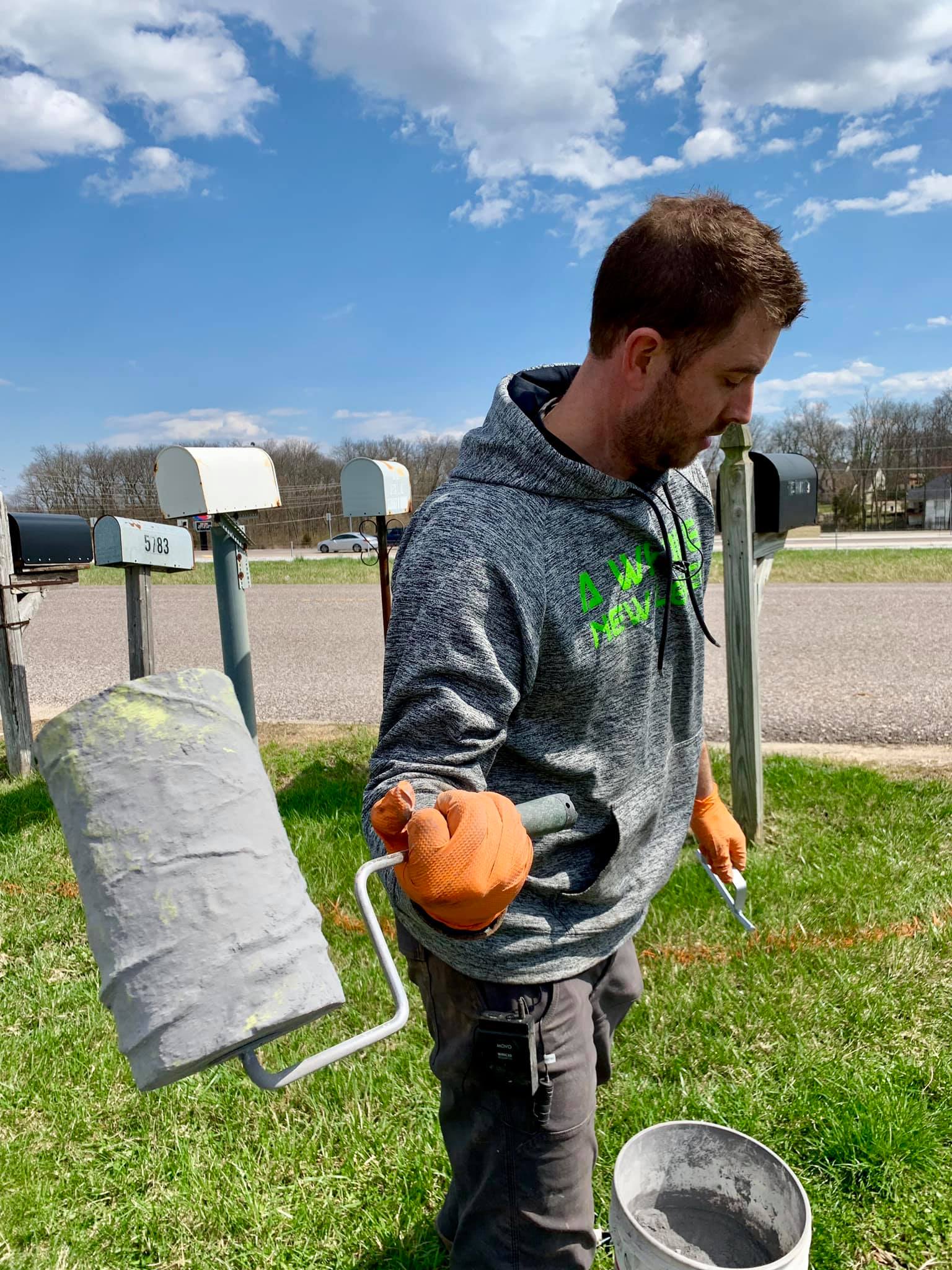
Applying sealer is a four-step process. Skipping or rushing any step is where most problems originate.
Step 1: Clean the Surface
Pressure wash or scrub the curbing with a concrete cleaner to remove dirt, mold, and efflorescence (the white mineral deposits that appear when water moves through concrete and leaves calcium or salt residue behind). Efflorescence must be removed before sealing; locking it in under sealer makes it permanent.
Step 2: Let It Dry Completely
Allow at least 24 hours of drying time after cleaning. Moisture trapped under sealer causes bubbling and adhesion failure. If rain is in the forecast, wait.
Step 3: Apply a Thin, Even Coat
Thin coats bond better than thick ones. Most sealers require only one coat; some two-coat systems are used for high-traffic areas. Apply evenly with a sprayer or roller, working in sections to avoid lap marks.
Step 4: Allow Full Cure Time
Keep foot traffic off for 24-48 hours. Wait 72 hours before any vehicle or equipment crosses the curbing.
Which Sealer Type Is Right for Your Curbing?
Two main categories exist, and the right choice depends on your finish goals.
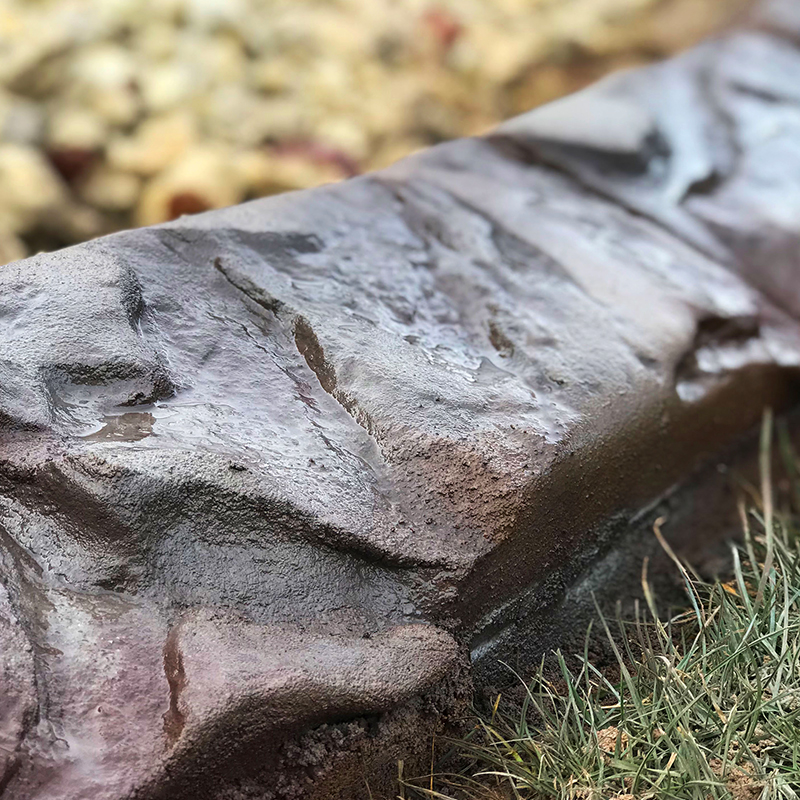
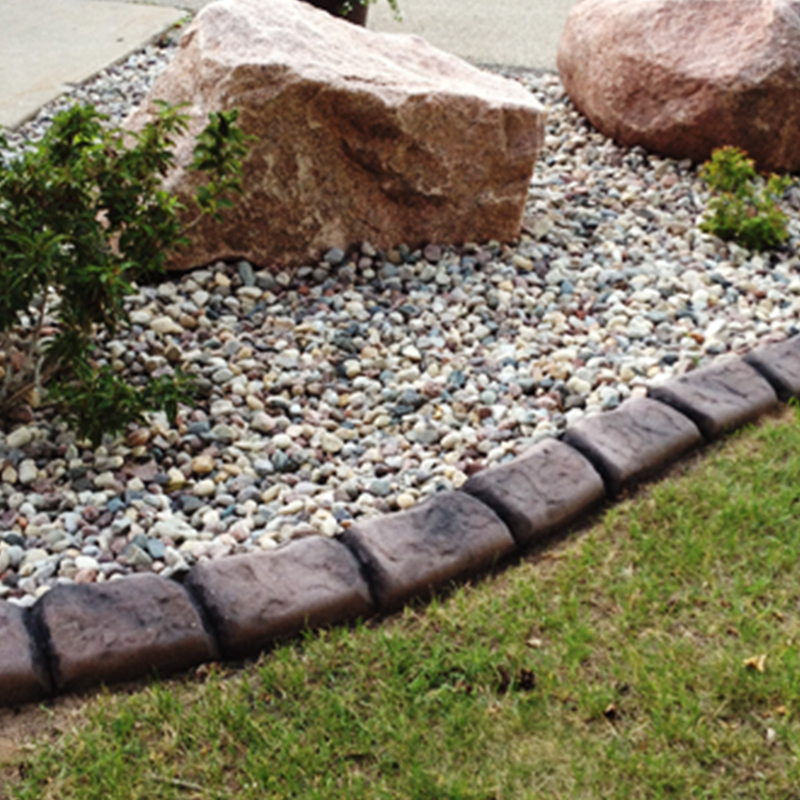
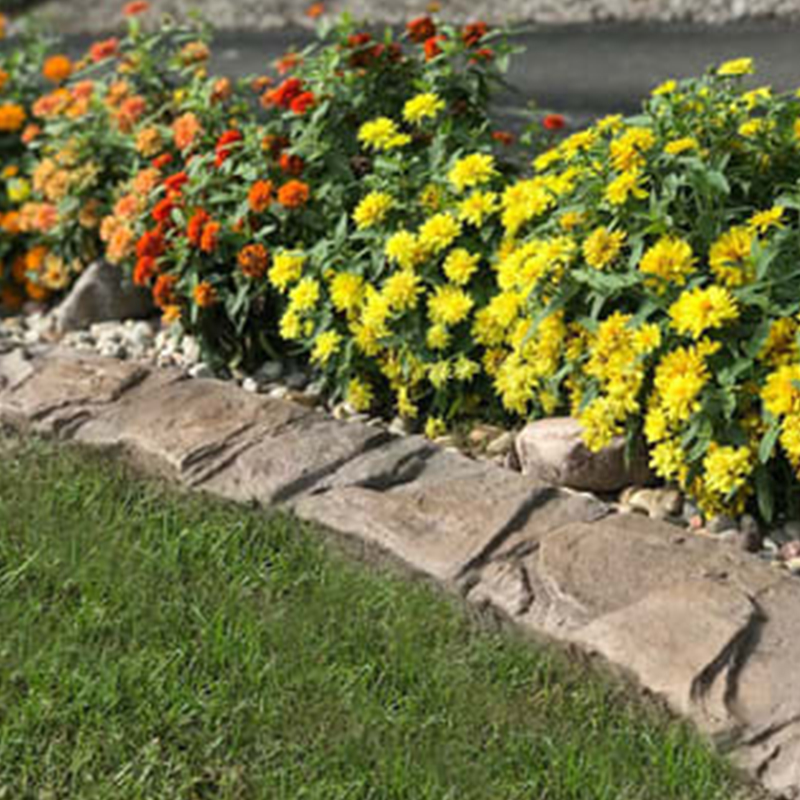
Penetrating sealers soak into the concrete and harden from within. They don’t change the surface appearance much. The finish stays matte, making them a strong choice for natural stone stamped curbing where a glossy coat would look out of place. They’re also extremely durable because there’s no surface film to scratch or peel.
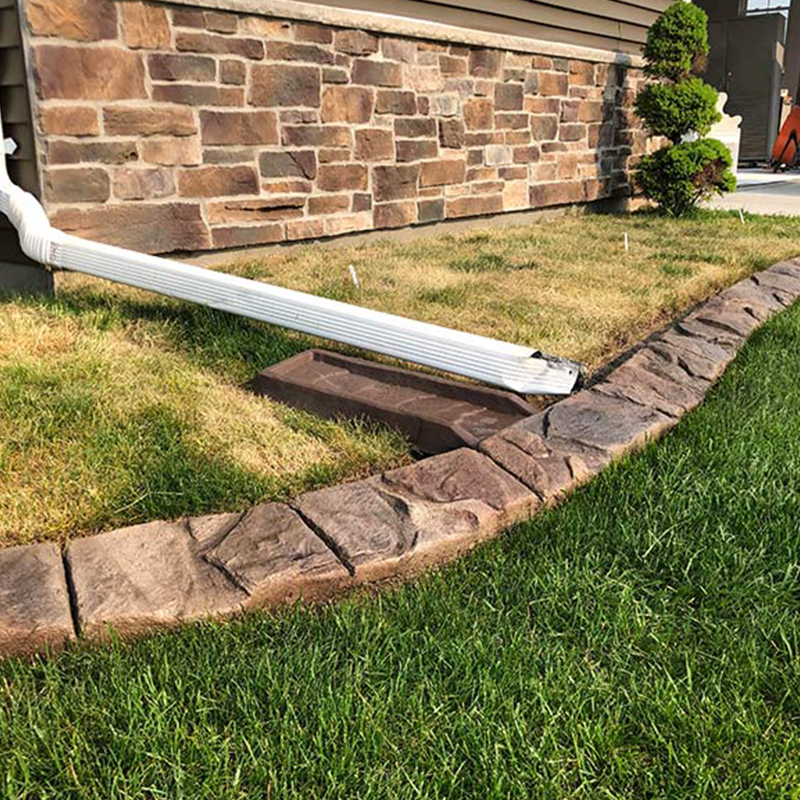
Film-forming sealers sit on top of the concrete and are available in matte, satin, or gloss finishes. They enhance color and give the curbing a richer, more polished look. They tend to show wear more visibly over time and typically need reapplication more regularly than penetrating options. For slant-style curbing and other decorative profiles where color payoff is a selling point, a film-forming sealer with a satin finish is a popular choice.
Curb Depot carries sealers formulated specifically for landscape curbing, not generic concrete sealers that may cure too hard for the rounded profiles curbing machines produce.
Frequently Asked Questions
Should Curbing Contractors Offer Sealing as a Separate Service?
Yes, sealing is one of the highest-margin add-ons in the curbing business. Material cost runs $50-$100 per job, labor is minimal, and most customers readily agree when you explain the protection it provides. Offering a sealing package at installation plus a recurring reseal service every 2-3 years builds predictable revenue and keeps you connected to past customers for future work.
What Happens if I Never Seal My Concrete Curbing?
Unsealed curbing typically shows noticeable color fading within 3-5 years and becomes vulnerable to spalling as moisture and freeze-thaw cycles degrade the surface. Curbing that is never sealed may need replacement in 10-15 years. Properly sealed and maintained curbing can last 25-30 years or longer, making sealing services one of the highest-return maintenance tasks available.
Does Sealing Affect How Much Curbing Installation Costs Overall?
Sealing is a separate maintenance cost from installation, typically $50-$100 in material every 2-3 years. It doesn’t change the cost of concrete curbing per linear foot upfront, but it significantly affects long-term value. Curb Depot recommends factoring a sealer application into the first-year budget so the curbing gets its initial protection at the right time.
The Easiest Maintenance Dollar You’ll Spend
A quality sealer applied at the right time is the single most cost-effective thing you can do to extend the life of concrete landscape curbing. Clean it, dry it, apply a thin coat, and let it cure. Do that every 2-3 years and the color stays rich, the surface remains intact, and the curbing keeps doing its job for decades.
For contractors, sealer application is also a natural upsell that protects your work long after installation day. Browse Curb Depot’s sealer options to find the right product for your project or customer base—or reach out to the team directly to talk through which formulation fits your work.
Earn More With Natural Stone.

Click to Register
Create beautiful curb with unique stamps.
Looking to sell your equipment?
Let us help.


Ready to Order Your New Curbing Trailer? Request More Info.
Give us a call at (920) 740-2218 or simply fill out the form below to learn more about getting all the tools and training to get started. We make the process easy to start earning money in landscape curbing.