A curbing contractor in Central Wisconsin took an estimate call last spring for a 180-foot front-yard bed. The homeowner had asked for the basic option to keep the quote low. The contractor brought a slant sample and a natural-stone-stamped sample to the appointment, showed both, priced both, and let the homeowner decide. She booked the stamped version at $2,520 instead of the $1,440 base. Same crew, same day, same drive time.
This article breaks down the price difference, the sales tools that close upgrades, and the specific stamps worth keeping in the trailer.
What “Stamped Concrete Border” Actually Includes
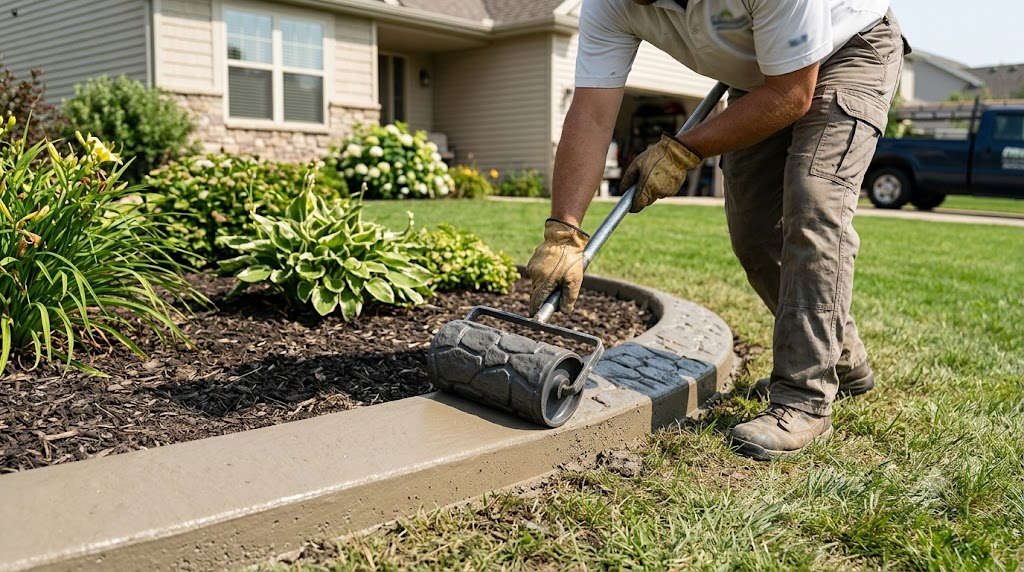
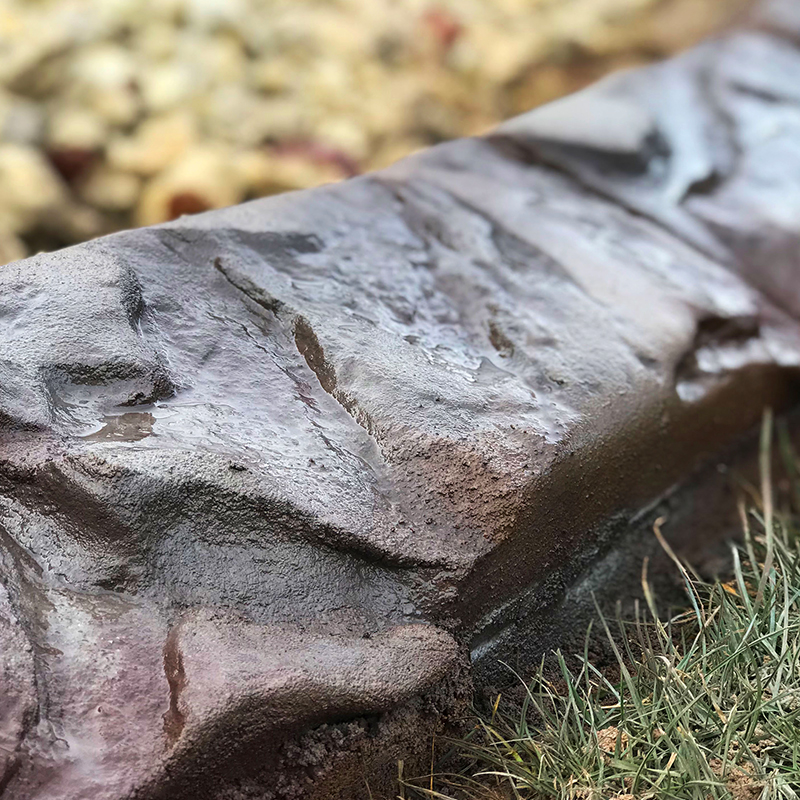
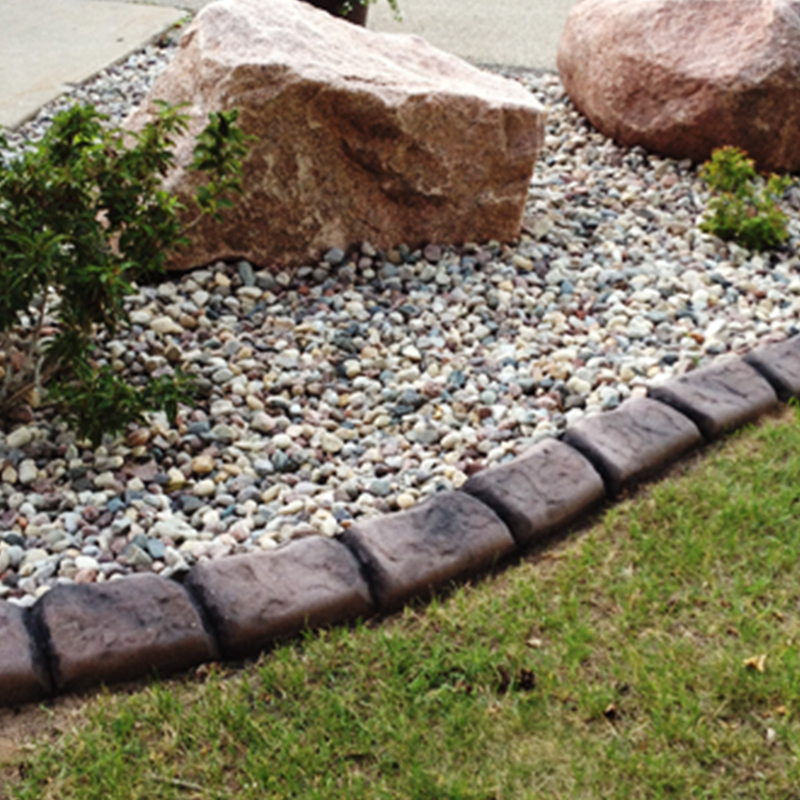
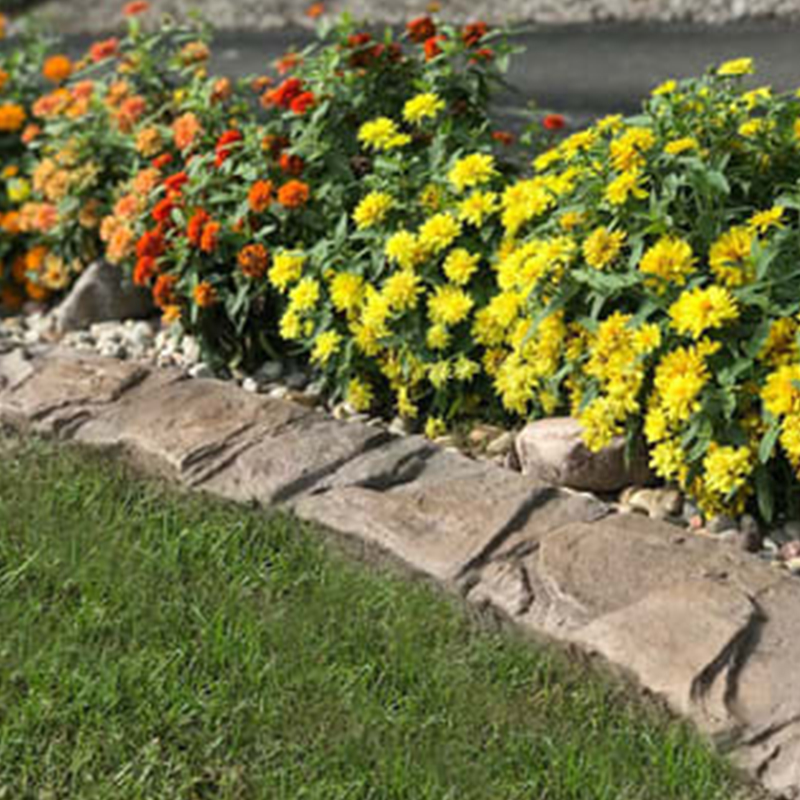
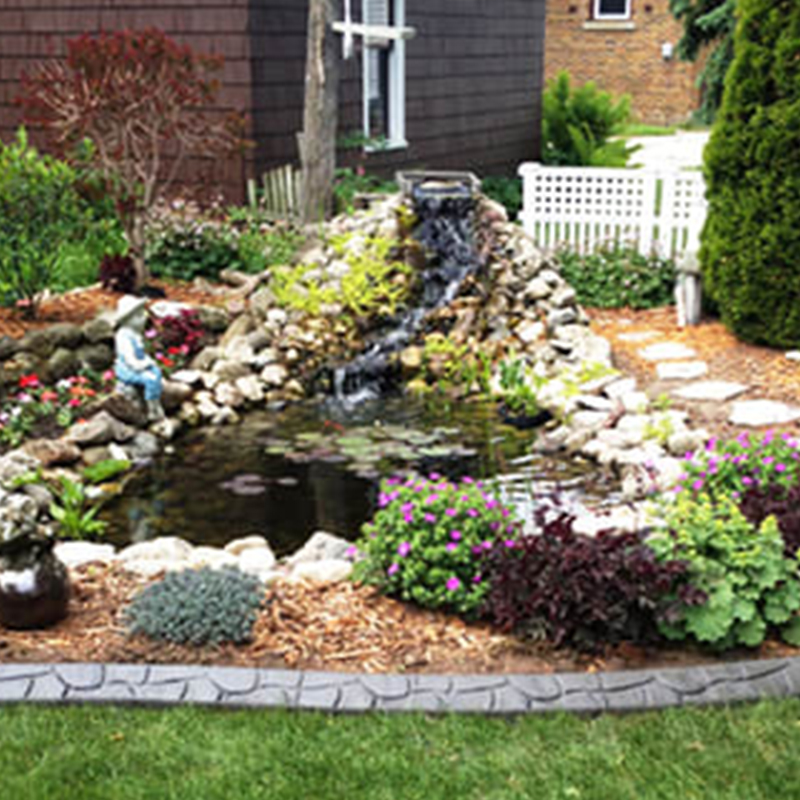
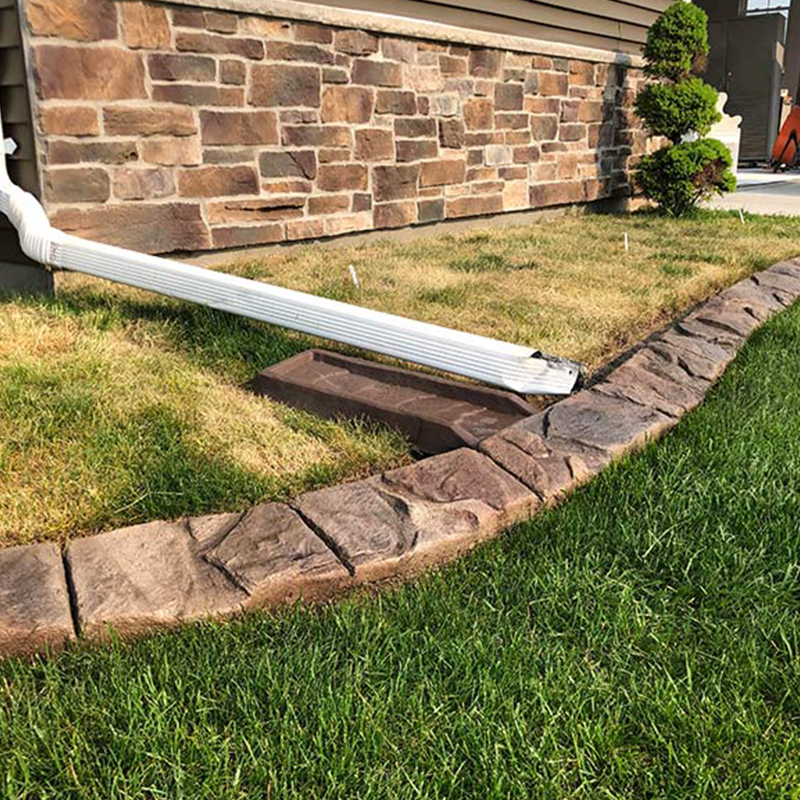
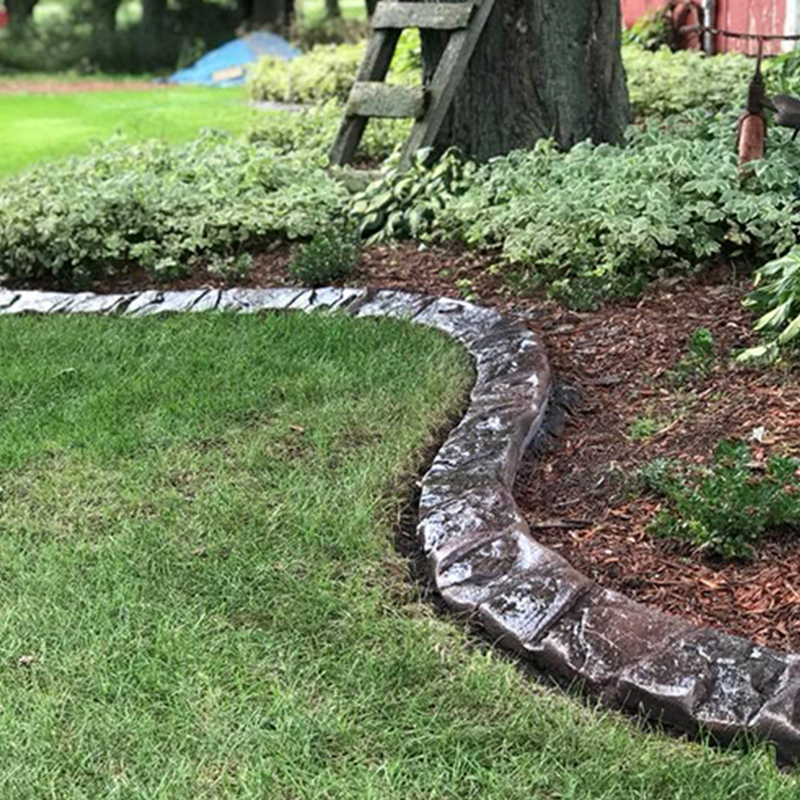
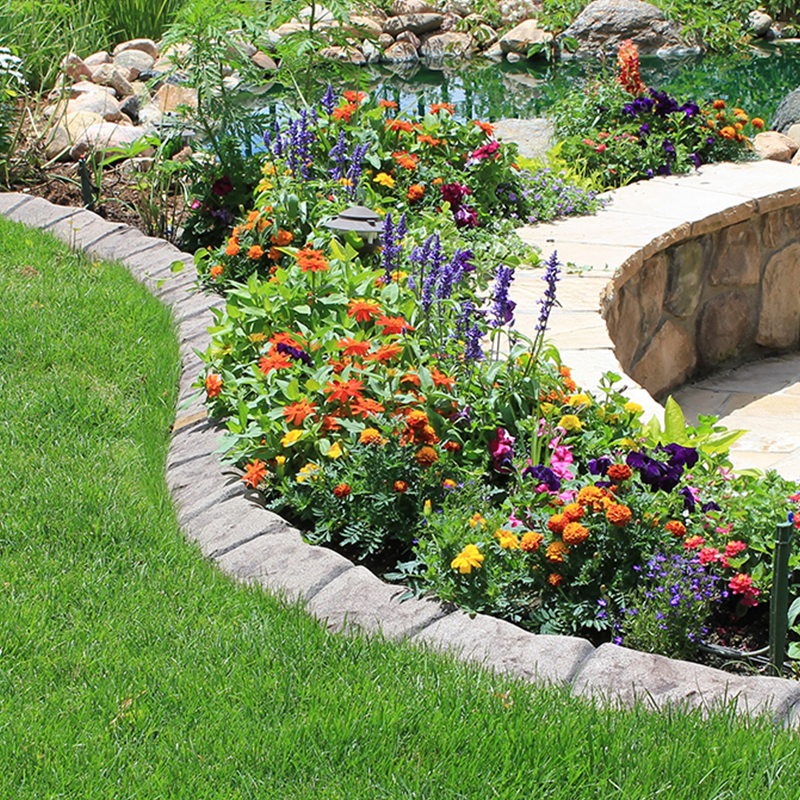
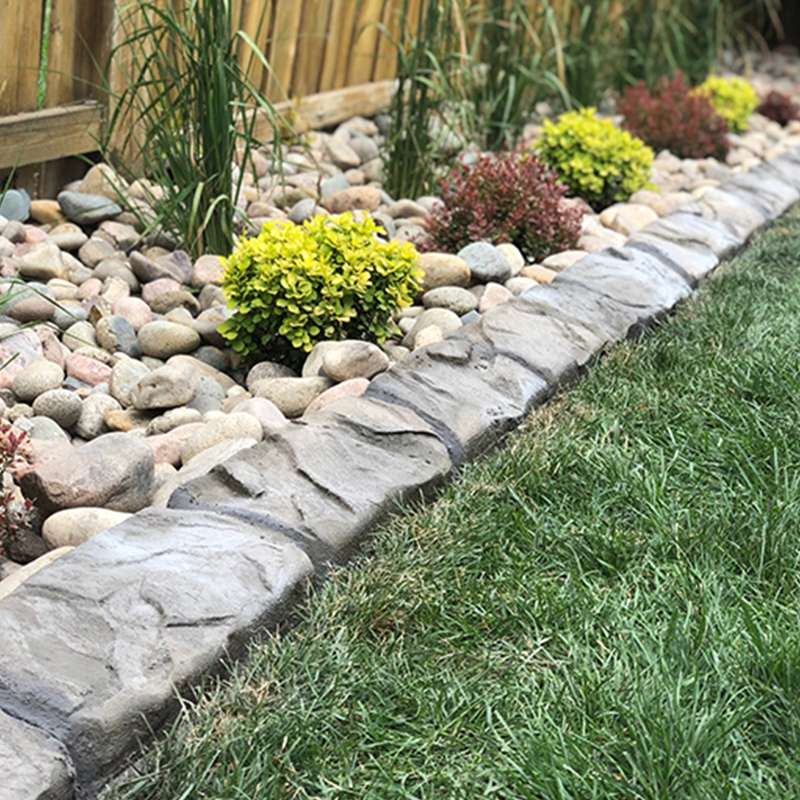
Stamped concrete curbing is standard extruded curb with a texture pattern rolled or hand-stamped into the surface while the concrete is still workable. The result mimics natural stone, brick, cobblestone, slate, or woodgrain depending on the stamp used. Add integral coloring and a post-cure sealer, and the curb reads as premium hardscape.
Curb rollers apply the texture in a single pass along the length of the run. Random Rock, Slate Texture, Cultured Stone, and Cobblestone are the most common patterns. Hand stamps like Fractured Limestone, Granite Peak, and Fox River Valley deliver deeper individual stone impressions when the design calls for a specific look. The stamping step adds roughly two to three minutes per section on top of the base install time.
The Real Cost Difference Between Plain and Stamped
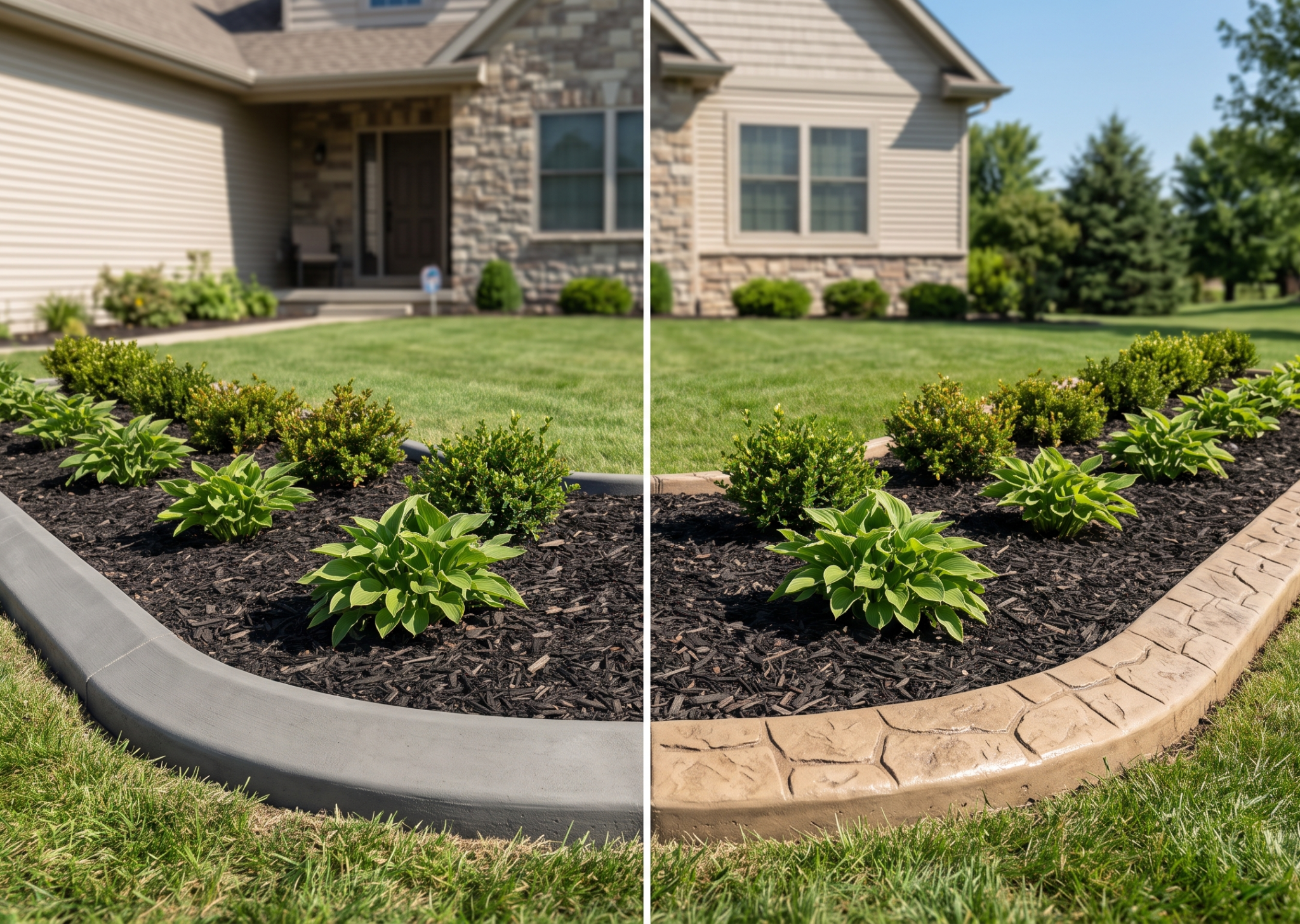
Our estimating guide puts basic styles (slant profile, mower edge, and simple roller stamp) at $8 to $10 per linear foot in most U.S. markets, with natural stone curbing justifying $12 to $14. That’s a $4 to $6 per foot spread, or $400 to $600 on a 100-foot run and $800 to $1,200 on a 200-foot run.
It’s worth noting where the line actually falls: a simple roller stamp is priced as a basic option. The premium comes from natural stone patterns, not from texture alone.
The contractor’s added cost is minimal. Stamps are a one-time equipment purchase amortized across hundreds of jobs. Integral color adds a few dollars per bag of mix, and the stamping step only adds minutes to the install. Material and labor are comparable across both tiers, so nearly all of that upcharge goes to margin. That’s why natural stone work offers the highest profit in a curbing business.
How Stamped Curbing Sells the Higher Ticket
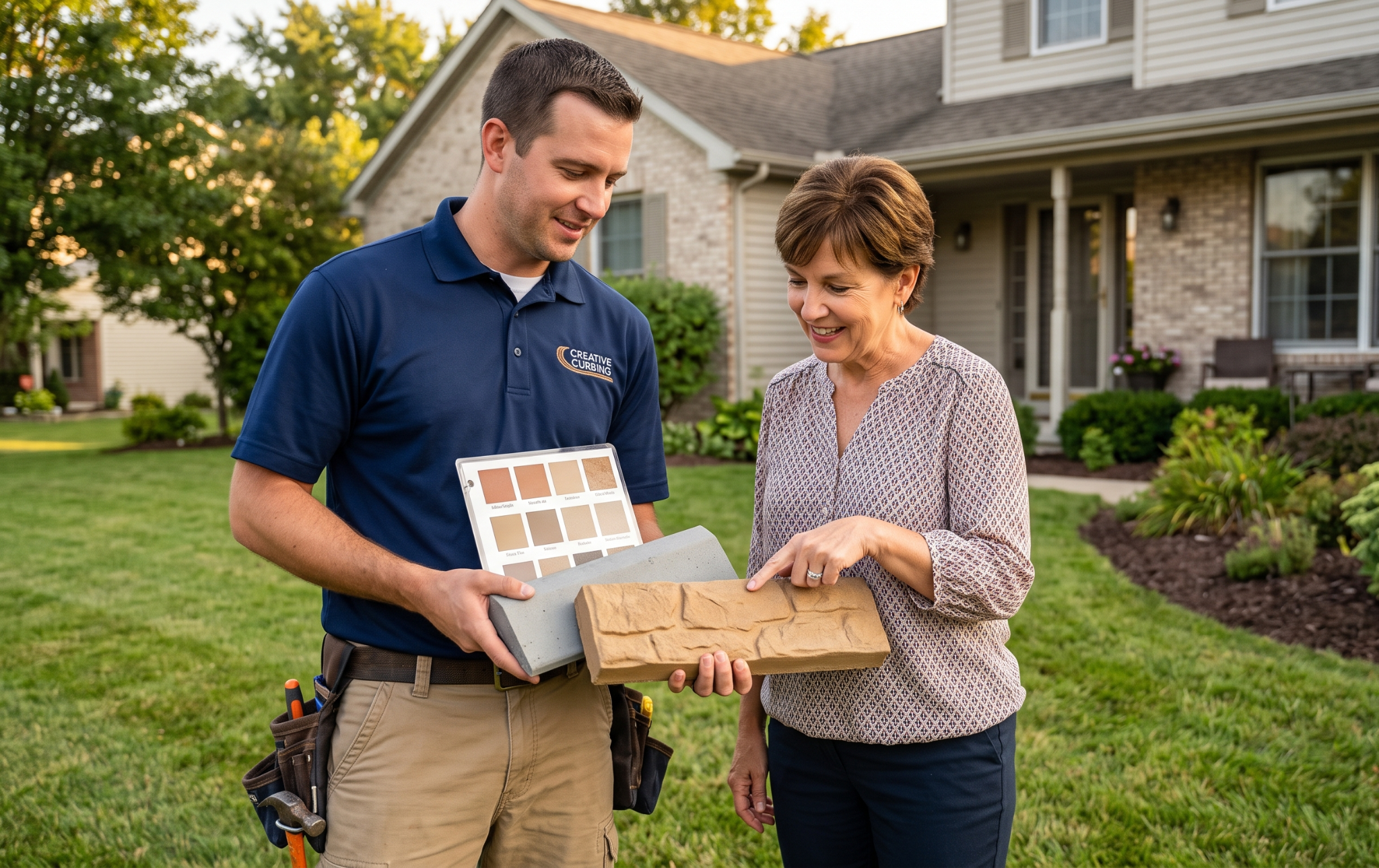
Never quote plain curbing without showing a stamped sample. The likelihood of an upgrade rises when the homeowner can hold both samples side by side. It drops sharply when the client only receives a verbal description of stamped work.
Three quick tools will sell the upgrade for you on almost any sales call: a physical stamp sample, a color chip card, and a photo of a completed stamped job on a similar profile. Print them, laminate them, keep them in the truck. If a customer only books your base service, it’s usually because they never got a real feel for the premium alternative.
Which Stamps Deliver the Best Return?
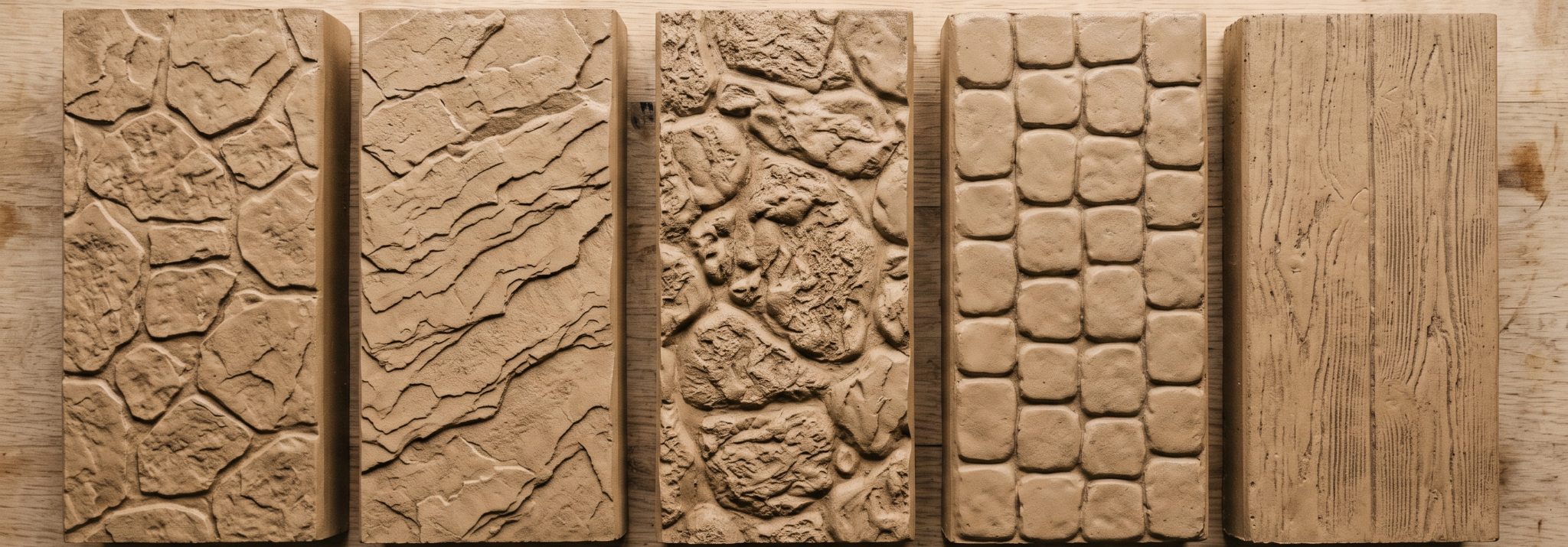
Not every curbing stamp pattern sells at the same rate or price point. To maximize your profit without cluttering your trailer, categorize your stamp inventory by their specific residential appeal:
Natural Stone Patterns (Random Rock, Fractured Limestone, Fox River Valley)
- The Pitch: These carry the highest upgrade rate because they instantly look like premium, expensive hardscaping.
- Pricing: These are the primary patterns that easily justify the top-tier $12 to $14 per foot range.
Historic & Traditional Patterns (Cobblestone, Belgian Block)
- The Pitch: These sell incredibly well on colonial, brick, or historic-style homes where modern slate looks out of place.
- Pricing: Ideal mid-to-high-tier upgrades that match specific architectural styles.
Specialty Patterns (Woodgrain)
The Pitch: A niche look that works perfectly for rustic cabin properties and lakefront homes, though it has narrower appeal for standard suburban neighborhoods.
Your Essential Trailer Inventory
You don’t need to carry dozens of options. To cover almost every residential upgrade opportunity, stock your trailer with:
- 2 to 3 Natural Stone rollers
- 1 Cobblestone stamp
- 1 Woodgrain stamp
Curb Depot’s hands-on training covers stamp selection and finishing techniques to help new contractors master these high-margin upgrades.
Frequently Asked Questions
Does stamped concrete curbing require different equipment than plain?
No. Stamped concrete curbing uses the same Harpten machine and the same slant, mower, or square mold as plain curbing. Only the stamp roller or hand stamp is added to the setup, and those are lightweight enough to carry in the trailer alongside standard trowel and finishing tools without changing loadout.
How long does the stamped texture stay visible before wearing down?
The texture of stamped curbing stays visible for the life of the concrete when properly sealed and resealed every three to five years. The impression is pressed roughly ⅛- to ¼-inch deep into the curb face during install, well beyond normal weathering depth. Loss of visible texture is almost always a sealer maintenance issue rather than material wear.
Can you stamp existing plain curbing after installation?
No, contractors can only stamp plain curbing while the concrete is still workable, not after installation. Concrete’s workable period is 20 to 40 minutes right after extrusion. Plain curbing that has cured can be resealed, recolored with a concrete stain, or overlaid with a thin decorative topping, but the surface cannot be true-stamped after the initial pour.
Turn Every Basic Quote Into an Upgrade Opportunity
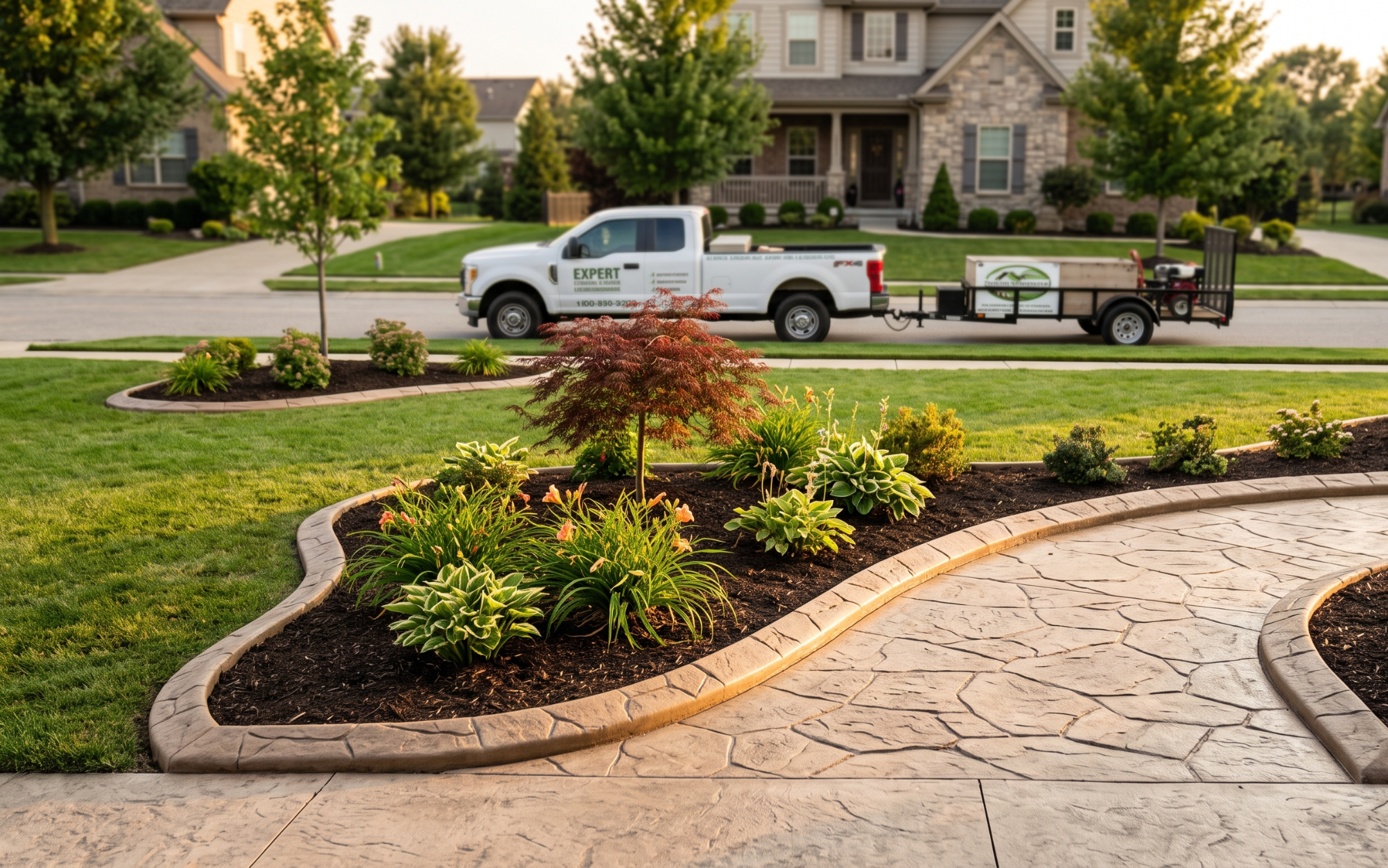
The pattern is simple. Show the sample, price both options honestly, and let the customer choose. Operators at the high end of the income range are almost always offering natural stone and running on referrals rather than heavy marketing spend.
Ready to build out the stamped side of your curbing business? Reach out through the Curb Depot contact page or call (920) 740-2218.
Earn More With Natural Stone.

Click to Register

Create beautiful curb with unique stamps.
Looking to sell your equipment?
Let us help.


Ready to Order Your New Curbing Trailer? Request More Info.
Give us a call at (920) 740-2218 or simply fill out the form below to learn more about getting all the tools and training to get started. We make the process easy to start earning money in landscape curbing.