Rubber edging is marketed as durable because it’s flexible, but flexibility is exactly what defeats it in the yard. Recycled tire edging in full sun typically shows visible cracking, hardening, or fading inside four seasons well before the box-store label suggests. Here are the failure mechanisms, the pricing tactics, and the rare fit cases that separate a real recommendation from a lazy one.
Why Rubber Edging Fails Faster Than Homeowners Expect
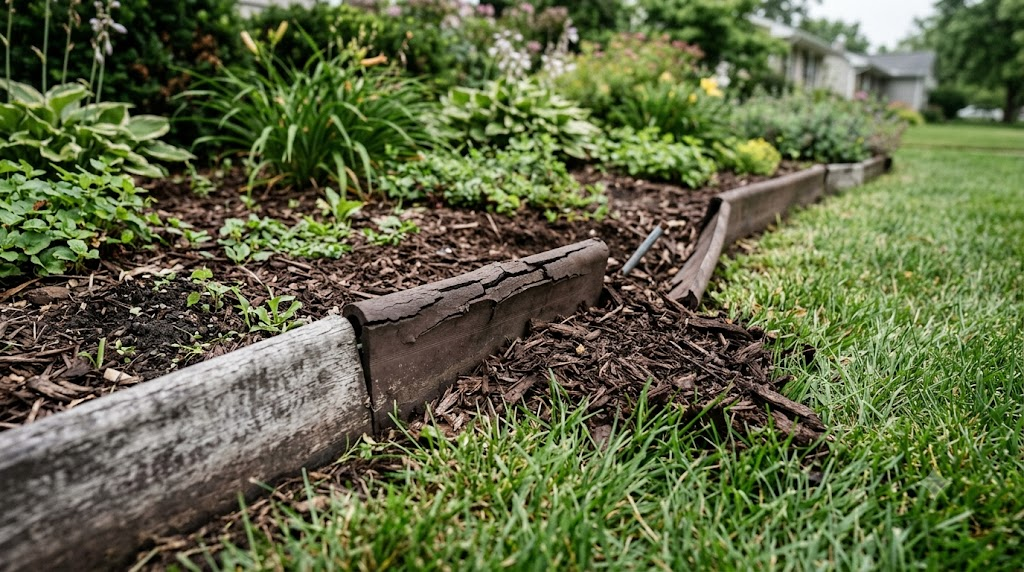
While rubber edging is often chosen for its low upfront cost, it fails quickly due to three distinct environmental pressures.
1. UV Degradation
Recycled tire rubber, even when treated with black pigment for UV blocking, loses plasticizer within three to seven years of sun exposure. This causes the material to stiffen, fade, and crack along the top edge.
2. Lack of Weight and Anchoring
Rubber edging weighs roughly a fifth of what continuous concrete does per foot, meaning it cannot anchor itself against soil movement. As a result, every stake has a risk of drifting out of line.
3. Loss of Contours
Curved sections naturally try to straighten out as the surrounding soil freezes and thaws over time. This moves the edging out of place, causing the clean radius the homeowner paid for to go slack.
Educating your customers on these inevitable failures is the easiest way to upsell them on the permanent, high-margin value of continuous concrete curbing.
What Concrete Curbing Does That Rubber Cannot
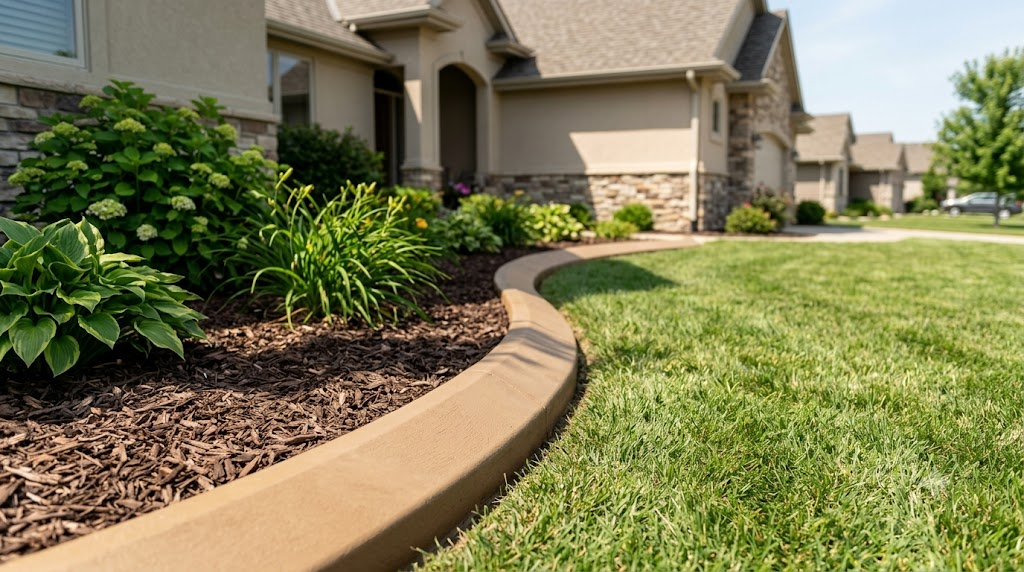
Poured concrete curbing offers a permanent landscaping solution that solves every major failure point of cheap rubber alternatives.
1. Structural Strength and Stability
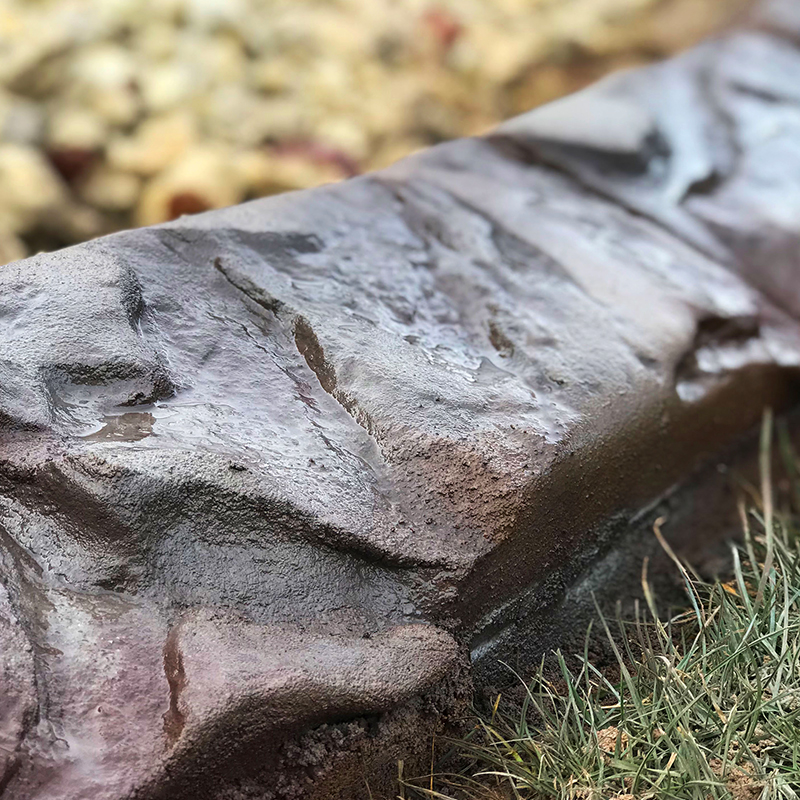
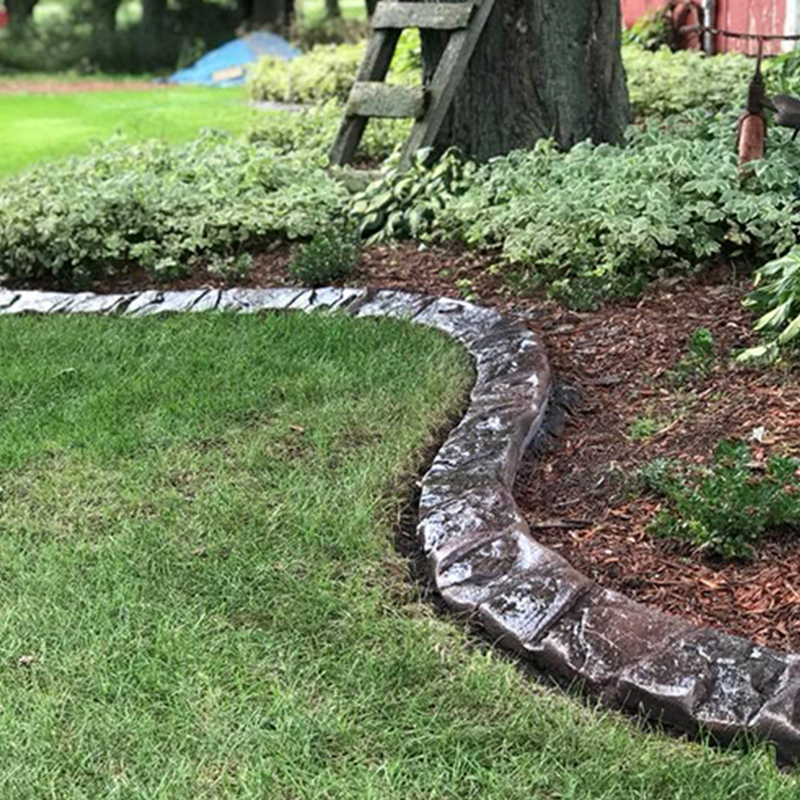
Poured concrete curbing carries its own weight and is reinforced internally with steel cable. With no stakes that can fail and no risk of UV degradation, the concrete holds its shape permanently. Once cured, the profile locks in the exact layout you installed.
2. Resistance to Soil Movement
While freezing and thawing soil ruins rubber borders, it only affects the subgrade when concrete is installed on a properly compacted base. The curb itself remains undisturbed, preventing any shifting or drifting.
3. Profitable Pricing and Longevity
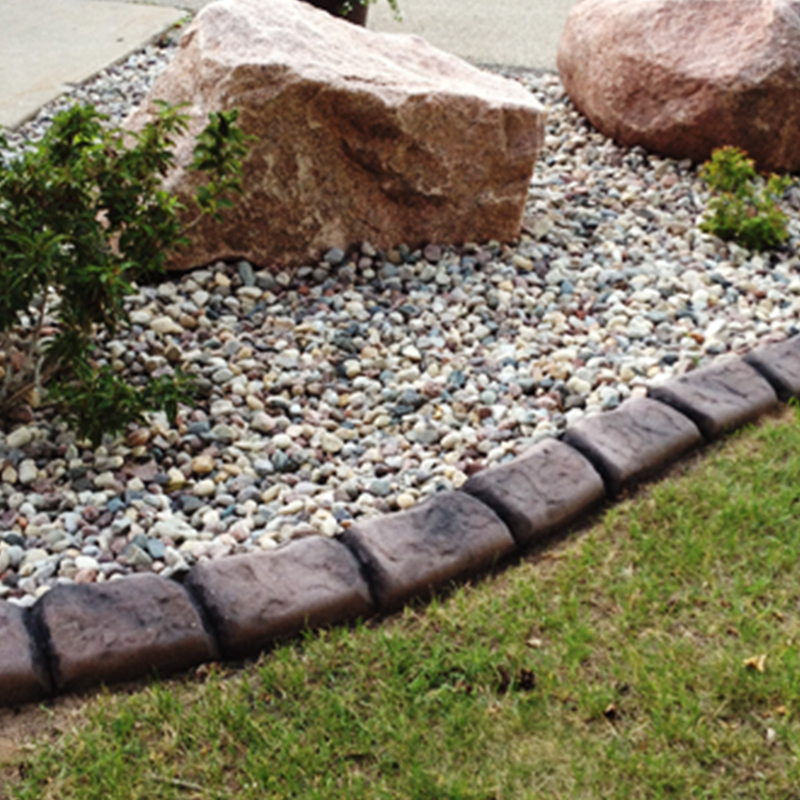
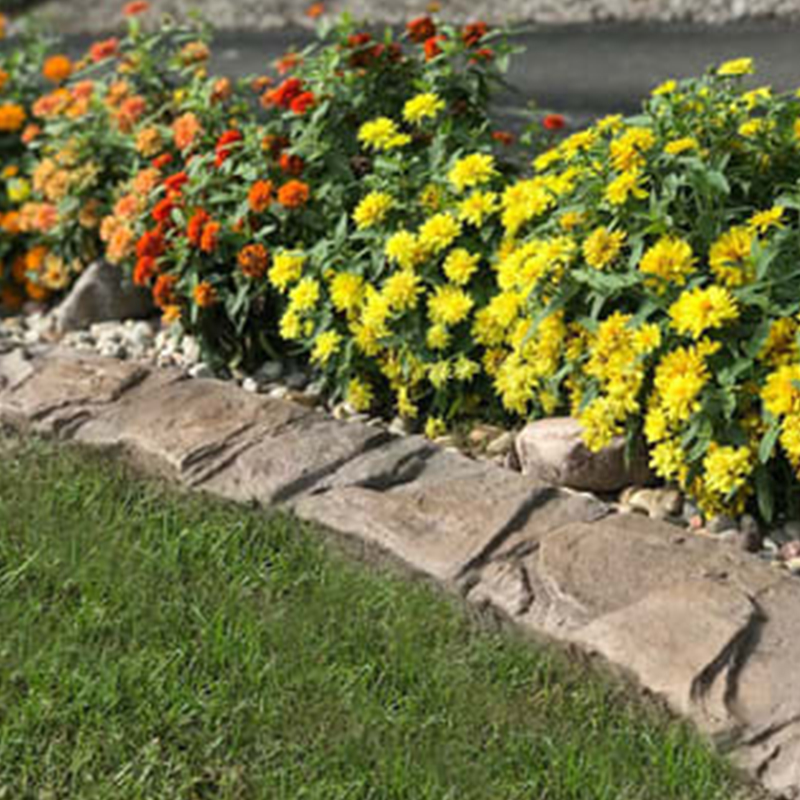
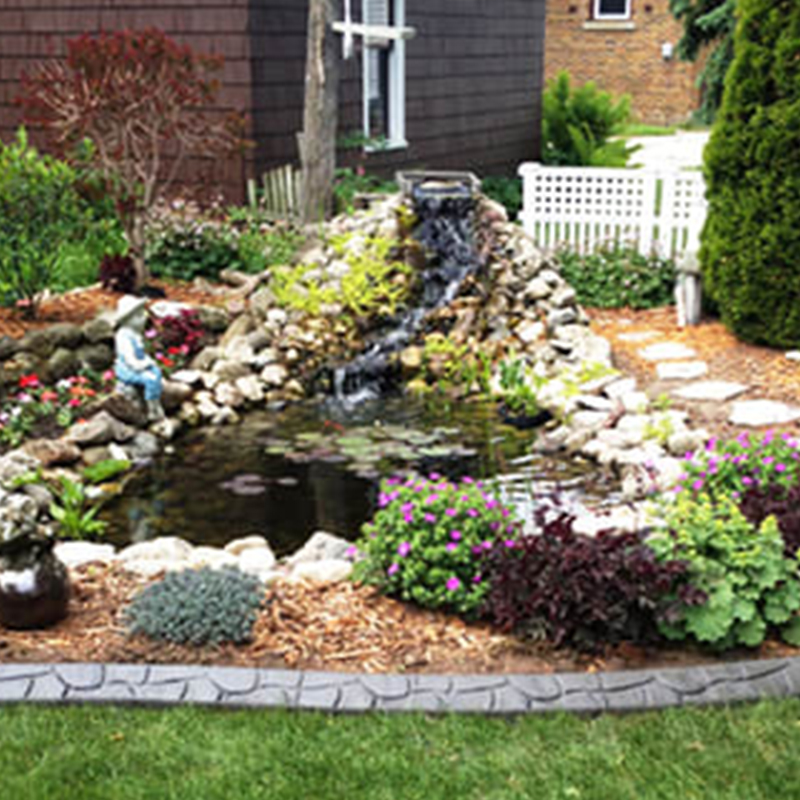
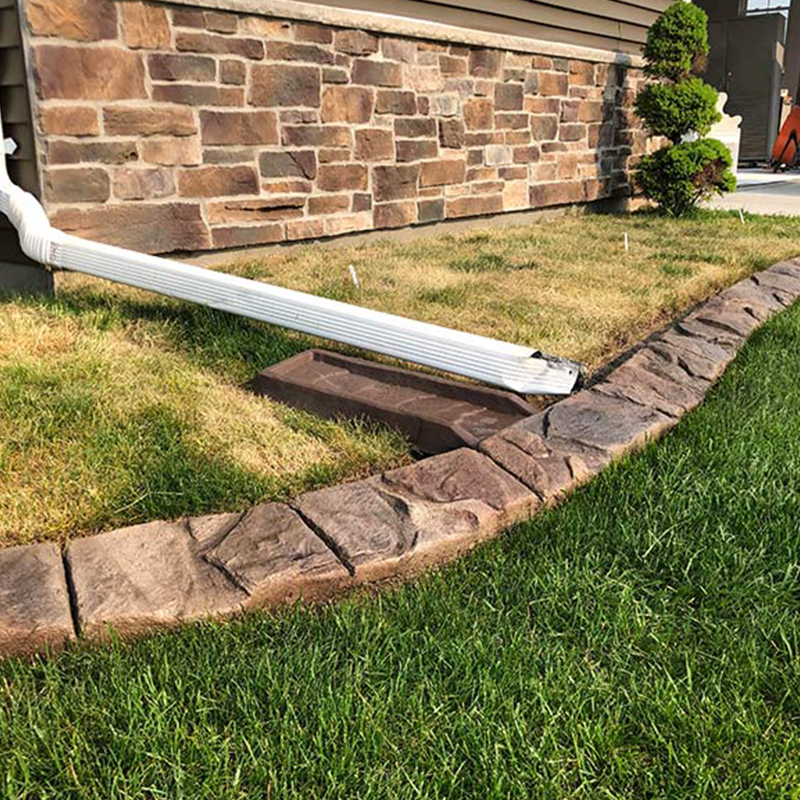
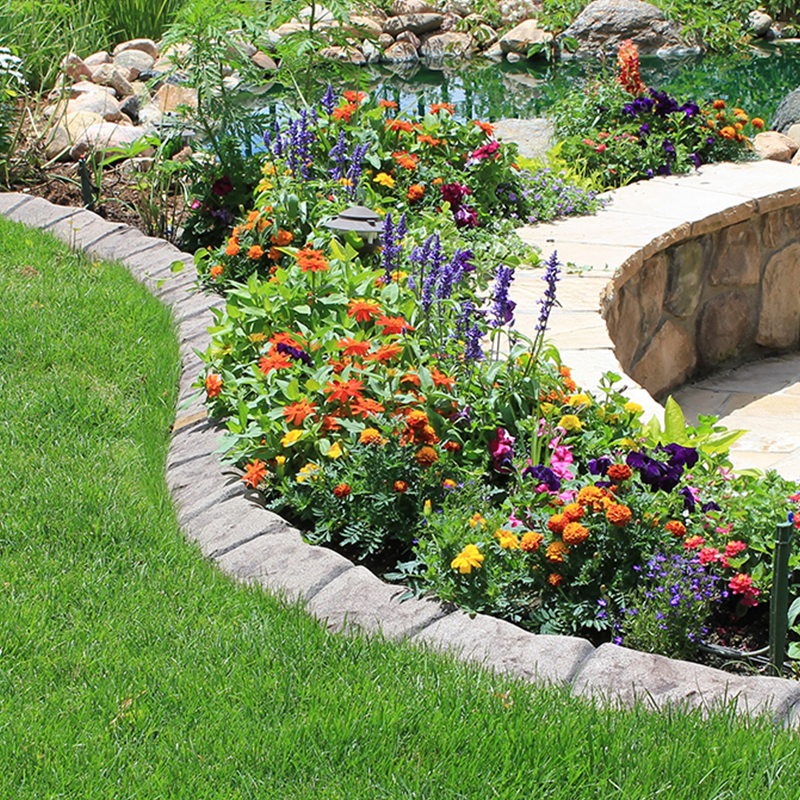
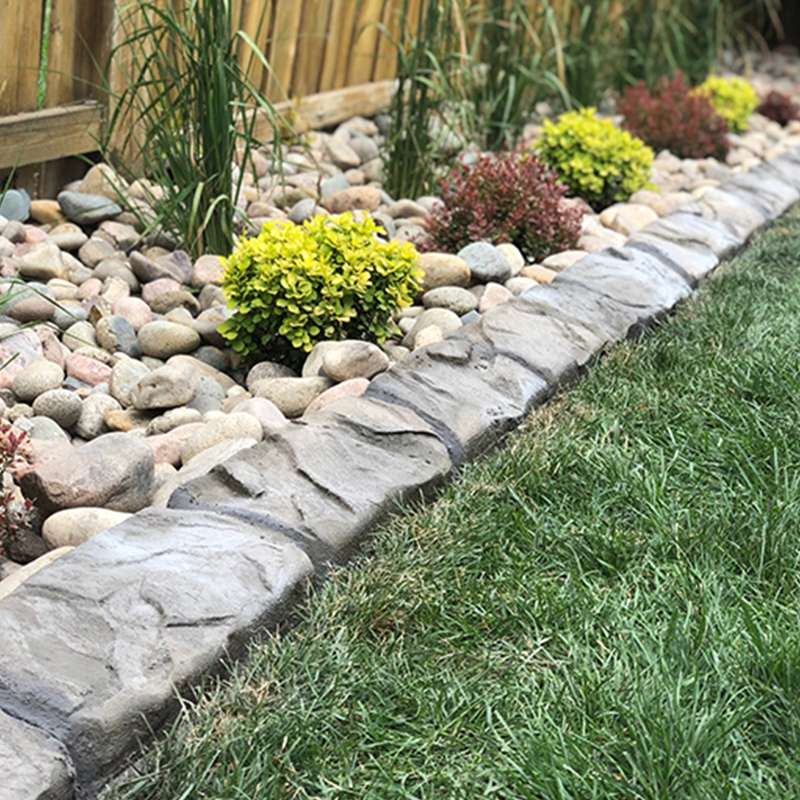
Our estimating guide puts basic profiles (slant, mower edge, and simple roller stamp) at $8 to $10 per linear foot, with natural stone reaching $12 to $14. Every tier outlasts rubber by decades with zero maintenance.
Showing your clients a full breakdown of concrete curbing cost per linear foot is the perfect way to prove its long-term value and close the sale on your next call.
How to Price the Upgrade From Rubber
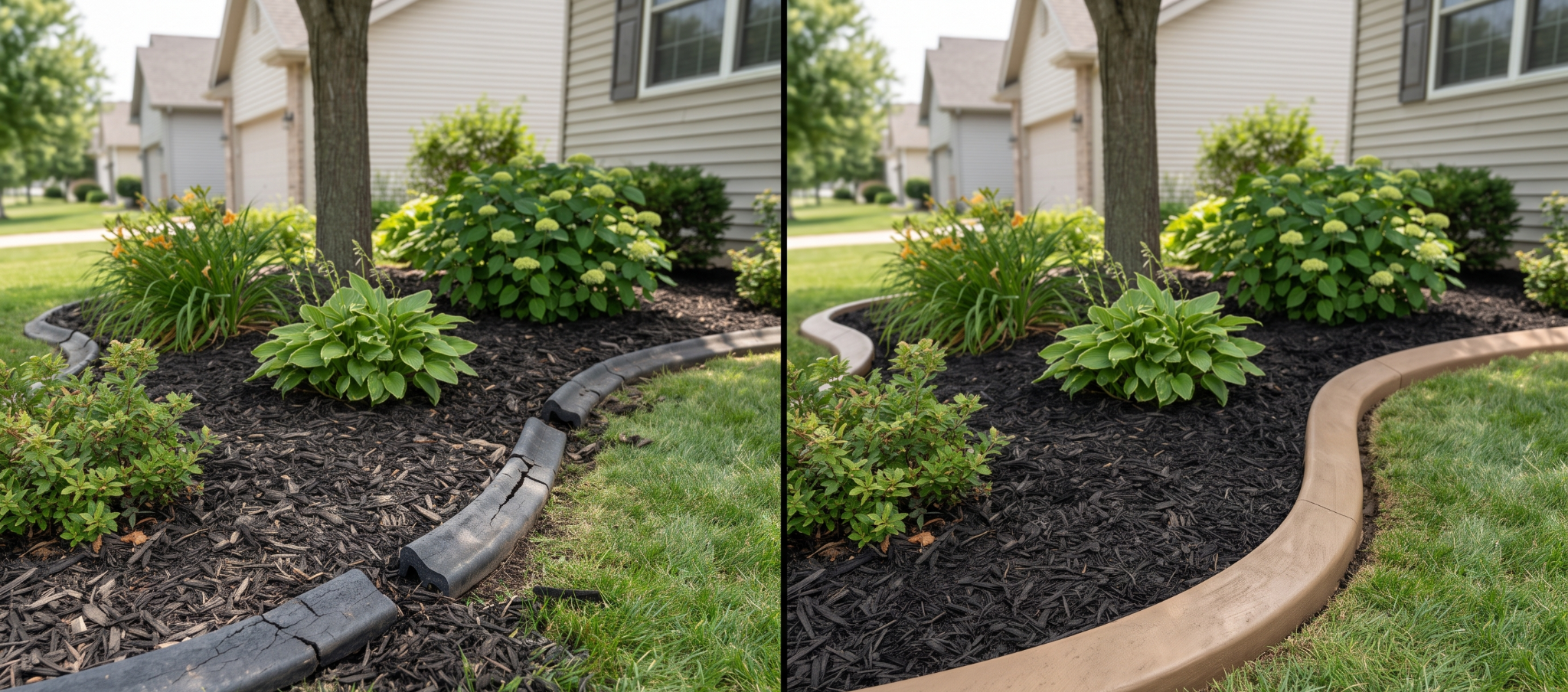
The homeowner who installed rubber edging did it because it looked cheap and easy. Both were true until year three when the sections started drifting. When that third year hits, you have the perfect opportunity to pitch them a concrete upgrade.
Price the concrete curbing job the same way you’d quote a fresh install. Add a small removal and disposal line for the failed rubber rather than a full teardown. Most rubber edging can be pulled up by hand in under an hour on a standard residential run. The visible before-and-after between drifted rubber and a fresh concrete pour is the strongest sales asset a curbing contractor has. Take photos and use them in the next quote.
The Scenarios Where Rubber Still Fits
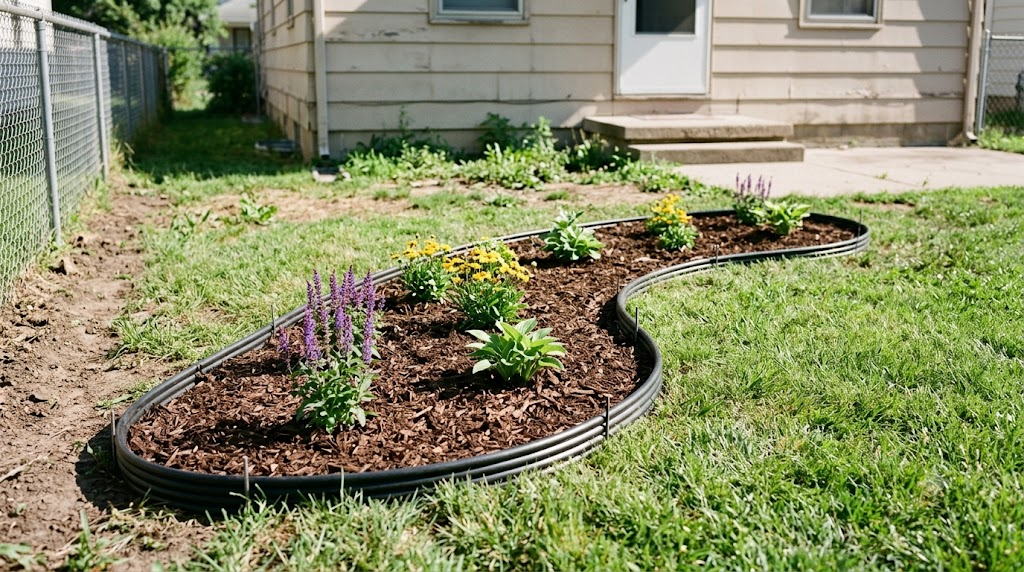
While concrete is the superior long-term choice, rubber edging still has its place in specific, short-term situations:
- Homes on the market: Temporary features designed to boost curb appeal just long enough to sell
- Rental properties: Yards where the landlord wants a quick fix but refuses to invest in permanent upgrades
- Future redesigns: Low-priority backyard beds that the homeowner plans to completely tear out and remodel in a year or two.
Rubber is a legitimate short-term product when the customer’s timeline actually matches its lifespan. For every other job, concrete curbing is the more honest recommendation. Curbing success depends on contractors who offer services that match the customer’s timelines.
Frequently Asked Questions
How long does rubber edging actually last outdoors?
Rubber landscape edging typically lasts three to seven years in full sun before UV degradation causes visible cracking, hardening, or fading. Northern climates with heavy freeze-thaw see the shorter end of that range as sections shift and stakes lose grip in the frost cycle. Shaded installations can extend the window somewhat.
Can concrete curbing be installed over an existing rubber border?
No. The rubber must be removed and the subgrade prepared before pouring concrete. Rubber edging can be pulled up by hand in under an hour on a standard residential run, so removal is a minor line item on the quote rather than a major cost driver for the upgrade to concrete curbing.
Why don’t hardware stores stock a concrete curbing equivalent for DIY buyers?
Extruded concrete curbing requires a curbing machine and technique that takes hands-on training to run well. Homeowners can’t source that at a big-box store, which is exactly why the professional installation market for concrete curbing remains strong across North America.
Turn the Drawbacks of Rubber Edging Into a Curbing Job
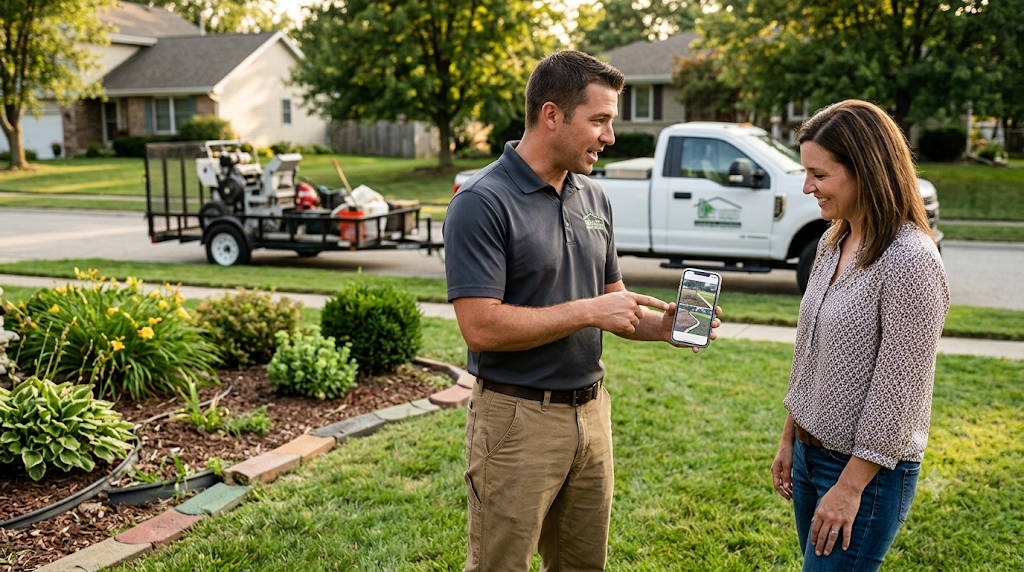
Every yard with sagging, drifted rubber edging is a warm sales lead waiting for you to knock. Most homeowners only chose rubber because they didn’t know a durable, professional concrete option was within their budget.
When you show up with a physical profile sample, a color chip, and a quick before-and-after photo of your concrete work, the contrast sells itself. Use their failing rubber borders as the perfect visual aid to pitch a permanent, high-margin concrete upgrade that protects their landscaping—and builds your business.
Ready to win more high-margin curbing jobs? Contact Curb Depot for the professional training, durable molds, and high-performance mix additives you need to dominate your local market. Call (920) 740-2218 today.
Earn More With Natural Stone.

Click to Register

Create beautiful curb with unique stamps.
Looking to sell your equipment?
Let us help.


Ready to Order Your New Curbing Trailer? Request More Info.
Give us a call at (920) 740-2218 or simply fill out the form below to learn more about getting all the tools and training to get started. We make the process easy to start earning money in landscape curbing.