The first hard freeze ends most curbing seasons within days. Operators who don’t plan for winter either scramble for income or burn through their season’s profits by February. The sections below cover the revenue streams that actually generate cash in winter, plus how to use the downtime to make your business more profitable when spring arrives.
Winter Revenue Streams for Curbing Operators
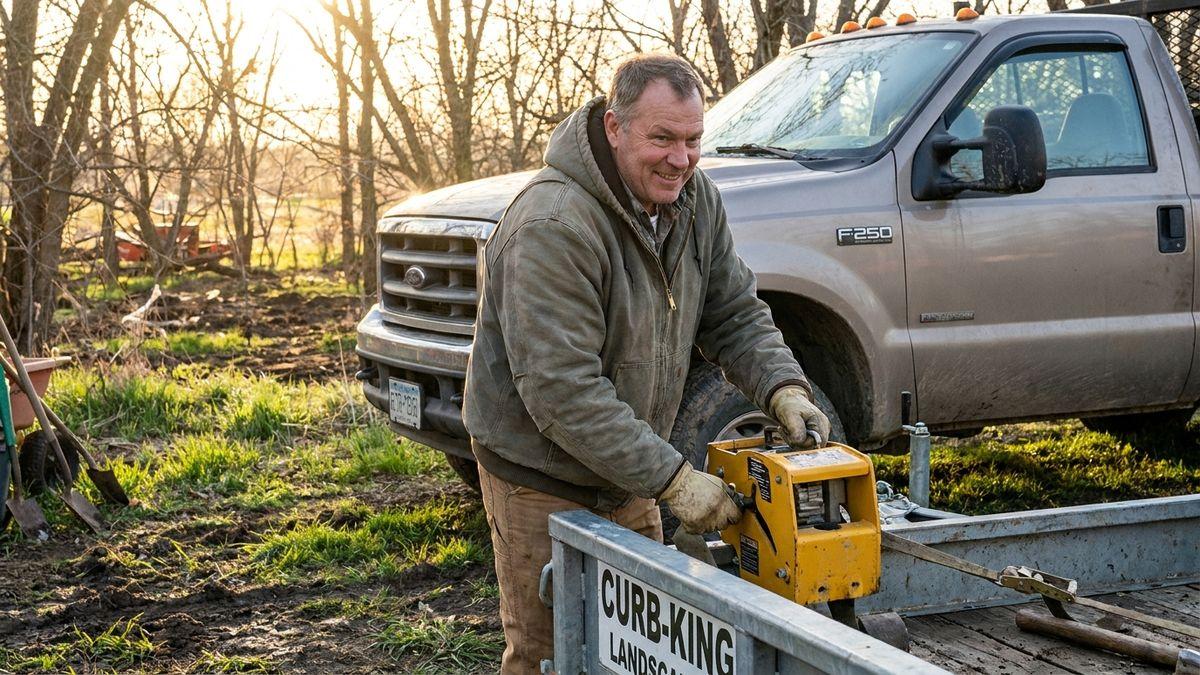
Three revenue streams generate income without requiring outdoor pours:
Precast Concrete Products
Concrete benches, stepping stones, and decorative pavers can be poured in a heated garage and sold through local garden centers, online marketplaces, or directly to homeowners. Curb Depot’s precast mold sets cover flagstone benches, barnwood plank benches, and heirloom slate designs. Each mold set produces sellable products year-round regardless of weather. Operators with a heated workspace and basic mixing equipment can produce 10 to 20 pieces per week, depending on the design complexity.
Deposit-Based Spring Scheduling
Spring books fill fast for operators who collect deposits in January and February. A $200 to $500 deposit locks in the pour date and gives the homeowner peace of mind that their job is scheduled. Operators who run winter marketing campaigns can build a backlog of 30 to 50 paid deposits before the first pour date, which translates to $6,000 to $25,000 in cash that funds equipment maintenance, fuel, and early-season payroll.
Snow Removal and Related Seasonal Services
The truck and trailer setup that pulls a curbing machine can pull a snow plow or salt spreader through winter. Operators in the Midwest and Northeast often add snow removal contracts for residential driveways or small commercial lots. A single-route operator can clear 15 to 25 driveways per snow event, with each route generating $40 to $80 per home depending on the market.
Use the Downtime to Make Spring More Profitable

Two off-season activities don’t generate winter revenue directly but raise your per-job profit when spring arrives.
Natural Stone Training
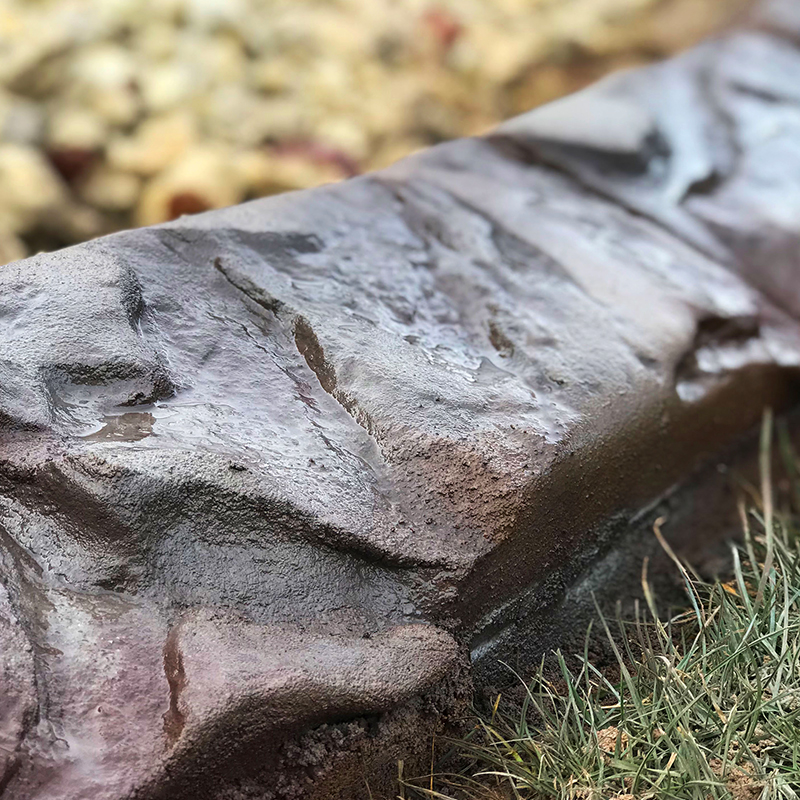
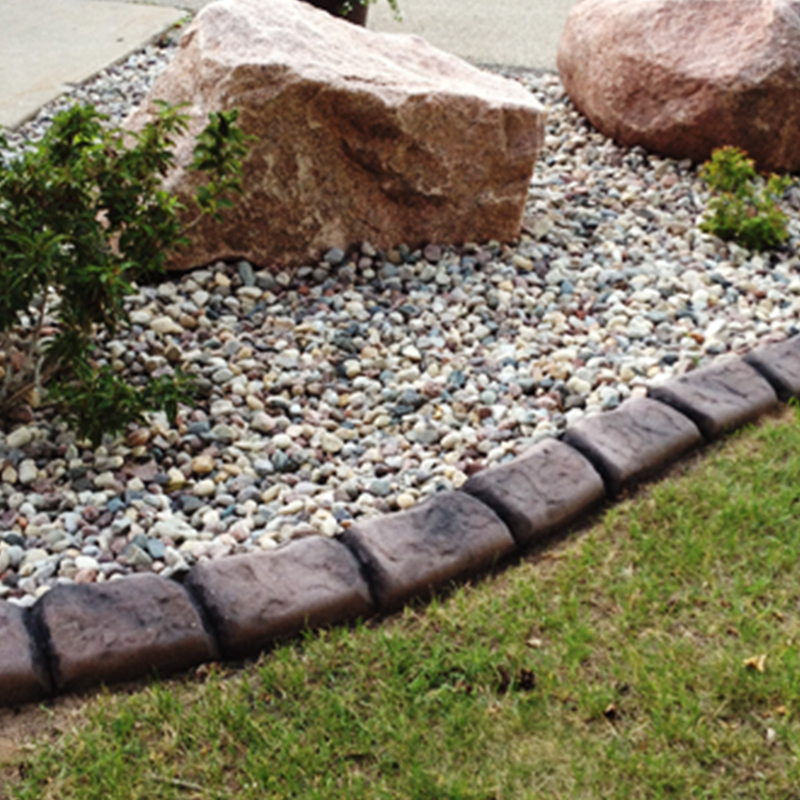
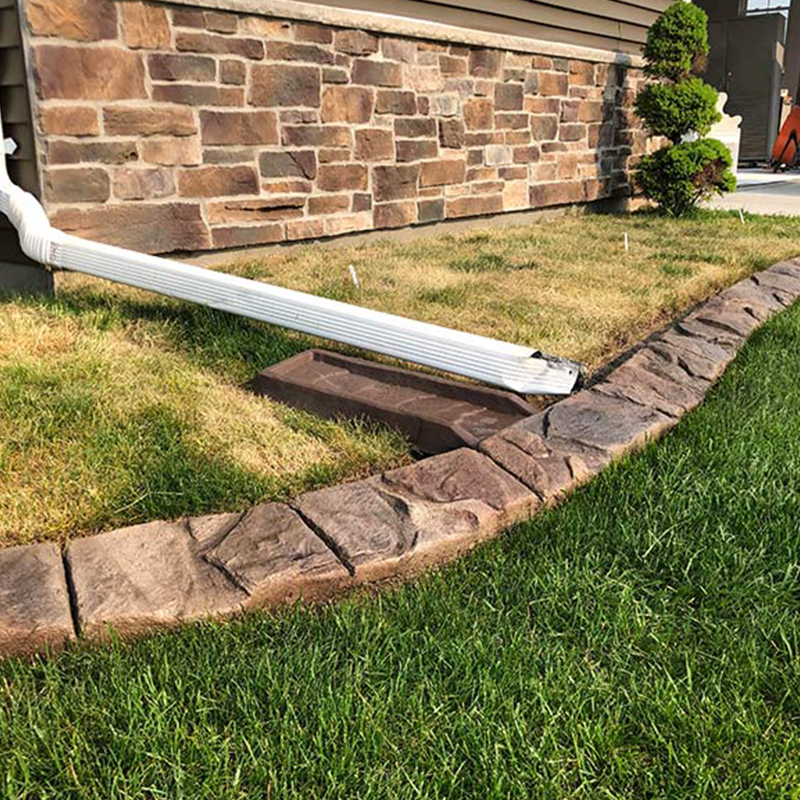
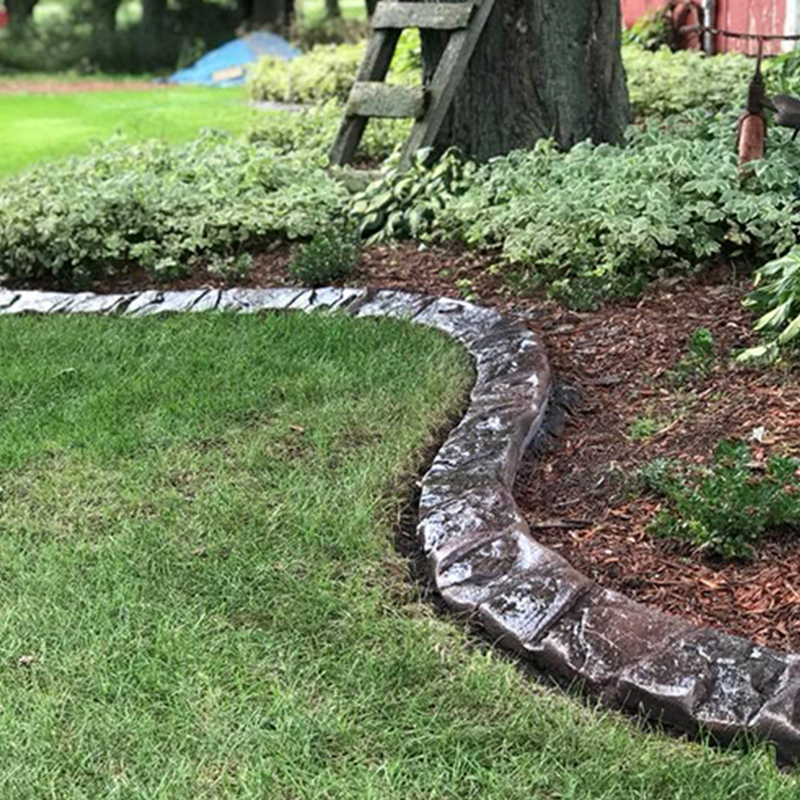
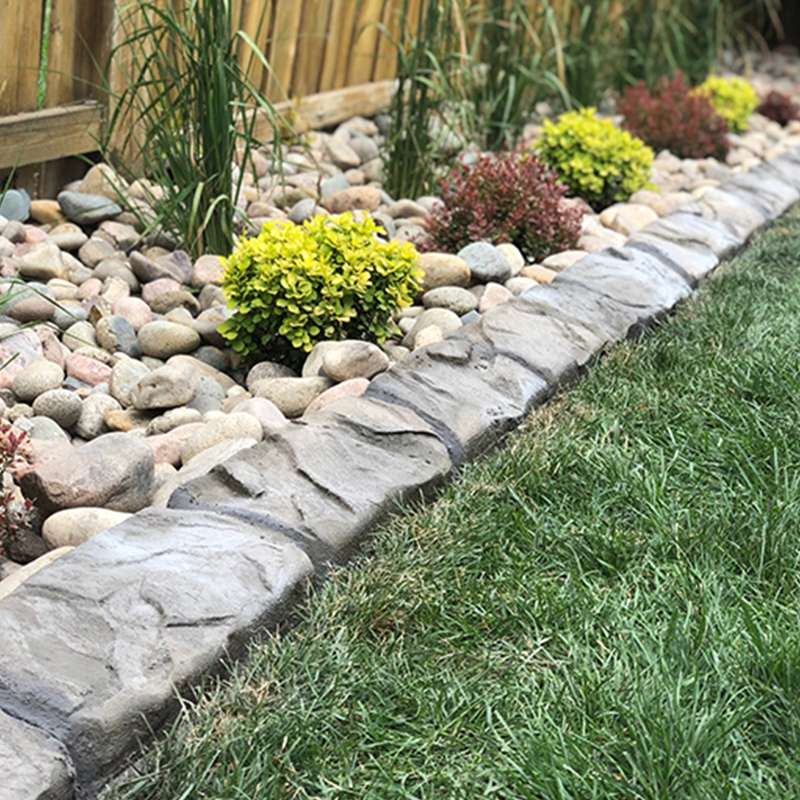
Natural stone curbing commands $14 per linear foot versus $8 for basic curb, with comparable material costs. That premium adds $500 to $600 in profit on a standard 200-foot job. Curb Depot’s natural stone training runs $2,699 and most operators recover the cost within their first two or three natural stone installations. Stepping stone and flatwork training let you offer additional services.
Equipment Maintenance
Problems you don’t fix in December become job-site breakdowns in April. Drain and clean the Harpten machine’s plunger assembly, inspect the belt tensioner, cable feed mechanism, and mold attachments for wear. Replace worn parts while lead times are short.
On the trailer, check weatherproof seals, tire pressure, and ramp hardware. A structured machine maintenance routine takes one weekend and prevents the mid-season breakdowns that cost entire jobs.
Marketing and Lead Generation for Spring

The operators who book the most spring work are the ones who start marketing in January, not April.
- Set up or optimize your Google Business Profile with updated photos, services, and service areas.
- Build a simple website if you don’t have one.
- Collect and post reviews from your previous season’s customers.
- Start running low-budget Facebook ads targeting homeowners in your area who follow landscaping pages.
Proven marketing strategies for curbing contractors focus on visibility before demand peaks.
Door-to-door flyers in neighborhoods where you’ve already completed work are free and effective. A before-and-after photo card left at 200 homes can generate five to ten calls when spring hits.
Frequently Asked Questions
Can you pour concrete curbing in cold weather?
Concrete curbing can’t be poured reliably when ground temperatures drop below 40 degrees Fahrenheit. Cold conditions slow the chemical curing process and increase the risk of surface scaling and strength loss. Most Northern operators shut down pours between November and March. They use that window for precast production, deposit collection, snow removal, and equipment maintenance.
How do curbing business owners make money in winter?
Curbing business owners make money in winter through three main revenue streams: precast product sales (concrete benches, stepping stones, decorative pavers poured in a heated garage), deposit-based spring scheduling (locking in spring pour dates with paid deposits), and related seasonal services like snow removal that use the same truck and trailer setup.
What is the best off-season investment for a curbing business?
The best off-season investment for most curbing businesses is natural stone training, because it raises the per-foot revenue by roughly 75% without increasing material costs proportionally. A $2,699 training investment typically pays for itself within the first two or three natural stone jobs the following spring. Equipment maintenance is a close second because it prevents mid-season downtime that costs entire jobs.
Maximize Your Off-Season Revenue
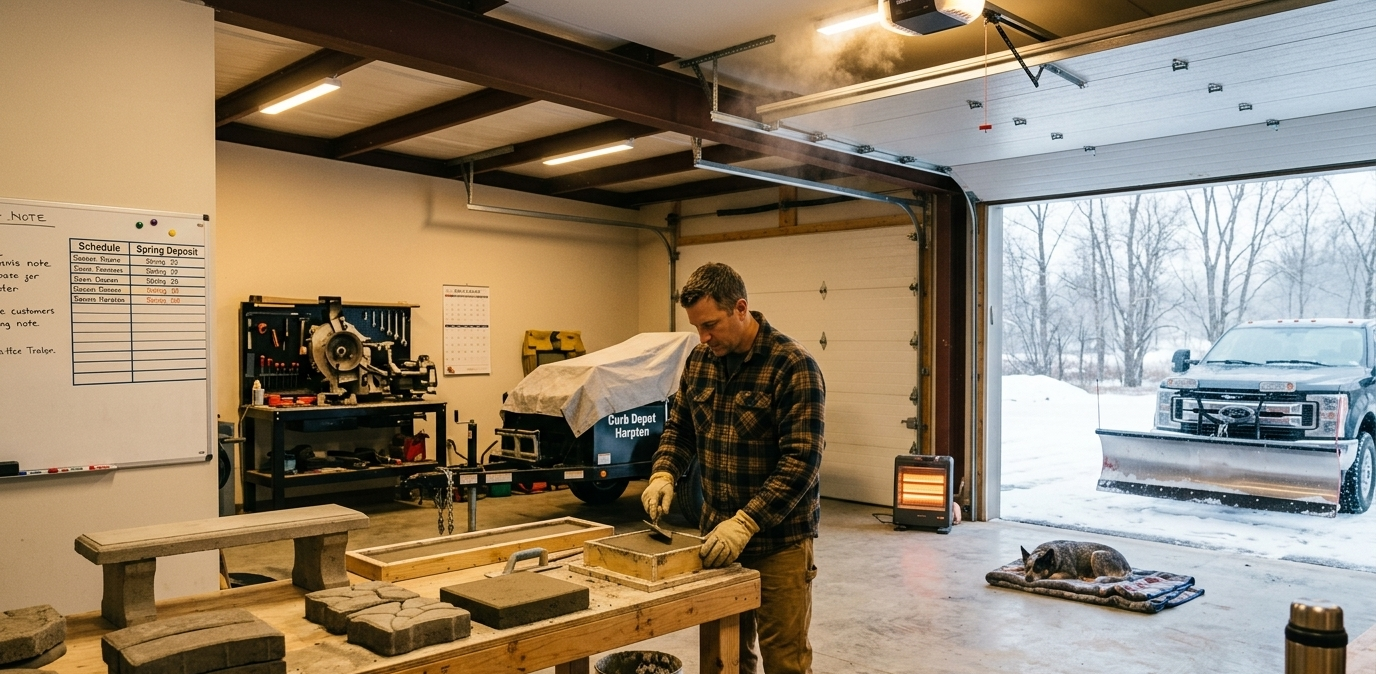
Winter doesn’t have to mean zero income. The operators who come out strongest in spring are the ones who built precast product inventory, collected spring deposits, ran snow removal routes, and used the downtime to upgrade their skills and maintain their equipment.
Send Curb Depot a message or call (920) 740-2218 to explore training and equipment packages that keep your business moving year-round.
Earn More With Natural Stone.

Click to Register

Create beautiful curb with unique stamps.

Looking to sell your equipment?
Let us help.





Ready to Order Your New Curbing Trailer? Request More Info.
Give us a call at (920) 740-2218 or simply fill out the form below to learn more about getting all the tools and training to get started. We make the process easy to start earning money in landscape curbing.