Most contractors blame cracking on bad concrete. The real cause is usually what happened before the pour. Insufficient ground prep, excess water in the mix, and skipping control joints create conditions where cracking is inevitable regardless of concrete quality.
Shrinkage Cracks: The Most Common Culprit
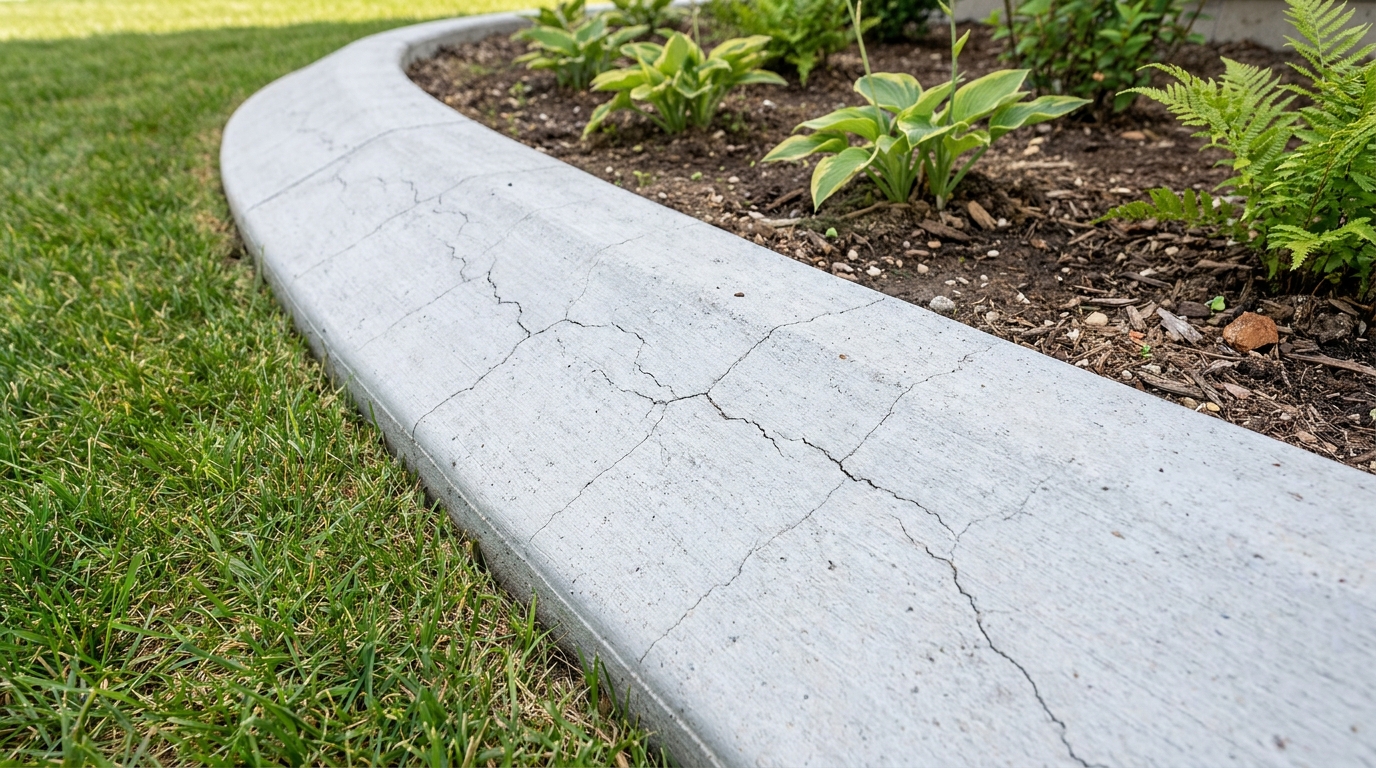
Plastic shrinkage happens when the surface of fresh concrete dries faster than the interior. The resulting tension pulls the surface apart, creating hairline cracks that widen over time.
What Causes Rapid Surface Drying
- Hot, windy conditions accelerate evaporation. A 90°F day with 15 mph wind can dry the surface before the mix reaches initial set.
- Excess water in the mix. Adding water to make concrete flow easier increases shrinkage as that extra water evaporates during curing.
- Pouring over dry, absorbent soil that pulls moisture from the bottom of the curb while the sun dries the top.
How to Prevent It
Keep your water-to-cement ratio consistent. Use a proper curbing admixture instead of extra water to improve workability. On hot days, mist the ground before pouring and avoid direct sun exposure during the first four hours of curing. A correct mix ratio is the single biggest factor in crack prevention.
Ground Movement and Base Failure
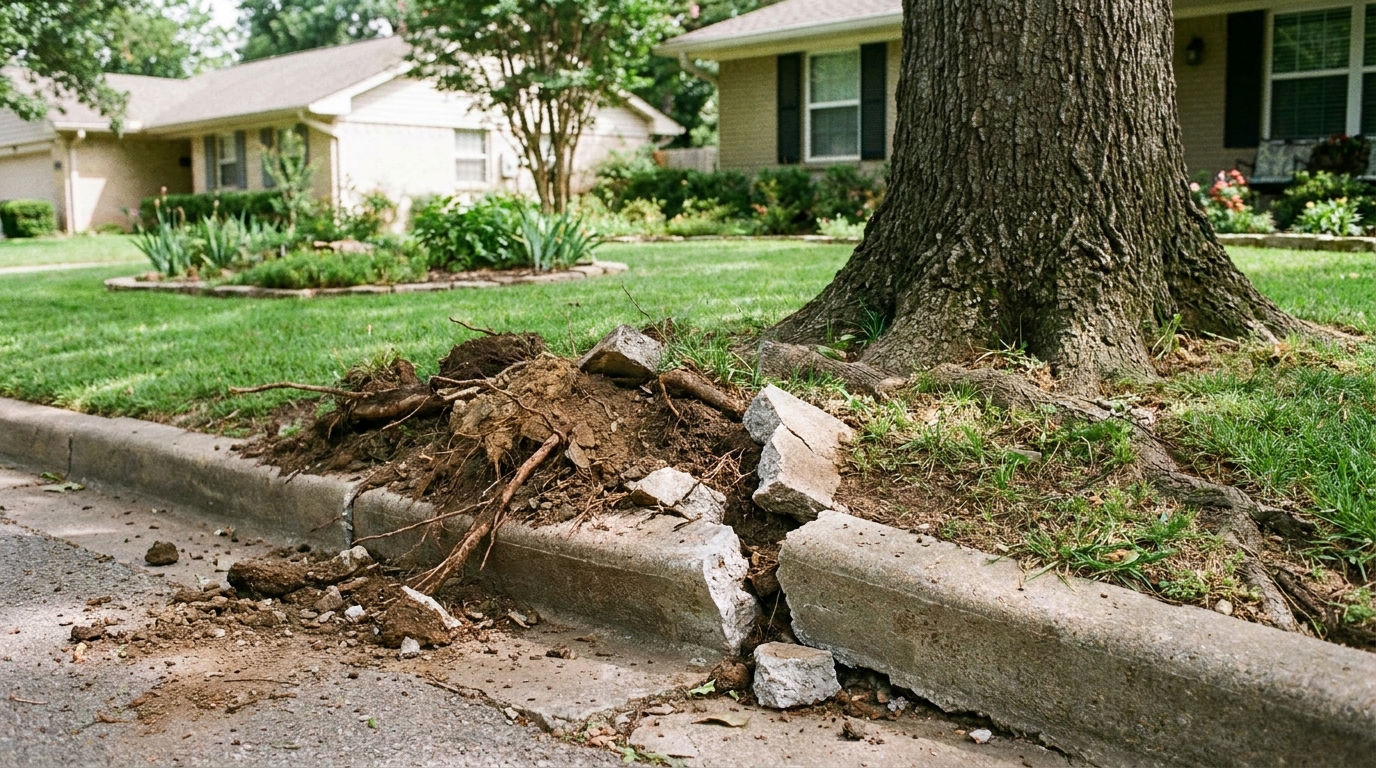
Cracks that appear weeks or months after installation usually trace back to what’s underneath the curb, not the concrete itself.
- Unstable soil. Clay-heavy soil expands when wet and contracts when dry. This seasonal movement lifts and settles the curb unevenly, creating stress fractures at the weakest points.
- Tree roots. Roots growing toward moisture beneath a curb create upward pressure that cracks the concrete from below. Plant trees at least 5 feet from curbing or install root barriers.
- Poor compaction. Soft or recently disturbed soil settles under the weight of cured concrete. Compacting the base with a plate compactor or hand tamper before pouring prevents settlement cracks.
The most effective approach to ground movement is prevention. Once the base fails, surface repairs won’t hold. Contractors who take 15 minutes to prep and compact the base avoid callbacks that cost hours.
Reinforcement and Control Joints That Work
Steel cable and fiber reinforcement serve different purposes. Cable holds cracked sections together so they don’t separate. Fiber reduces micro-cracking during the curing process.
Cable Reinforcement
Steel cable runs continuously through extruded curbing. If a crack does form, the cable keeps both sides aligned and prevents the curb from splitting apart. Curb Depot carries both stainless and galvanized cable in 5,000- and 10,000-foot spools for production-scale jobs.
Control Joints
Control joints are shallow cuts placed every 10 to 12 feet along the curb. They create planned weak points where cracks form in a straight, controlled line instead of randomly across the surface. Cut joints to at least one-quarter of the curb’s depth.
Using cable reinforcement and control joints together provides the strongest protection against visible cracking. Cable prevents separation, and joints direct any stress to predictable locations.
Frequently Asked Questions
Should I use fiber or steel cable to reinforce curbing?
Steel cable reinforcement holds cracked sections together and prevents separation. Fiber reinforcement reduces micro-cracking during curing but doesn’t provide structural holding power. For landscape curbing, steel cable is the standard because it keeps the curb intact even if ground movement causes a crack. Curb Depot supplies both stainless and galvanized cable.
How soon after pouring can concrete curbing crack?
Plastic shrinkage cracks can appear within the first 24 to 48 hours after pouring, especially in hot or windy conditions. These cracks form when the surface dries faster than the interior of the concrete. Proper curing techniques and a correct water-to-cement ratio prevent most early cracking.
Can cracked concrete curbing be repaired permanently?
Small hairline cracks can be sealed with a flexible concrete caulk that prevents water infiltration. Cracks wider than a quarter inch usually indicate base failure or reinforcement issues that surface repair alone won’t fix. Removing and replacing the damaged section is more cost-effective than repeated patching.
Stop Cracks Before They Start

Cracking isn’t random. Every crack traces back to a specific cause: too much water in the mix, poor base preparation, or missing reinforcement. Fix the cause and the cracks don’t appear.
Contractors who invest in proper ground prep, consistent mix ratios, and quality cable reinforcement build curbing that lasts well beyond a decade without major cracking. Learn the full installation process or contact Curb Depot to get the equipment and training that makes crack-free curbing standard on every job.
Earn More With Natural Stone.

Click to Register

Create beautiful curb with unique stamps.
Looking to sell your equipment?
Let us help.






Ready to Order Your New Curbing Trailer? Request More Info.
Give us a call at (920) 740-2218 or simply fill out the form below to learn more about getting all the tools and training to get started. We make the process easy to start earning money in landscape curbing.