
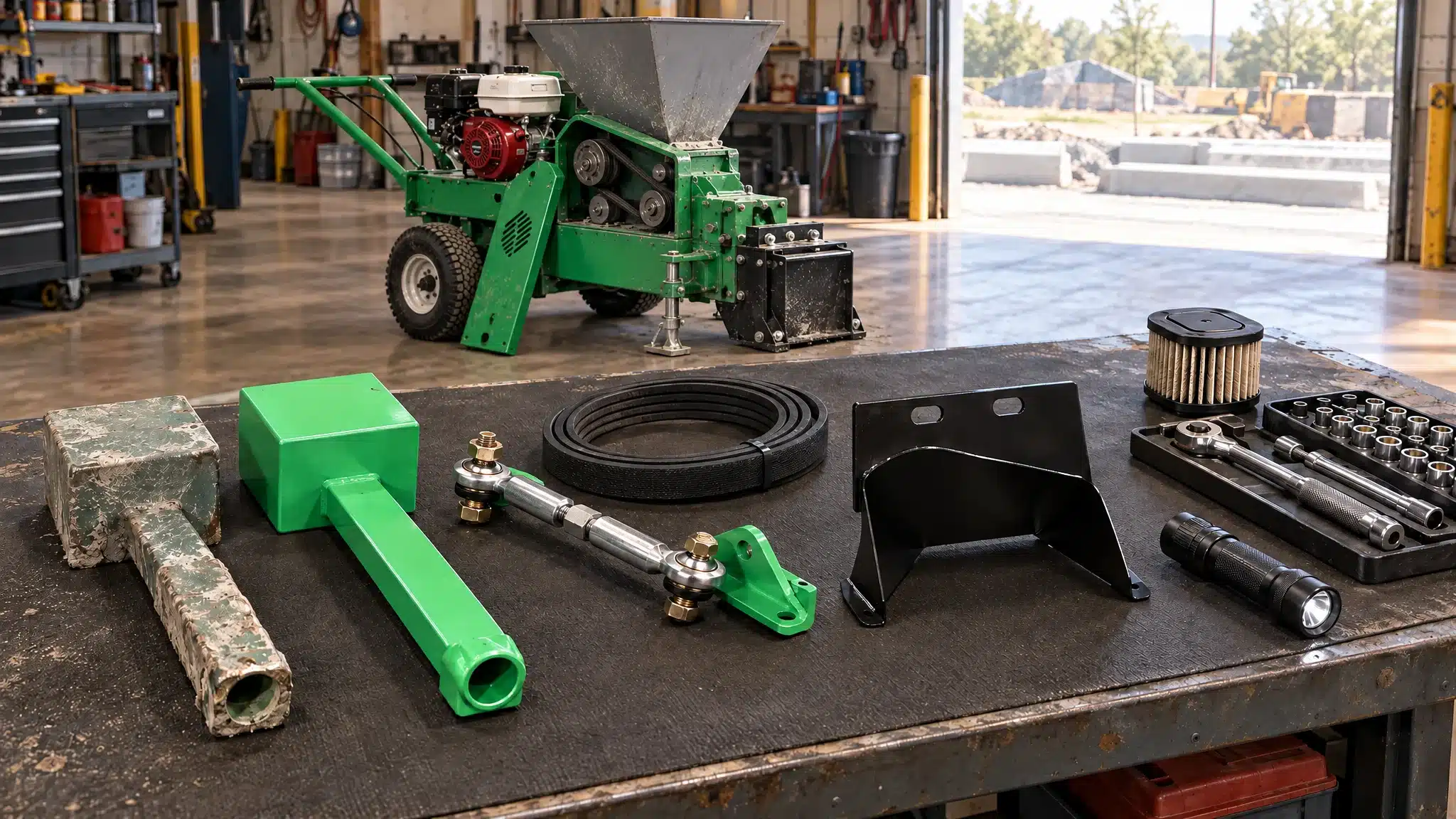
Start With the Component Category, Not the Symptom
Before ordering anything, it helps to narrow down which system is actually causing the problem. Most curbing machine issues fall into one of a few categories:
- Extrusion components: the plunger, plunger arm, and related linkage that shape and push concrete through the mold.
- Drive components: the link arm, gearbox attachment, and gearbox manufacturing plate that transfer power through the machine.
- Molds and profiles: the working surface that determines the finished curb shape and finish quality.
- Engine-related service items: wear parts tied to the power unit itself.
- Companion equipment: parts for the other machines a crew relies on the same day, such as a power wheelbarrow or a bed edger.
Narrowing the problem to one of these categories first makes it much faster to identify the exact part needed instead of guessing at a general description of the issue.
What a Replacement Parts Order Usually Covers
Curb Depot stocks the individual components tied to the categories above. On the extrusion and drive side, that includes a plunger, a plunger and plunger arm assembly, a link arm, a link arm with gearbox attachment, and a gearbox manufacturing plate. Curb Depot also carries replacement parts for companion jobsite equipment, including a power wheelbarrow switch and brake lever, and a bed edger rotor. Part availability and pricing can change, so the current catalog at current curbing machine replacement parts is the best place to confirm what is in stock for a specific machine.
Confirm Machine and Profile Compatibility First
Not every mold, trowel, or component is interchangeable across machines. Curb Depot offers both Harpten profiles and molds and trowels compatible with EdgeMaster and Kwik Kerb systems, which means mold and finishing-tool compatibility is a real consideration before ordering. Matching the exact machine and profile system to the replacement part, rather than treating curbing components as universal, is the first and most important step in choosing the right part.
Inspection Signals That Justify Replacing a Part
Some wear is cosmetic. Other wear affects curb density, extrusion performance, or the finished profile, and that is the wear worth acting on. Key signals to watch for include:
- Scoring along the plunger shaft
- Play or looseness in the plunger-arm connection
- Warped or cracked mold interiors
- Belts that are fraying, glazing, or running slack
These findings are worth checking before every job, since catching them early is what separates a quick part swap from an unplanned mid-job breakdown. More detail on spotting this kind of wear is covered in inspecting curbing equipment for hidden wear.
Cleanup and Checks That Prevent Early Replacement
A surprising number of part replacements trace back to cleanup habits rather than normal wear. Concrete left on the mold and plunger assembly after a job can harden further overnight and score the mold surface, so clearing it out at the end of each job protects some of the more expensive working components on the machine. Belt condition is also worth a quick daily look, since catching fraying, glazing, or slack before starting a job helps avoid cable-feed problems later. Beyond daily checks, a deeper start-of-season and end-of-season review, covering mold surfaces, drive-belt condition, and preparing the engine and exposed metal for storage, helps a crew plan for parts needs rather than reacting to a failure. The full routine is outlined in Curb Depot’s daily and seasonal machine maintenance routine.
How Machine Design Affects Part Changes
Machine design itself can change how often a crew deals with parts and downtime. The Harpten, for example, uses a bolt-free quick-release mold system, with mold changes taking about 10 seconds, and a no-guts design with no moving parts down by the plunger, which reduces the bearing, auger, track, and trolley components found on more traditional machine layouts. That design difference is worth factoring into how a crew thinks about long-term maintenance load, not just individual part replacement. More on this design is available on the Harpten machine design and compatible components page.
Engine Care on Gas-Powered Equipment
For curbing equipment that runs on a Honda engine, Honda’s own guidance calls for a pre-operation inspection, checking engine oil and air-filter condition, correcting any problems before use, and stopping the engine before performing maintenance. Honda also notes that dusty operating conditions can require more frequent air-filter service than the standard schedule, which is worth keeping in mind on a concrete and dust-heavy jobsite. For any engine-specific service question, the applicable Honda GX270/GX390 owner’s manual is the right reference.
When Training Fills the Gap
Identifying a problem is only half the job. Curb Depot also provides online and in-person training, and its basic training program can cover equipment maintenance, extruder setup, operation, cleanup, and jobsite systems, which gives a new operator or a growing crew the hands-on knowledge to inspect, maintain, and run the equipment correctly.
Frequently Asked Questions
How can I tell whether a curbing machine problem needs a replacement part instead of adjustment or cleaning?
Start by cleaning the machine and checking for simple causes like hardened concrete buildup. If the issue remains, such as scoring on the plunger shaft, play in the plunger-arm connection, a warped mold, or a worn belt, that points to a part that needs attention rather than a quick adjustment.
Which curbing machine parts should a crew keep on hand to reduce downtime?
The parts most tied to daily production, such as plunger and linkage components, drive-related parts, and the molds or profiles in regular rotation, are the ones worth having available so a single worn part does not stop a scheduled job.
How do I confirm that a replacement mold or component will fit my machine?
Match the part to the exact machine and profile system in use. Curb Depot offers both Harpten profiles and EdgeMaster/Kwik Kerb compatible molds and trowels, so confirming the profile system before ordering avoids a mismatched part.
Keep Your Crew Running
Curb Depot supplies the replacement parts, molds, and training curbing crews in Appleton, Neenah, Menasha, Kaukauna, and across the Fox Valley, WI region rely on to stay productive. To check part compatibility for your machine or place an order, call (920) 740-2218 or browse the current curbing machine replacement parts catalog.
Earn More With Natural Stone.

Click to Register

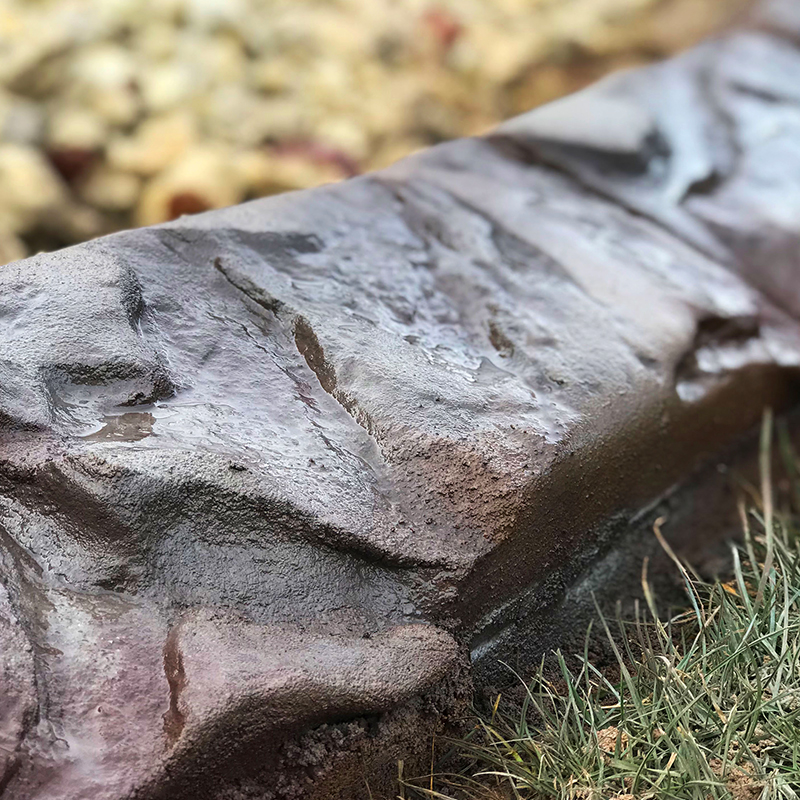
Create beautiful curb with unique stamps.
Looking to sell your equipment?
Let us help.





Ready to Order Your New Curbing Trailer? Request More Info.
Give us a call at (920) 740-2218 or simply fill out the form below to learn more about getting all the tools and training to get started. We make the process easy to start earning money in landscape curbing.