The best curbing machine for landscape contractors delivers consistent output across varying terrain, changes molds fast enough to keep a multi-job day on schedule, and doesn’t eat your margins in maintenance costs. Three machines dominate the walk-behind landscape curbing market: the Lil’ Bubba Hornet EP, the Tygar Bengal, and Curb Depot’s Harpten. Each takes a different approach to motor, drive system, and mold design, and those differences show up in your daily output and long-term operating costs.
A contractor bought his first machine based on price alone. Specs looked close enough on paper. What he didn’t account for was how a bolt-style mold system would slow him down mid-job—roughly 5 minutes per change, adding up to 50 minutes of dead time on a busy day with multiple mold changes. Tighter garden beds were a problem too: a narrow wheelbase tipped before it turned. He’s on his second machine now, and most contractors shopping for their second machine tell a version of the same story. This guide is meant to help you skip that expensive first lesson.
Lil’ Bubba Hornet EP
Lil’ Bubba has been in the curbing equipment business since 1992, making the Hornet EP one of the most recognized machines on the market. It runs a Kohler Command PRO CH245 at 4.5 HP, uses a patented elliptical plunger drive that creates uniform, air-gap-free curbs, and can extrude walkways up to 24 inches wide. It gets within 2 inches of walls and fences, which helps on tight residential work.
At well over $9,000 for the machine alone, it’s the most expensive option in this comparison. The Kohler motor is capable, but its speed is fixed. It doesn’t self-adjust when terrain changes. On slopes or soft ground, you’re compensating manually, and that shows up in curb consistency across longer runs. Lil’ Bubba also offers trailer packages that push the total investment significantly higher.
The key question with the Hornet EP: does the brand recognition and elliptical drive justify the price premium over machines that include variable motors and quick-release mold systems as standard?
Tygar Bengal
The Bengal runs a Honda 3.0 HP fixed-speed motor, weighs 185 lbs, and has a 14-inch steering radius. Its standout feature is decorative range: over 30 stamp patterns and 25 curb shapes, the widest selection in this comparison. It also extrudes braided galvanized cable directly into the curb as a standard feature, adding reinforcement without a separate step.
The 14-inch steering radius handles standard residential curves but requires more correction on complex garden bed shapes. At 3 HP fixed-speed, the motor works well on flat terrain; on slopes, the operator picks up the slack. The Bengal is currently listed at $7,200 for the machine.
The Bengal is a solid choice if stamp variety and built-in cable extrusion are your priorities. Where it gives ground is motor power, wheelbase stability, and mold-change speed.
Harpten by Curb Depot
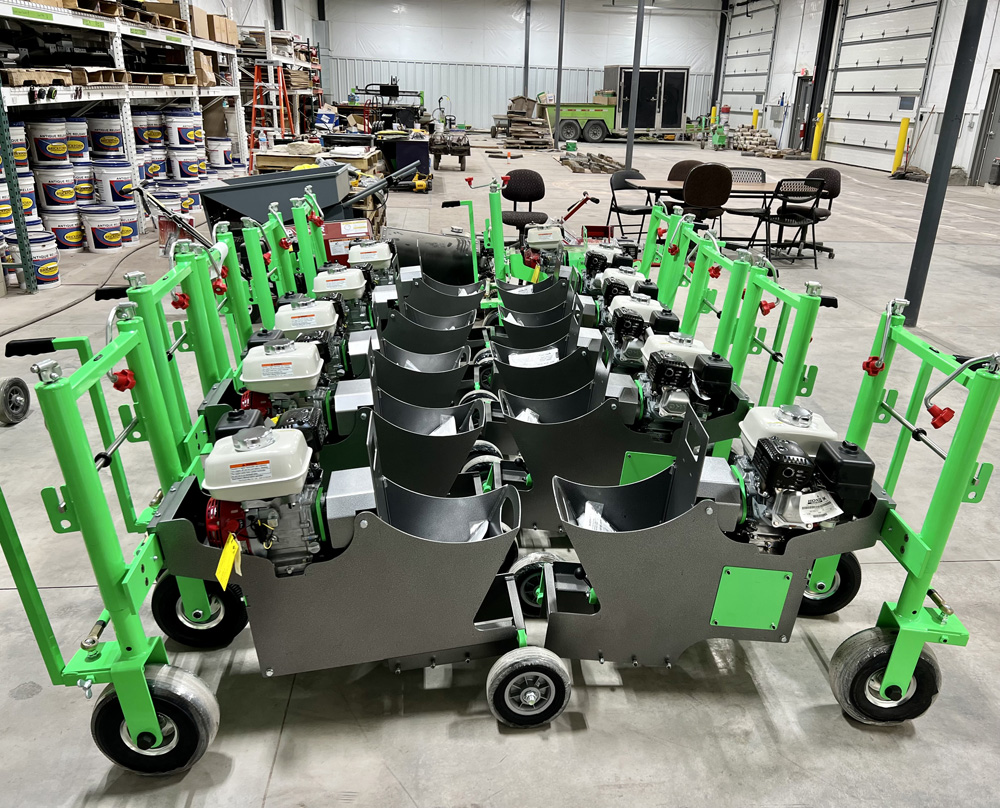
The Harpten was designed by Ryan Wolfrath, who’s been running a curbing business since 1993. The design reflects problems he solved on his own jobs, not features chosen by a product team.
It runs a Honda 4 HP variable-speed motor. Variable is the key word: the motor self-adjusts as terrain changes, so concrete comes out consistent whether you’re on flat lawn, a gravel approach, or a slope. You’re steering, not compensating. For contractors comparing gas versus electric curbing machines, the Harpten’s variable Honda offers terrain adaptability that fixed-speed electrics can’t match.
At 190 lbs with a 24-inch wheelbase, it’s the heaviest and widest machine here. That weight keeps it planted on uneven ground, and the wider wheelbase tracks more predictably through tight curves—counterintuitively giving you better access to garden beds, not less.
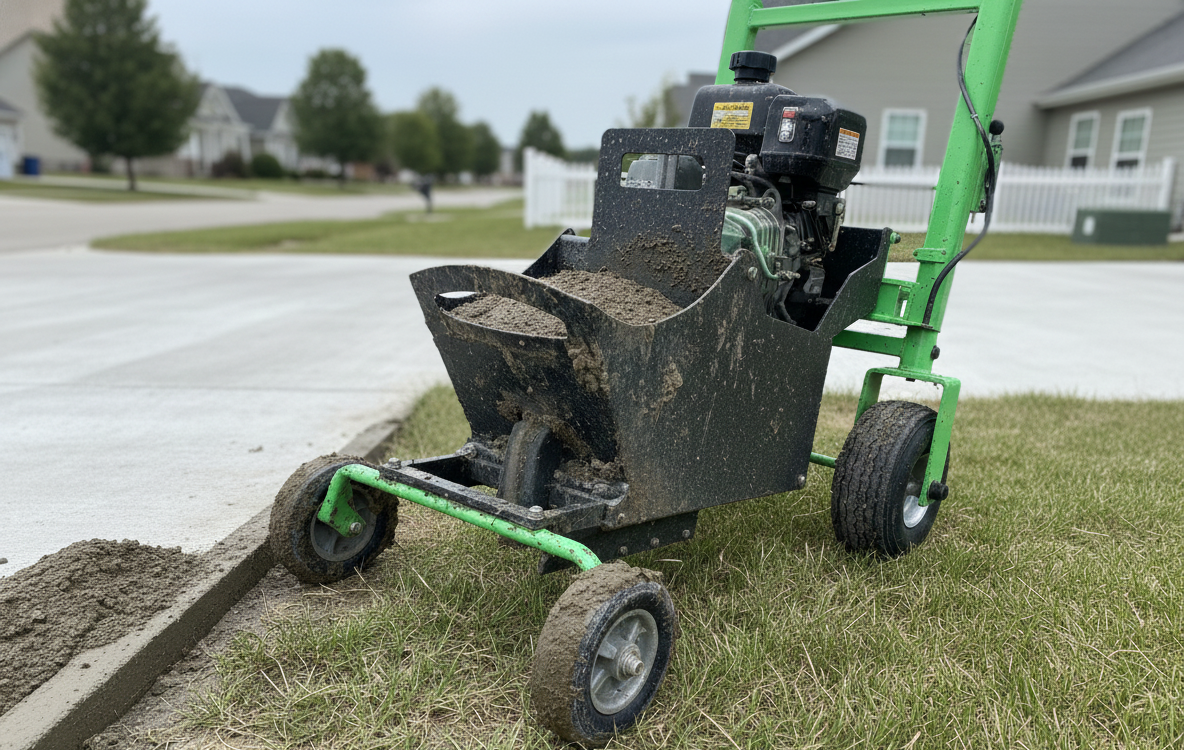
The boltless quick-release mold system swaps profiles in roughly 10 seconds. On a day with 5 mold changes, that’s under 2 minutes total versus 50+ minutes on a bolt system. The no-guts plunger design eliminates the auger, track, and trolley found in conventional machines, removing the parts that generate the most maintenance costs over a machine’s life.
At $7,200, the Harpten matches the Bengal on price while including the variable motor, quick-release molds, and adjustable belt tensioner as standard.
Buying New vs. Used
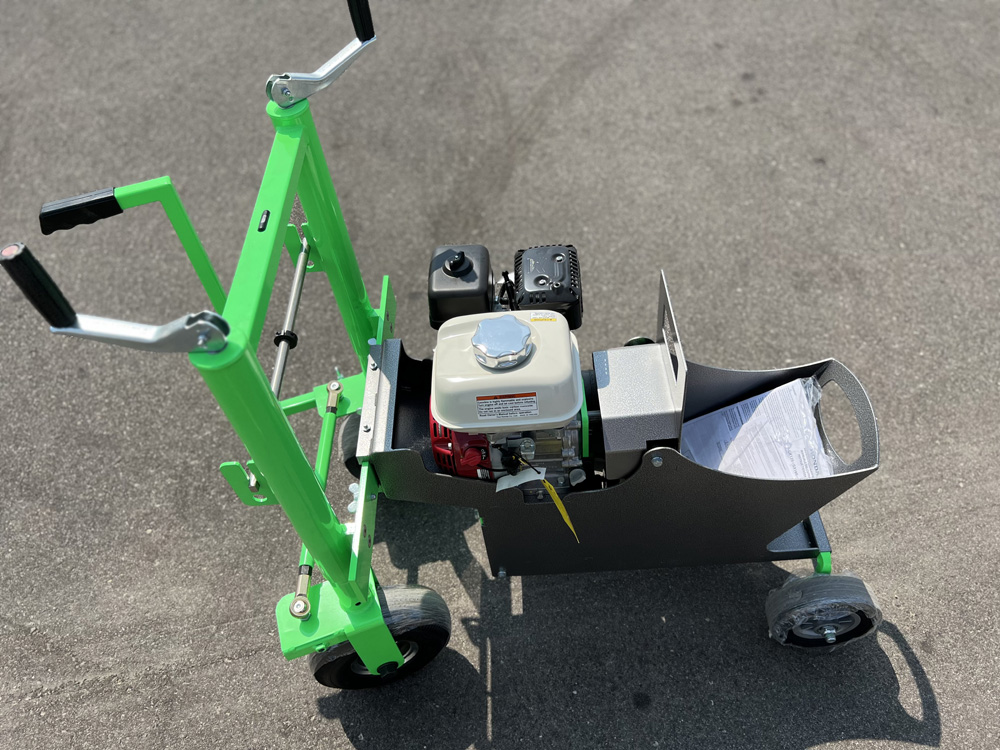
Both options work depending on where you are in your business. If you’re looking at used curbing equipment, check four things before you commit: plunger wear, belt condition, mold condition, and the gearbox for concrete ingestion. A used machine with worn consumables isn’t a deal; it’s a hidden parts bill.
For new buyers, equipment financing through Curb Depot’s lending partner offers credit decisions in under 30 minutes with no financial statements required. Generating revenue before the machine is paid off changes the math on what you can afford.
Frequently Asked Questions
How Much Does a Professional Curbing Machine Cost?
Professional landscape curbing machines range from $7,200 to over $9,000 new for the three machines in this comparison. Both the Harpten and the Bengal are currently listed at $7,200. The Harpten includes the boltless mold system, Honda variable motor, and belt tensioner as standard, not upgrades. Used machines from various brands can run $2,000 to $5,000 depending on age and condition.
What Is the Best Curbing Machine for a New Contractor?
The best machine for a new contractor minimizes your learning curve while delivering consistent results from day one. A variable-speed motor, quick-release mold system, and low-maintenance plunger design let you focus on installation quality instead of troubleshooting equipment. The less time you spend adjusting your machine, the more jobs you complete in a week.
Can a Curbing Machine Handle Sloped or Uneven Terrain?
Fixed-speed motors on machines like the Hornet EP and Bengal require manual compensation on slopes, which can affect curb consistency. A variable-speed motor like the Honda 4 HP on the Harpten self-regulates power delivery as conditions change. Combined with a 24-inch wheelbase, it tracks true on slopes without constant correction.
The Right Machine Pays for Itself in the First Season
Three machines, three approaches. The Lil’ Bubba Hornet EP brings brand history and a patented plunger drive at a premium price. The Tygar Bengal offers the widest stamp selection with built-in cable extrusion. The Harpten delivers the most field-practical features: variable motor, wide wheelbase, boltless molds, no-guts design—at a price that matches the Bengal and comes in well below the Hornet EP.
The best way to decide is to match the machine to how you’ll actually use it day to day. If you’re running multiple jobs across varying terrain with frequent mold changes, the Harpten was built for that workflow. Reach out to the Curb Depot team to talk through your setup, or explore the full Harpten specs to see how it stacks up against what you’re running now.
Earn More With Natural Stone.

Click to Register

Create beautiful curb with unique stamps.
Looking to sell your equipment?
Let us help.


Ready to Order Your New Curbing Trailer? Request More Info.
Give us a call at (920) 740-2218 or simply fill out the form below to learn more about getting all the tools and training to get started. We make the process easy to start earning money in landscape curbing.