Choosing between a gas-powered and an electric curbing machine is a major decision for contractors, directly affecting productivity, operating costs, and job site flexibility. Through our work with curbing contractors and equipment manufacturers nationwide, we’ve watched electric curbing machines go from underpowered newcomers to serious competitors.
This Curb Depot guide provides a practical, side-by-side comparison of gas-powered and electric curbing machines, examining torque output, runtime, maintenance requirements, job-site conditions, and long-term return on investment. Here’s what you need to know before investing in a curbing machine.
At a Glance: Gas vs. Electric Equipment
Gas-powered and electric curbing machines each offer distinct advantages for professional contractors:
Gas-powered machines like the Harpten provide consistent torque, unlimited runtime with refueling, and lower upfront costs, making them ideal for large-scale projects requiring continuous operation.
Electric machines deliver comparable torque for residential work, significantly lower maintenance requirements, reduced noise, zero emissions, and lower long-term operating costs despite the higher initial investment.
Equipment selection should be based on the specific needs of your curbing business, project types, and long-term financial goals, rather than on the initial purchase price alone.
Power and Performance: The Torque Debate
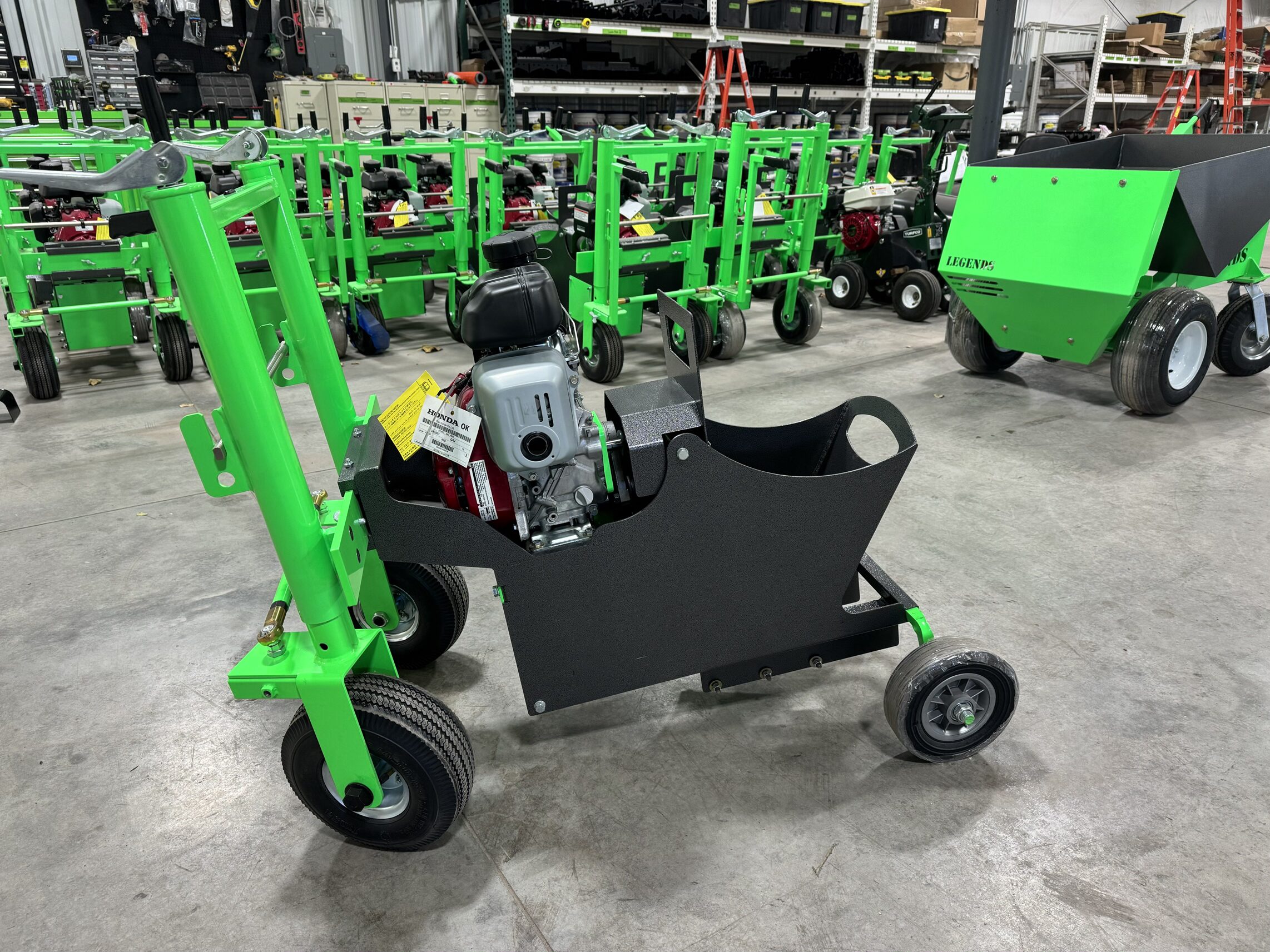
For decades, gas-powered curbing machines, such as the industry-proven Harpten, have been the standard due to their consistent torque output and ability to handle dense, low-slump concrete mixes. This capability is critical for producing structurally sound, uniformly extruded curbs across varying soil and weather conditions.
Electric curbing machines, however, have advanced significantly in recent years. Modern electric drive systems can now deliver high torque at low RPMs, which is exactly where torque matters most during concrete extrusion. In controlled conditions, electric machines can match gas-powered units for small to mid-sized residential and commercial projects.
The primary performance difference comes down to runtime. Gas-powered machines can operate continuously as long as fuel is available, making them better suited for long, uninterrupted pours. Electric machines are constrained by battery capacity and recharge time, though high-capacity lithium-ion battery systems are extending usable runtimes with each new generation.
Maintenance and Reliability: A Look at Long-Term Costs
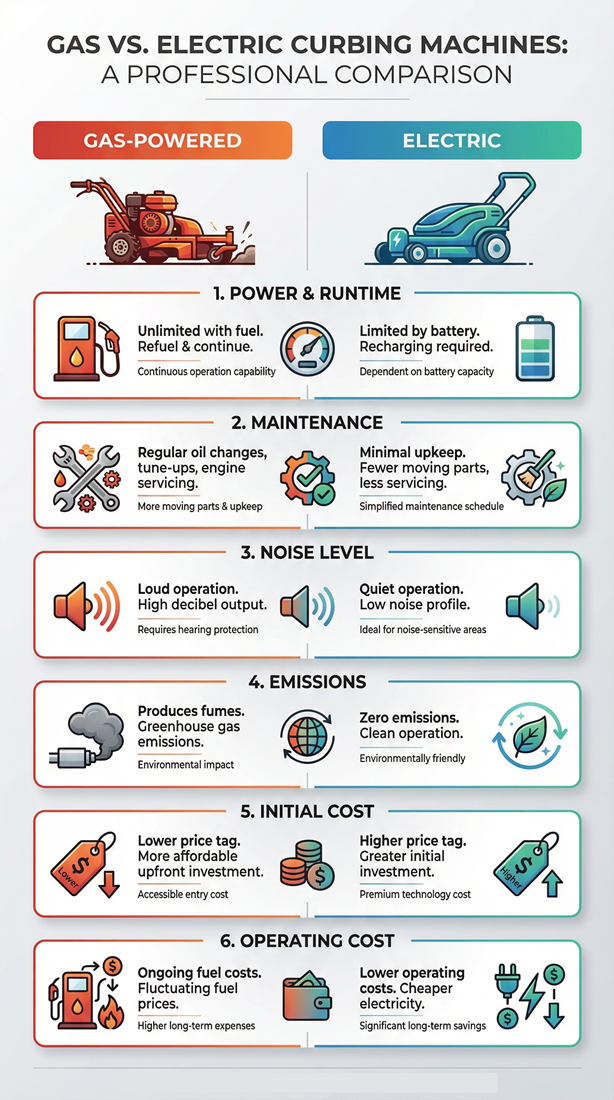
Electric curbing machines require significantly less routine maintenance than gas-powered equipment. With no oil changes, spark plugs, carburetors, or fuel systems to service, electric machines reduce downtime and simplify ownership. For contractors running multiple jobs per week, fewer maintenance interruptions can translate directly into higher profitability.
Typical maintenance requirements for gas-powered curbing machines:
- Regular oil changes (every 50-100 hours of operation)
- Air filter cleaning and replacement
- Spark plug inspection and replacement
- Carburetor adjustments and cleaning
- Fuel system maintenance
- Engine tune-ups and valve adjustments
- Fuel costs for every job
- Periodic engine component replacement
Gas-powered curbing machines remain reliable when properly maintained, but the cumulative maintenance time and expense can add up over years of use. While gas engines are well understood and widely serviceable, contractors should factor these ongoing costs into the total cost of ownership.
Job Site Considerations: Noise, Fumes, and Portability
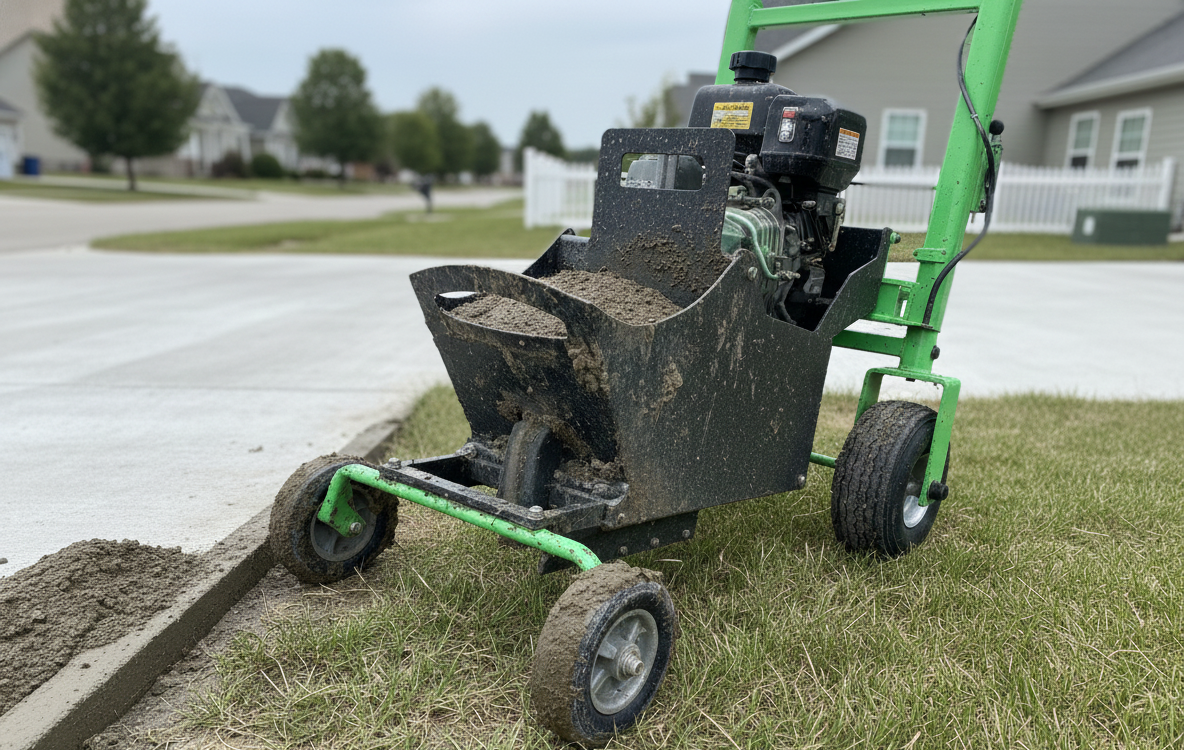
Job site conditions often influence equipment choice as much as performance. Electric curbing machines operate at substantially lower noise levels, making them ideal for residential neighborhoods, early-morning installations, and areas with local noise ordinances. Because they produce no exhaust fumes, electric machines are also better suited for enclosed or partially enclosed spaces.
Gas-powered machines generate more noise and exhaust, which can be a concern for crews working near homes, schools, or commercial properties with strict environmental requirements. In terms of mobility, both machine types are designed for maneuverability, though gas-powered units are typically heavier due to engine components and fuel systems.
Upfront Cost and ROI: Which Machine Makes Financial Sense?
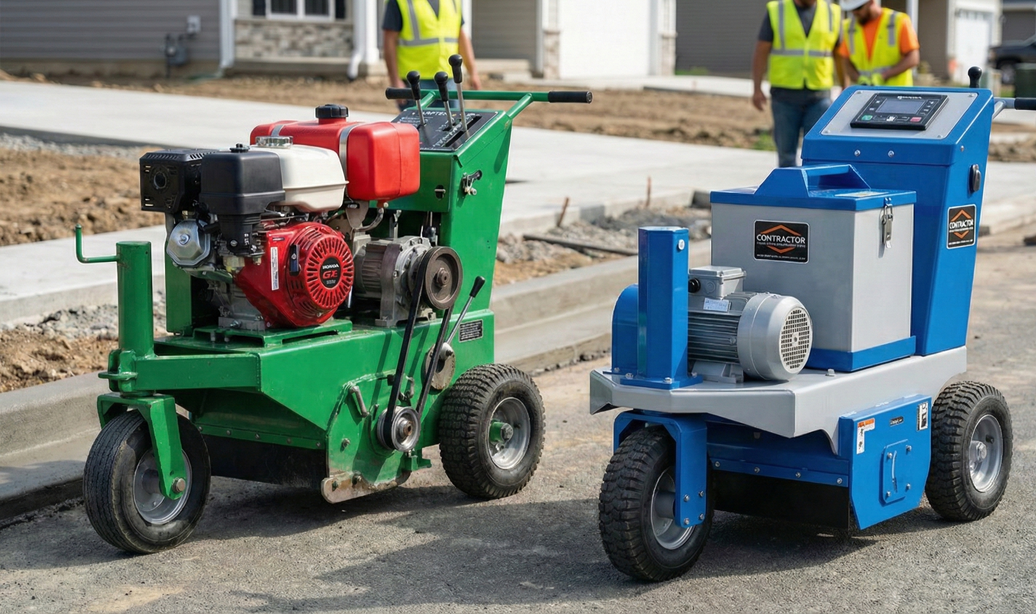
Historically, gas-powered curbing machines have had a lower upfront purchase price, making them a common entry point for new contractors. While electric machines often carry a higher initial cost, the price gap has narrowed as battery and motor technology have become more widely adopted.
For contractors just starting out or testing market demand, renting curbing equipment can be a cost-effective way to evaluate both gas-powered and electric options before committing to a purchase.
When evaluating return on investment, contractors should consider the total cost of ownership rather than the purchase price alone. Electric machines benefit from lower maintenance costs and reduced fuel expenses, which can offset higher upfront pricing over time. For established curbing businesses focused on efficiency, sustainability, and predictable operating costs, electric machines can offer a strong long-term value.
Choose the Right Machine for Your Business
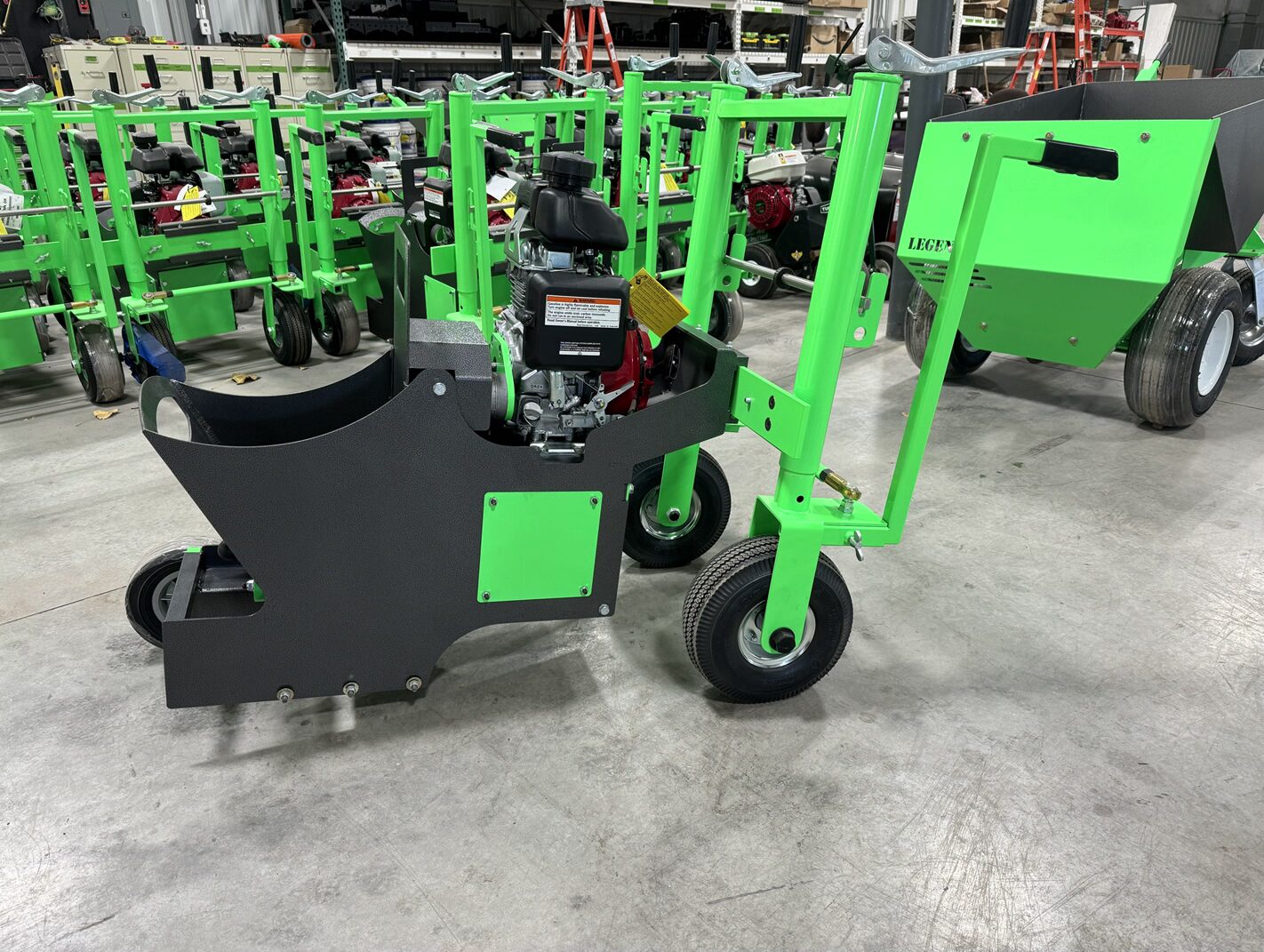
Both gas-powered and electric curbing machines have a place in today’s curbing industry. Gas-powered machines remain a dependable choice for large-scale projects requiring long, continuous operation. Electric curbing machines, on the other hand, offer advantages in maintenance, noise reduction, and job site flexibility, making them an increasingly popular option for residential and light commercial work.
At Curb Depot, we help contractors evaluate equipment based on real-world job requirements, not trends alone. Contact our team to discuss your project scope, budget, and growth goals, and we’ll help you choose the curbing machine that best supports your business.
Earn More With Natural Stone.

Click to Register

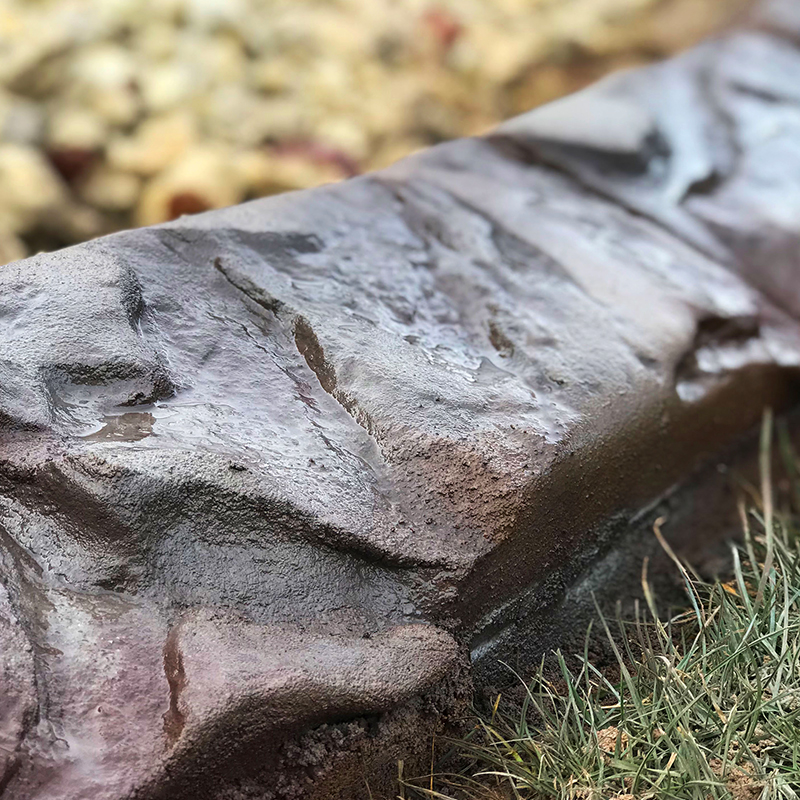
Create beautiful curb with unique stamps.

Looking to sell your equipment?
Let us help.





Ready to Order Your New Curbing Trailer? Request More Info.
Give us a call at (920) 740-2218 or simply fill out the form below to learn more about getting all the tools and training to get started. We make the process easy to start earning money in landscape curbing.