Your patio or driveway is one of the largest hardscape investments you’ll make in your property, which is why the natural stone vs. concrete paver decision can cause so much analysis paralysis. It’s not just about choosing materials; it’s about predicting how your choice will look, perform, and hold value over the next 20 to 30 years while managing upfront costs that can vary by thousands of dollars.
As a company equipping hardscape contractors nationwide—from Wisconsin’s freeze-thaw zones to milder southern climates—Curb Depot has unique insights into how both materials perform in real-world installations across vastly different conditions and budgets. The material you choose matters less than most people think, but installation quality and edge restraint details matter far more than most people realize.
The Case for Natural Stone
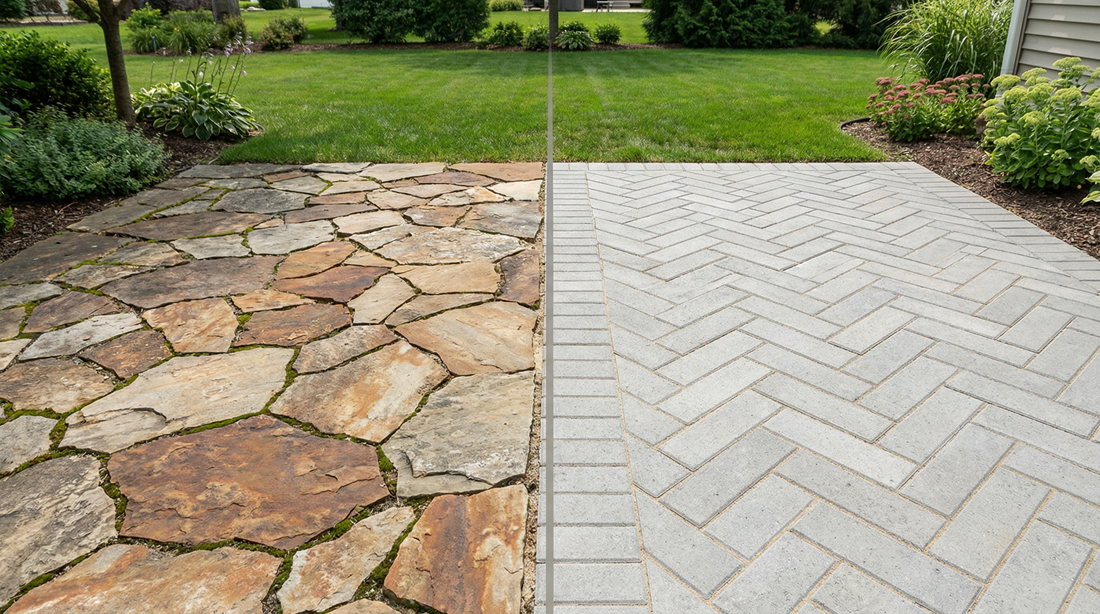
There’s no denying the timeless beauty of natural stone. Each piece is unique, with its own variations in color, texture, and shape, creating a one-of-a-kind hardscape that manufactured materials can’t fully replicate.
Popular options like flagstone, slate, and granite are known for their durability and can last decades or longer with proper installation and care. Natural stone is also generally less prone to fading from sun exposure compared to many concrete products.
That said, natural stone typically incurs higher material and installation costs. Because stones vary in size and thickness, installation requires more time and skill to achieve a level, stable surface. Some types of stone can also be more susceptible to staining, depending on their porosity and use.
The Advantages of Concrete Pavers
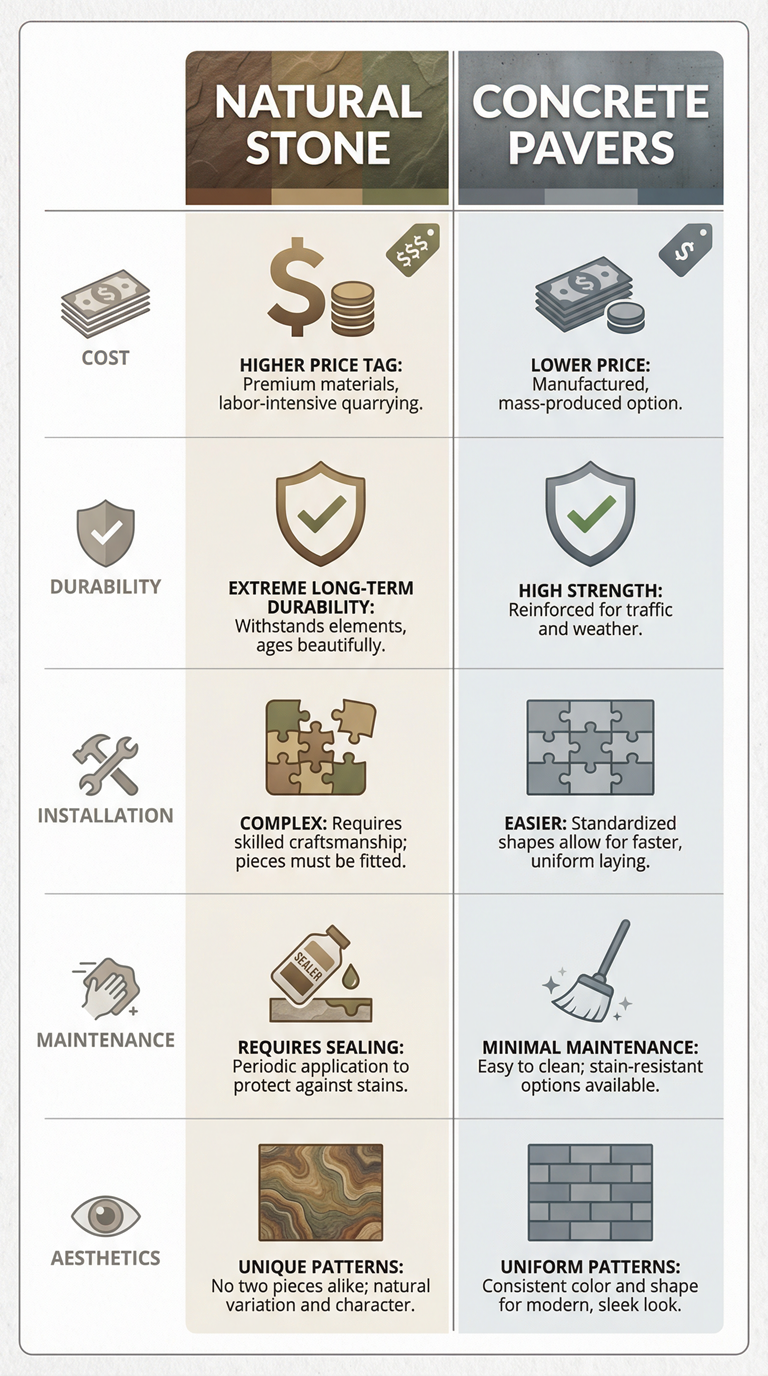
Concrete pavers are a versatile and cost-effective alternative to natural stone. Thanks to modern manufacturing techniques, concrete pavers are available in a wide range of colors, shapes, and textures, including styles designed to closely mimic natural stone.
They’re engineered for strength and consistency, making them a popular choice for patios, walkways, and driveways. Their uniform size enables faster installation and precise pattern layouts, reducing labor costs.
Contractors often favor concrete pavers for projects requiring clean lines, repeatable designs, or phased installation. At Curb Depot, we regularly see concrete pavers used to create everything from intricate patterns to simple, modern hardscapes.
Installation Considerations
Proper installation is critical to the long-term performance of both natural stone and concrete pavers. Each requires a well-compacted gravel base topped with a leveling layer of sand to promote drainage and prevent settling.
For natural stone, installation is often more custom, with each stone individually placed, adjusted, and leveled. Concrete pavers, by contrast, can be installed in consistent, repeatable patterns due to their uniform dimensions.
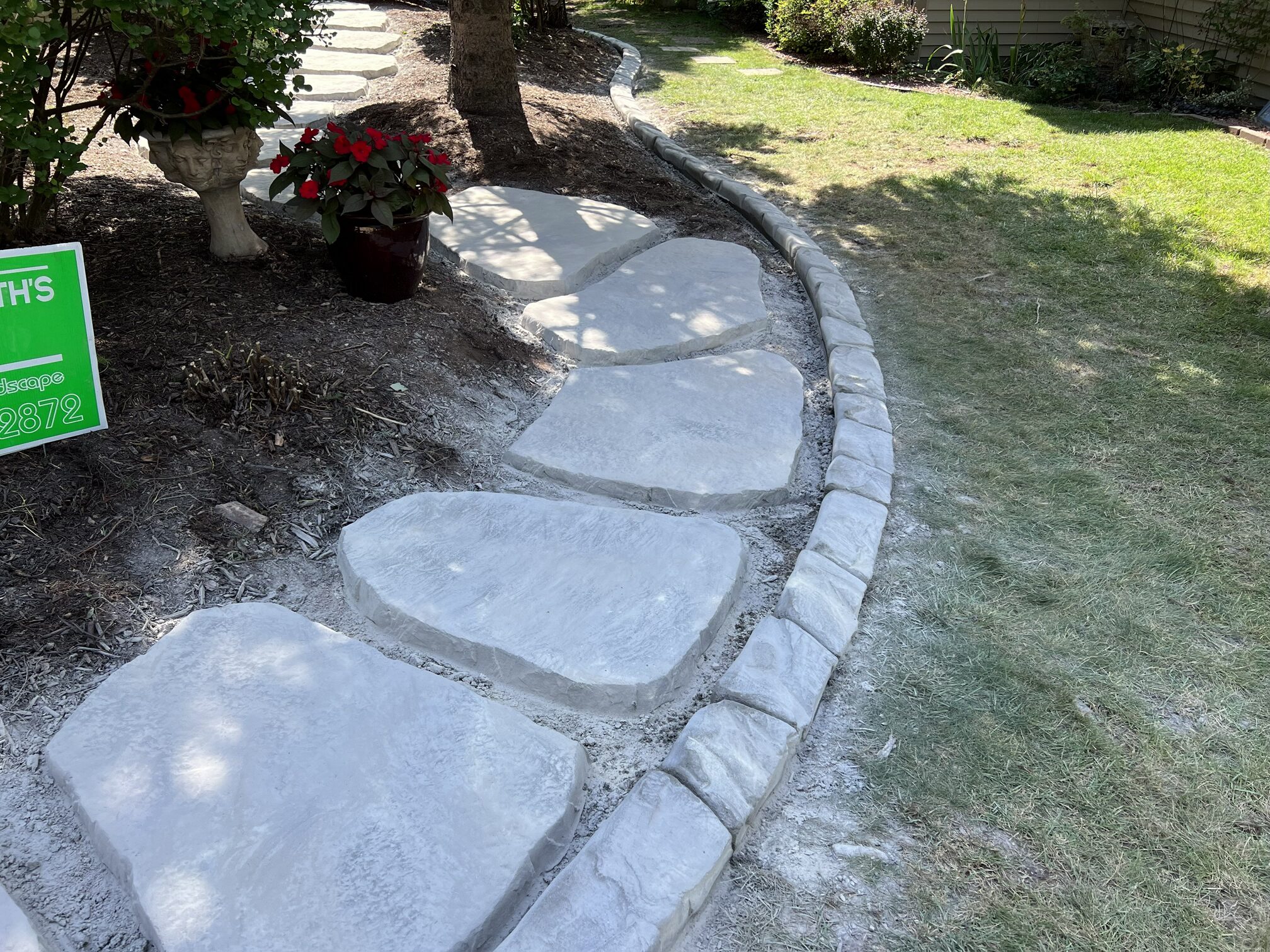
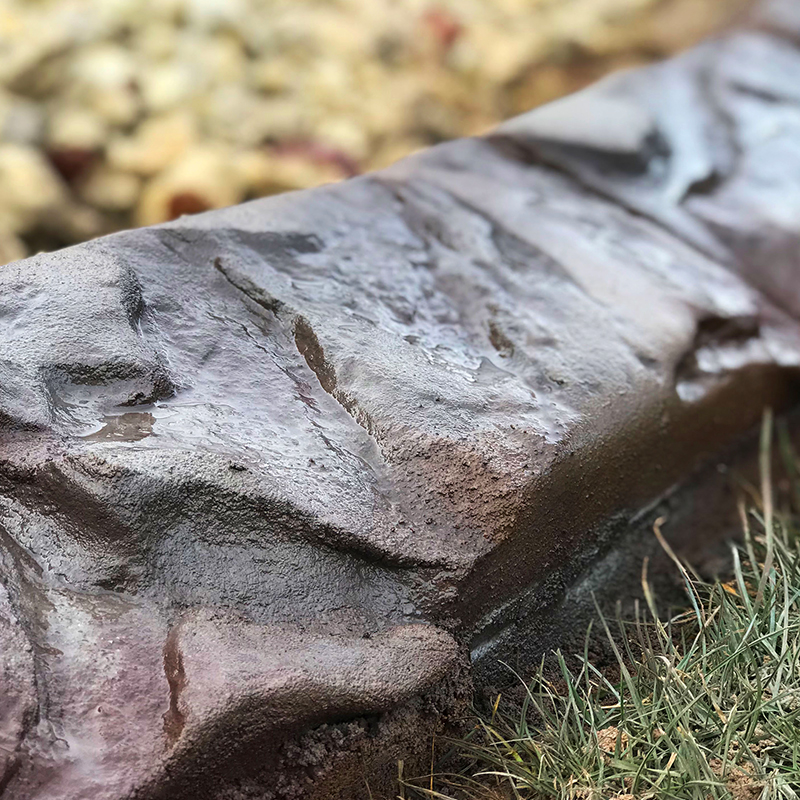
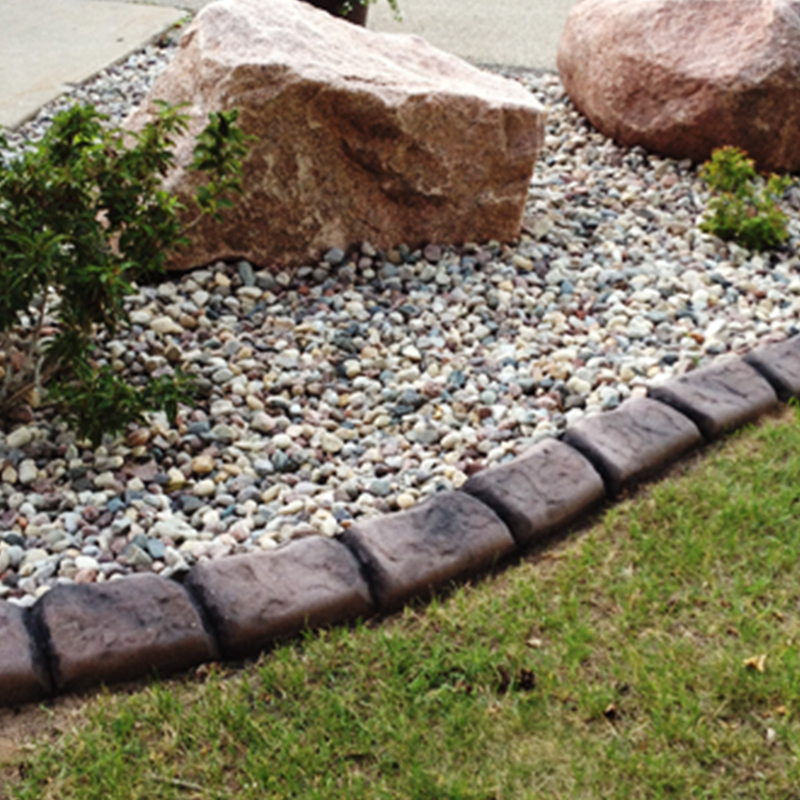
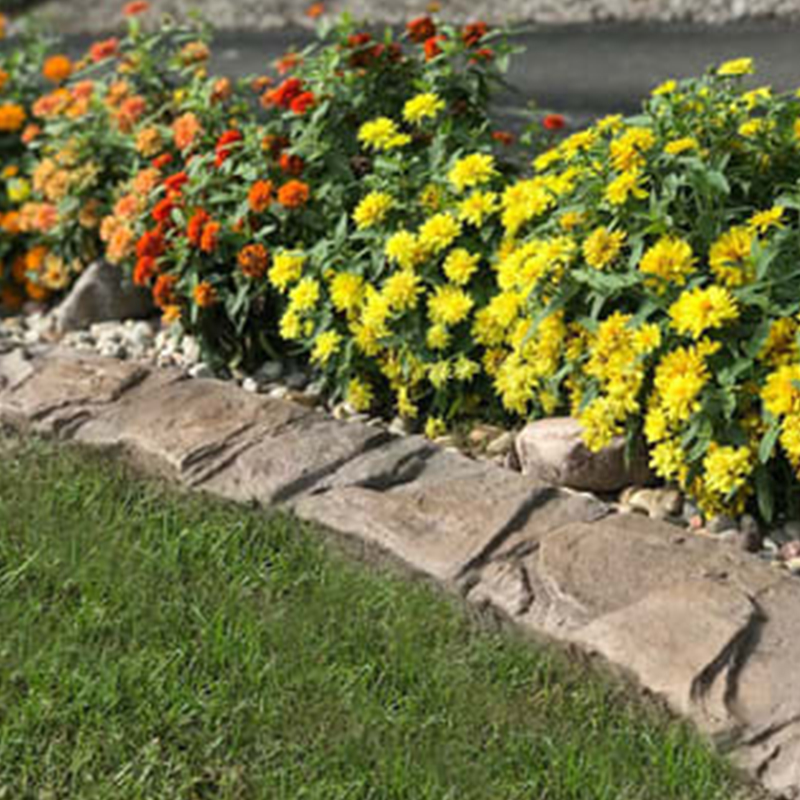
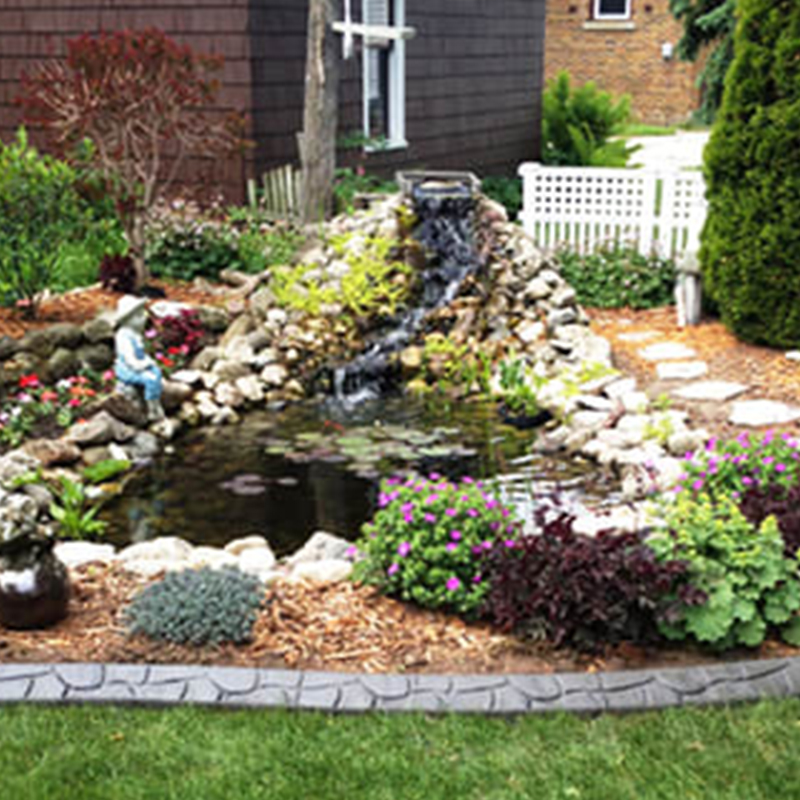
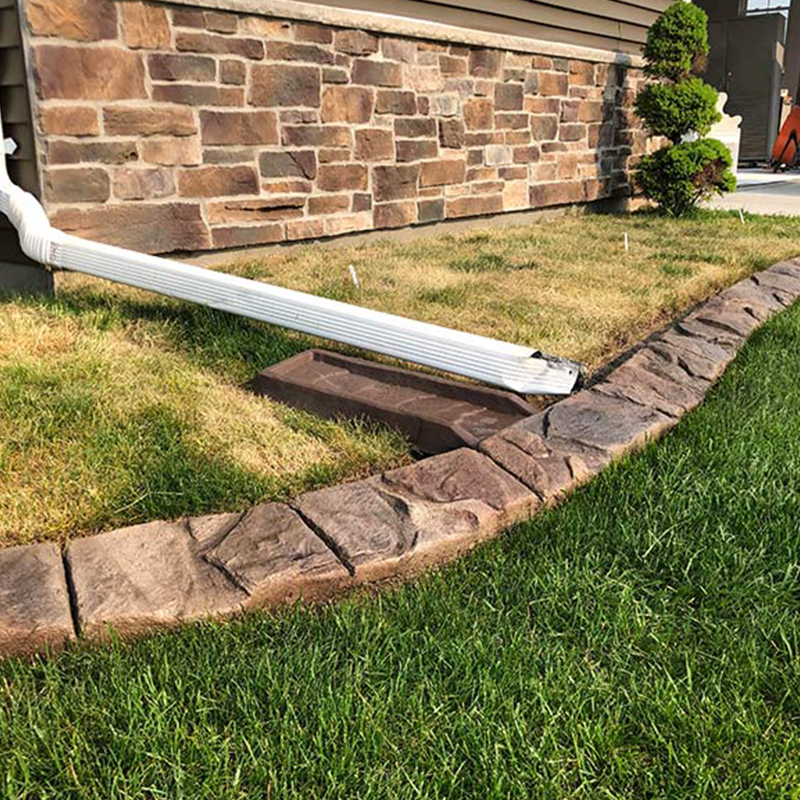
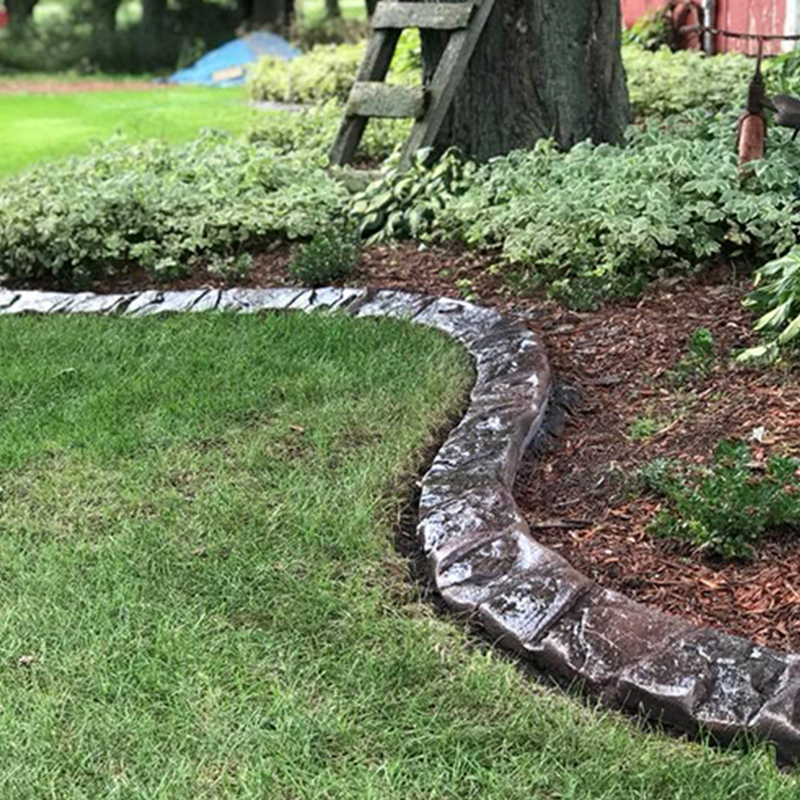
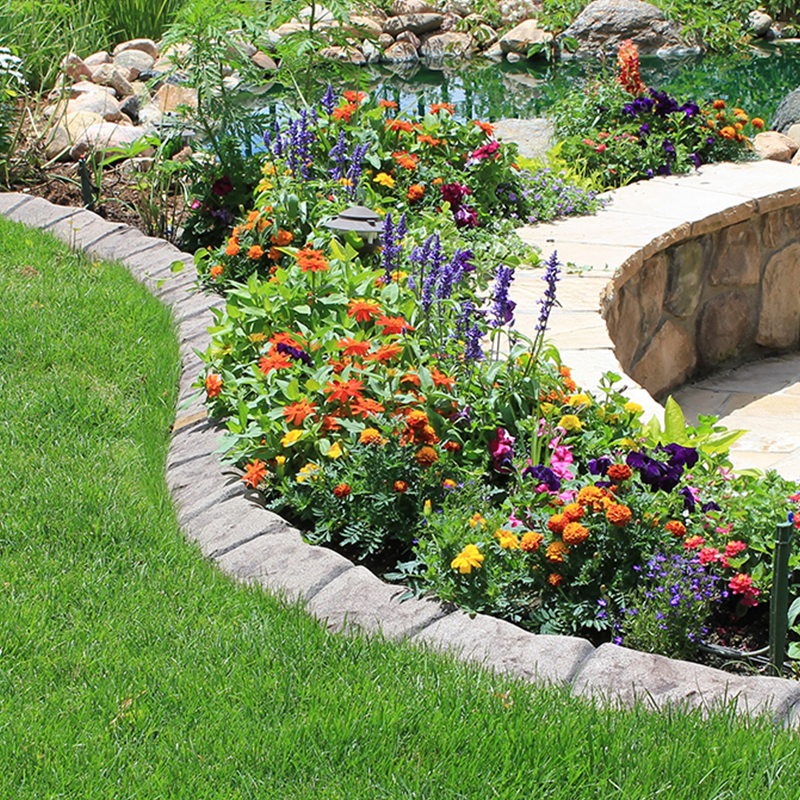
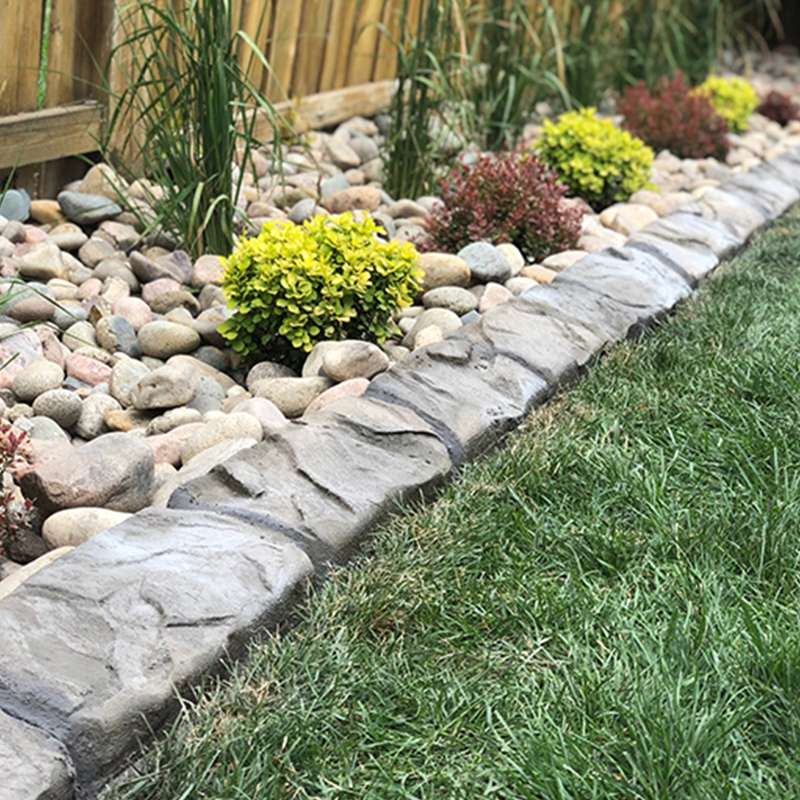
Regardless of material, a quality edge restraint is essential. Edge restraints, such as concrete curbing, help lock pavers in place, prevent lateral movement, and maintain clean lines over time.
Critical installation requirements for both materials:
- Well-compacted gravel base (typically 4-6 inches)
- Leveling layer of sand for proper drainage
- Quality edge restraint system (concrete curbing recommended)
- Proper slope for water runoff (minimum 2% grade)
- Joint sand or polymeric sand between pavers
- Adequate excavation depth for base materials
Maintenance and Durability in the Midwest
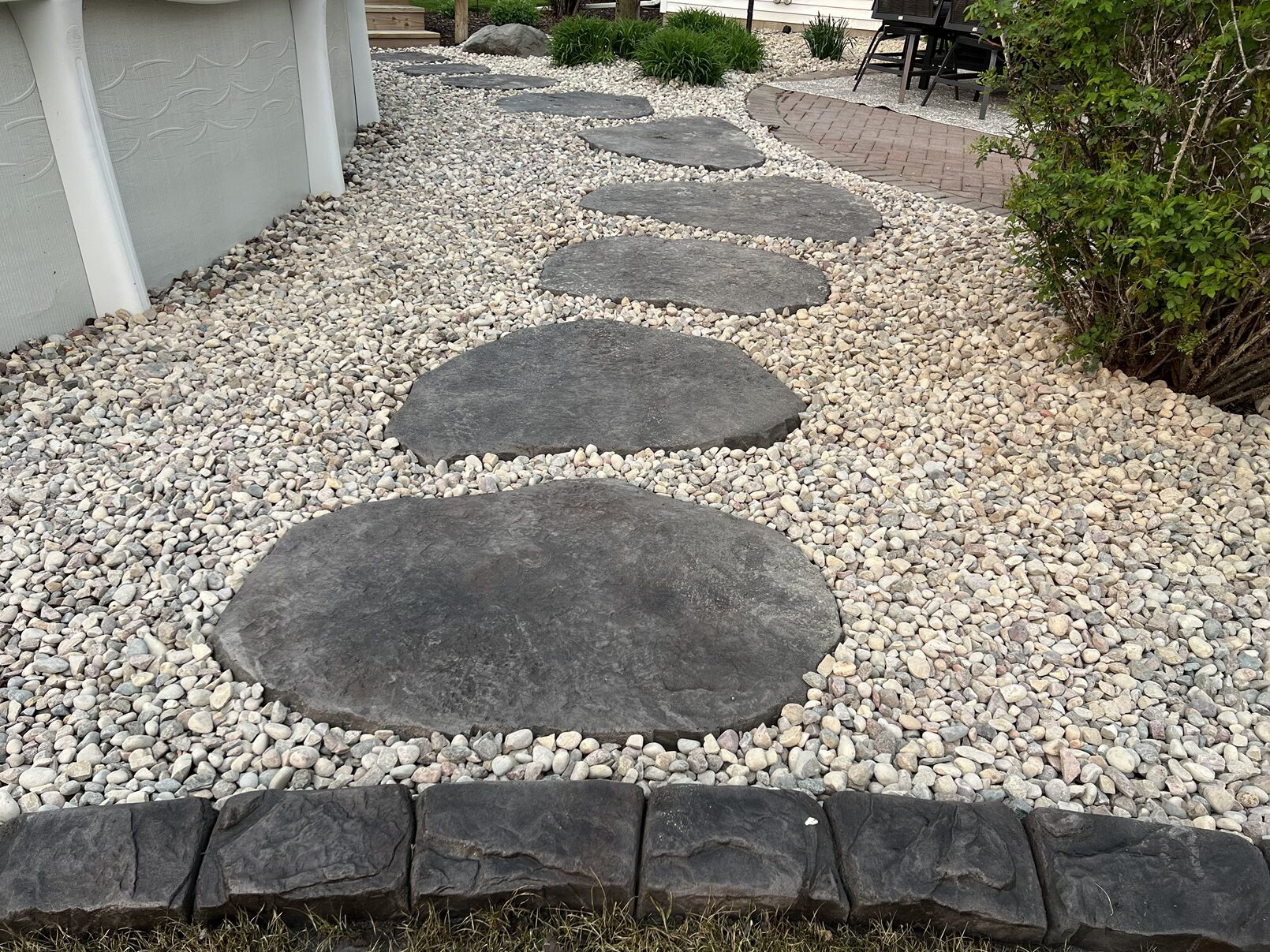
In regions with freeze–thaw cycles, natural stone and concrete pavers perform well when properly installed. The joints between individual units allow for slight movement as the ground expands and contracts, reducing the risk of large-scale cracking. If damage does occur, individual stones or pavers can typically be replaced without disturbing the surrounding area.
Natural stone is exceptionally resilient, though certain varieties may require sealing to reduce staining. Concrete pavers are also highly durable but may fade over time and often benefit from periodic sealing to maintain their color and protect against moisture and de-icing salts.
Frequently Asked Questions About Natural Stone and Concrete Pavers
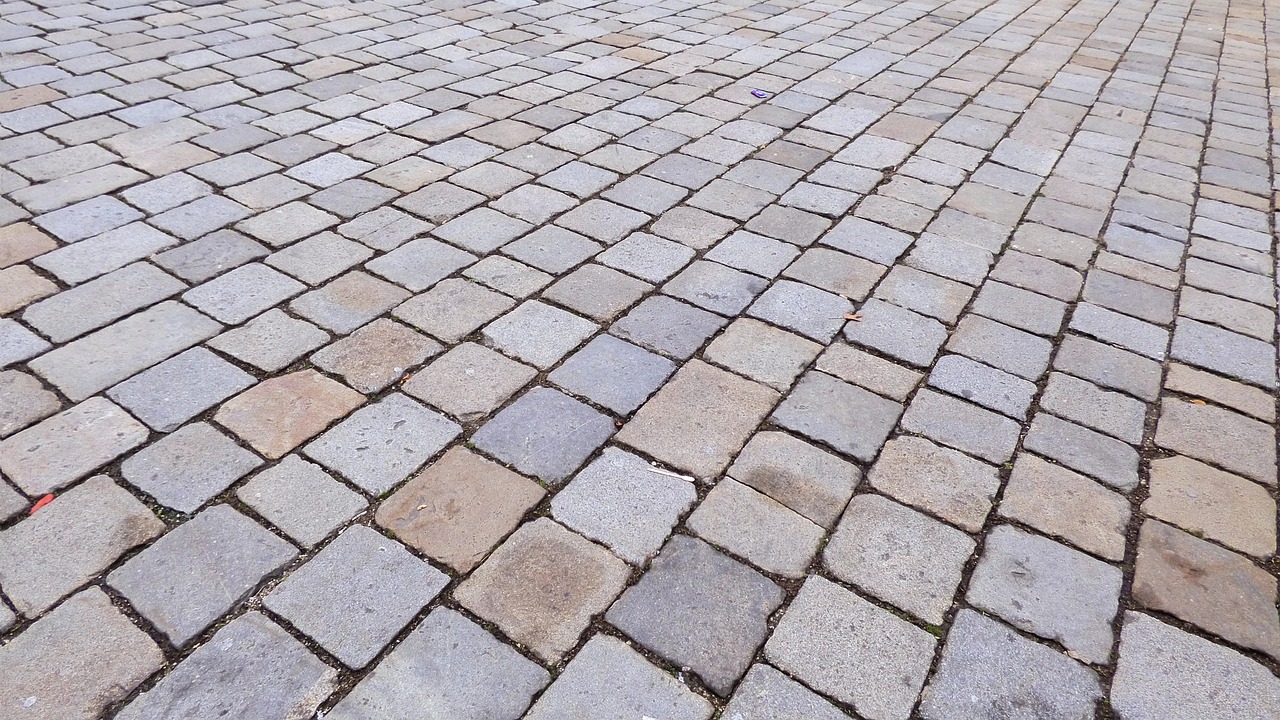
Which is better: natural stone or concrete pavers?
Neither is universally better. Natural stone offers a unique appearance and longevity, while concrete pavers provide affordability, consistency, and easier installation.
Are concrete pavers durable enough for driveways?
Yes. Concrete pavers are engineered to handle vehicle loads when installed over a properly compacted base.
How long do concrete pavers last?
With proper installation and maintenance, concrete pavers can last 25 to 50 years or more.
Secure Your Pavers With Professional Curbing
Choosing between natural stone and concrete pavers ultimately depends on your budget, design preferences, and long-term maintenance goals. Natural stone offers unmatched character and uniqueness, while concrete pavers provide a durable, flexible, and cost-effective solution with broad design appeal.
No matter which option you choose, professional installation and proper edge restraint are key to a long-lasting hardscape. Pairing either material with professionally installed concrete curbing ensures your pavers stay locked in place, maintains precise borders, and creates the polished aesthetic that elevates good hardscapes into showcase installations.
Curb Depot supports the contractors who bring these outdoor spaces to life with quality curbing equipment, curbing accessories, and training. Contact us to learn more about our products and how we help professionals build durable, high-quality hardscapes.
Earn More With Natural Stone.

Click to Register

Create beautiful curb with unique stamps.
Looking to sell your equipment?
Let us help.



Ready to Order Your New Curbing Trailer? Request More Info.
Give us a call at (920) 740-2218 or simply fill out the form below to learn more about getting all the tools and training to get started. We make the process easy to start earning money in landscape curbing.