Repairing cracked concrete curbing starts with identifying the crack type, then cleaning, bonding, and filling the area before resealing. Hairline and surface cracks are manageable field repairs; displaced or structurally failed sections typically require replacement. Curb Depot has trained over 500 curbing business owners across North America on installation and repair techniques.
That cracked curbing run used to generate a complaint call. Now it’s a scheduled maintenance visit with a signed work order. The difference was knowing exactly what kind of crack you’re dealing with before quoting anything. That one read separates a profitable repair from a callback.
Read the Crack Before You Touch It
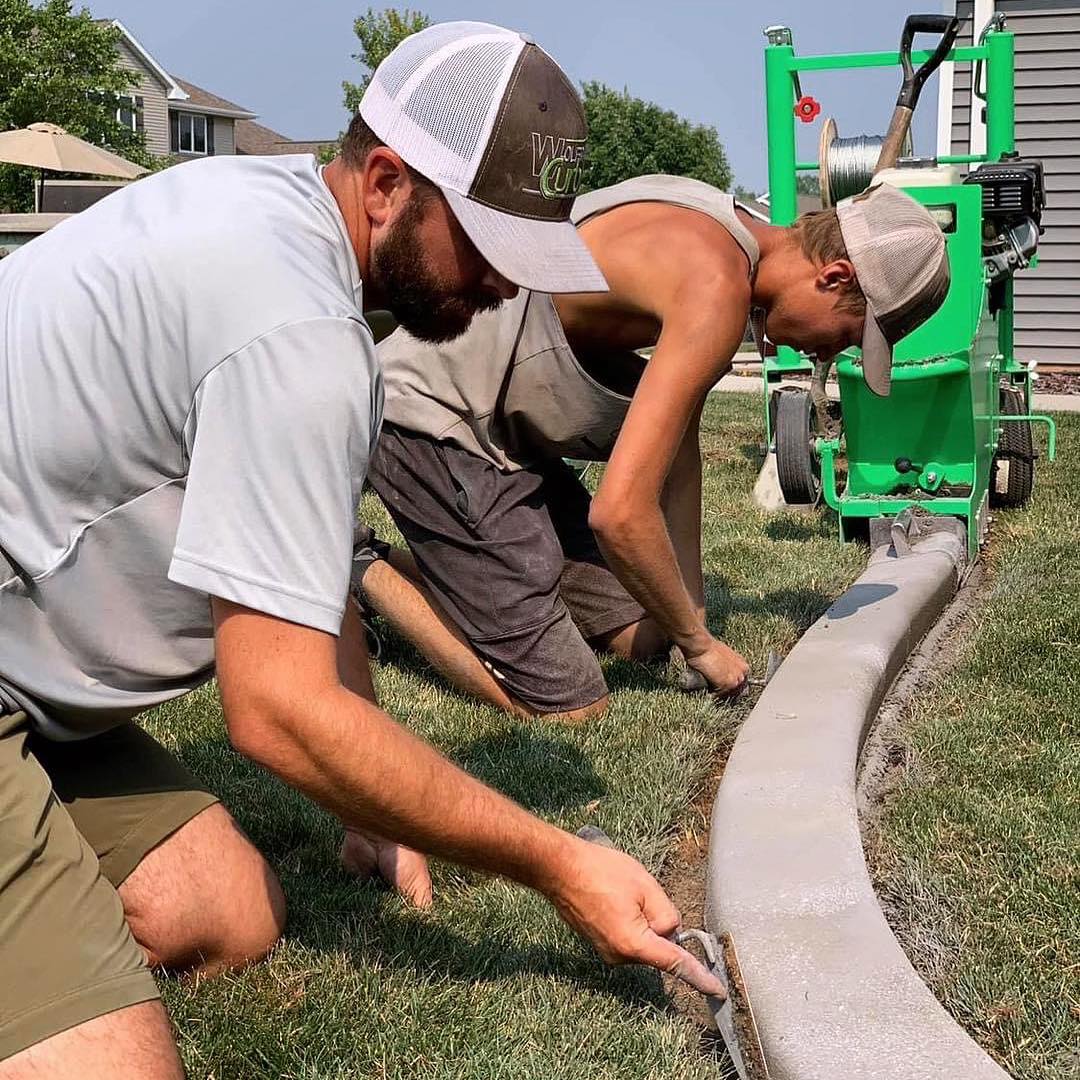
Spend two minutes on the assessment. Misreading damage is where repair jobs go sideways.
Hairline cracks, less than 1/16 inch wide, are usually cosmetic and the concrete beneath is still sound. Medium cracks, roughly 1/8 to 1/4 inch wide, are repairable when both faces sit level with no vertical displacement. If one face has risen or dropped, the soil beneath has moved.
Full displacement means sections have heaved or settled. In Midwest states like Wisconsin and Minnesota, this is typically freeze-thaw damage: water enters the subgrade, freezes, expands, and shifts sections. Patching the surface doesn’t fix the cause. Knowing your concrete curbing lifespan benchmarks helps set customer expectations before any money changes hands.
How To Repair Hairline and Surface Cracks
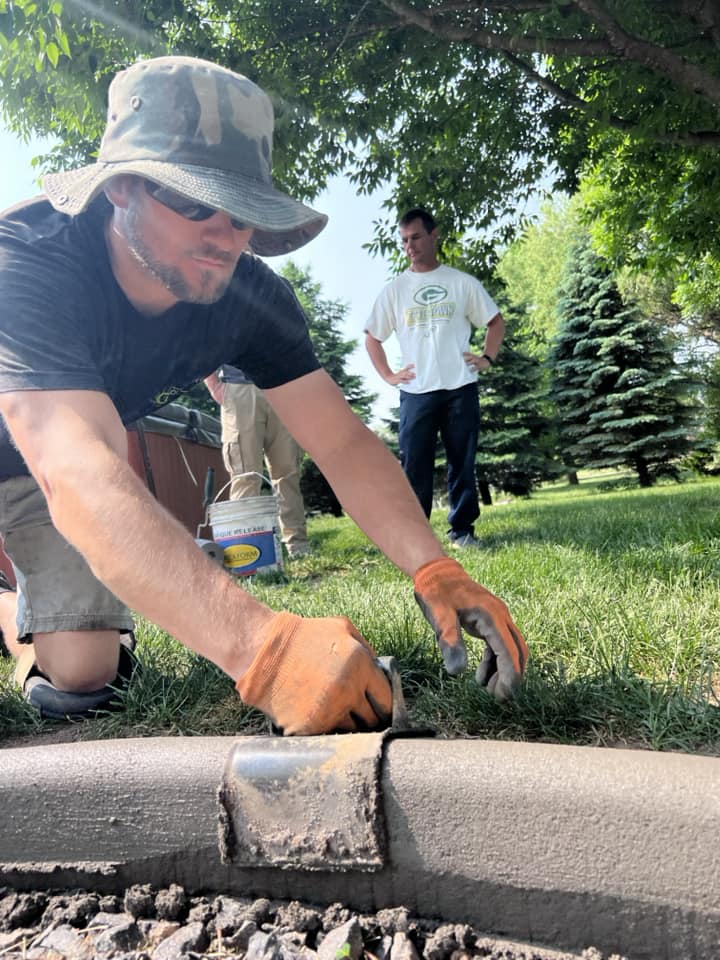
Surface cracks are the workhorses of your repair menu. The margin is solid and the steps are repeatable.
Clean the crack first. Use a wire brush or a crack-chasing blade on an angle grinder to remove loose material from both faces. Any debris left in the joint will block bonding.
Apply a concrete bonding agent before filling. This step gets skipped often, and it’s why repairs fail. Bonding agents chemically bridge old and new concrete. Without one, you’re relying on friction alone.
Fill with a low-shrinkage repair mortar. Pack it in, tool to match the original profile, and feather the edges. On stamped curbing, replicate the finish while the material is still workable.
Let the repair cure fully before applying sealer. Rushing compromises adhesion. Reseal the entire run, not just the patched area. A short run can often be completed in under two hours on-site. Every minute is billable.
When Replacement Is the Right Call
When sections are displaced or concrete has spalled through to the core, surface repairs won’t hold. Water expands significantly when it freezes. In northern climates, that internal pressure fractures curbing from the inside out, and no topical product reverses it.
Pull the damaged sections, check the subgrade, and fix any drainage or compaction issues before pouring new curbing. Skipping that step often means you’re back within a year or two. Partial replacement between expansion joints is cleaner than it sounds: match the original mix and color, pour, finish, and reseal the full run once cured.
This is also where the business angle sharpens. Customers with curbing installed several years ago are entering the maintenance window. A check-in and reseal program converts one-time customers into recurring revenue without new sales calls. Curb Depot’s equipment packages handle both new installation and repair from the same setup, and the hands-on training covers a full job simulation.
Frequently Asked Questions
Can I color-match a concrete curbing repair to the original installation?
Color matching is possible but rarely exact. Integral color changes as concrete weathers, so repair material mixed to the original spec will look slightly different on an aged run. Resealing the full visible run after the repair is the most effective step for minimizing contrast between old and new sections.
How long should a concrete curbing repair last?
A properly cleaned, bonded, and sealed repair on a hairline or medium crack can hold for years in moderate climates. In northern states with heavy freeze-thaw cycles, expect a shorter window and build resealing into the maintenance schedule. Preparation quality matters more than product selection.
When should I recommend replacement over repair to a customer?
Recommend replacement when sections are displaced, when spalling has gone deeper than the surface layer, or when the subgrade has shifted and is still moving. Curb Depot’s position is straightforward: repair is right when the concrete beneath is sound. When it isn’t, patching leads to a callback. Replacement done right eliminates that risk.
Build the Repair Side of Your Business

Repair work pays when you know what you’re looking at, quote it accurately, and execute cleanly. The contractors making money on maintenance calls understand crack mechanics and finish technique.
Ready to add repair to your curbing service menu? Get in touch with Curb Depot to talk through equipment, training, and the products that make this work profitable.
Earn More With Natural Stone.

Click to Register

Create beautiful curb with unique stamps.

Looking to sell your equipment?
Let us help.




Ready to Order Your New Curbing Trailer? Request More Info.
Give us a call at (920) 740-2218 or simply fill out the form below to learn more about getting all the tools and training to get started. We make the process easy to start earning money in landscape curbing.