A curbing side hustle can generate $1,000 or more per job on weekends, with startup equipment available through Curb Depot’s Basic Package for $14,000 to $18,000. Landscape curbing is low-competition, high-margin work that fits a part-time schedule. For many operators, it grows into a full-time income as production volume and bookings increase.
It’s Saturday morning. You’ve pulled up to a job where every third house has mulch beds and no edging. Eight hours later (mixing, extruding, stamping, cleanup), you invoice $2,400 on a 200-foot border. Materials: $475. Labor: $500. Profit: $1,425, and you’re home for dinner. That’s the honest pitch. Getting there requires clear-eyed planning upfront.
What a Curbing Side Hustle Actually Looks Like
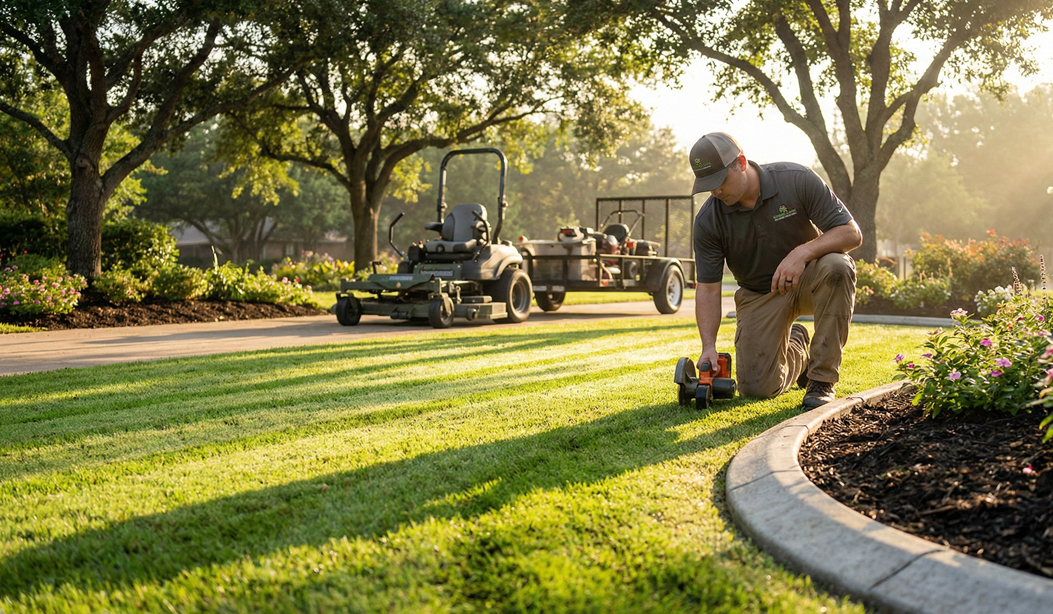
A single job, typically 150 to 250 linear feet, runs six to ten hours. That includes setup, pour, finishing, and cleanup. These steps all conveniently fit into a Saturday. A strong part-timer can complete two jobs per weekend during the busy season, which runs April through October in most markets.
The physical demands are genuine. You’re mixing and loading concrete, operating equipment, hand-finishing details, and cleaning the machine before it sets. But it’s skilled work, which is what keeps local competition thin. Most markets have one curbing operator, if that. Homeowners who want concrete curbing often have no one else to call.
The Real Numbers: What You Can Earn Per Job

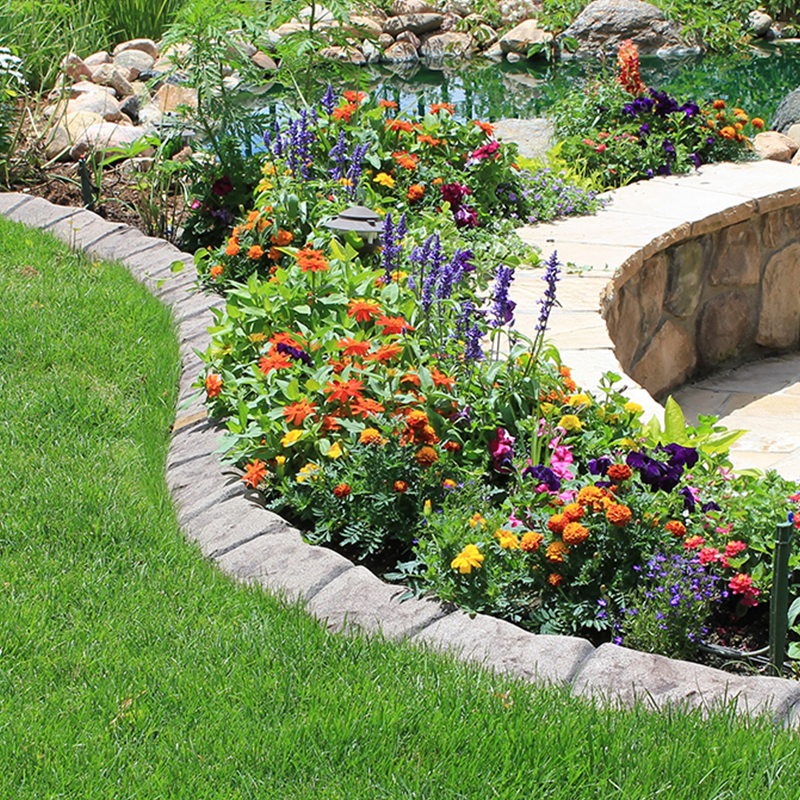
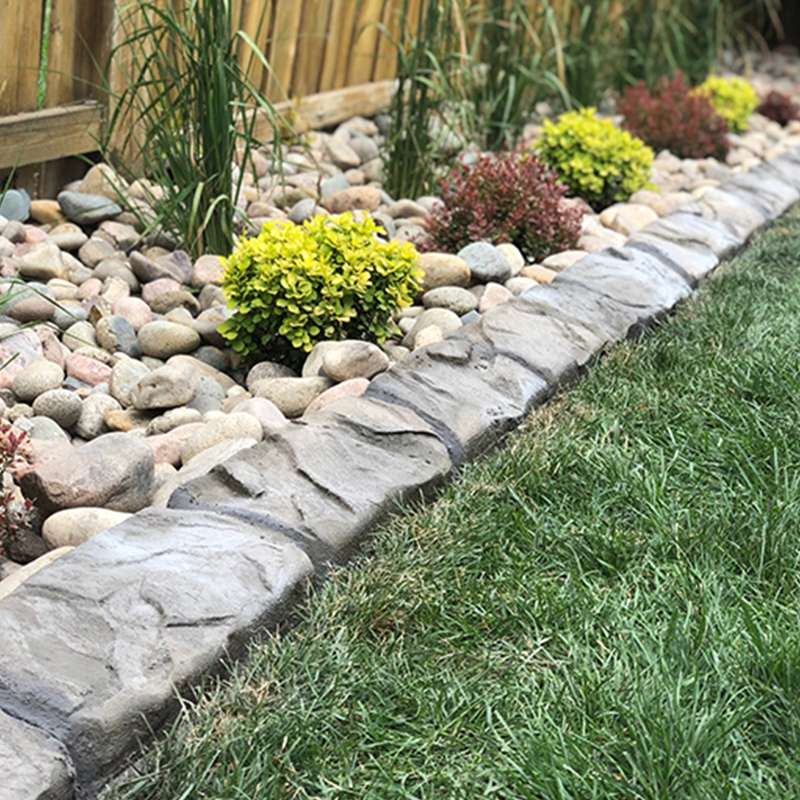
Curb Depot’s job data from Appleton, Wisconsin gives a clear baseline. A 200 linear foot natural stone job at $12 per linear foot generates $2,400 in revenue. Subtract $475 in materials and $500 in labor: profit is $1,425 for eight hours of work, before upsells like color upgrades or a sealing package.
The target for most landscape curbing business owners is $1,000 or more per job. Two jobs per weekend over a strong four-month stretch could add $30,000 or more in profit—assuming consistent bookings, which takes marketing effort. Curbing’s low local competition makes filling a calendar easier than in most trades.
Startup Costs and What the Basic Package Gets You
The honest conversation starts with startup cost. Curb Depot’s Basic Package runs $14,000 to $18,000 and includes the Harpten Curbing Machine, molds for three profile styles, a roller stamp package, a bed edger or sod cutter, and basic training—everything needed to take a job from ground prep to finished curb.
Financing through Western Equipment Finance delivers credit decisions in under 30 minutes, with funding in 24 hours. A single strong month of production can cover a meaningful chunk of that payment.
Seasonal Realities and How They Shape Your Schedule
Curbing is outdoor concrete work, so the season has limits. In northern states and Canada (Wisconsin, Michigan, Ontario), the practical working window runs late March through mid-November. Freezing temperatures prevent concrete from curing properly, and frozen ground makes prep unreliable. Operators in the Sun Belt work through winter with minimal disruption.
That pattern works in a side hustler’s favor. You produce hard for six to eight months, then step back when weather closes. In spring, demand typically runs ahead of local capacity: homeowners who stared at their mulch beds all winter call fast when the ground thaws.
When the Side Hustle Becomes the Main Hustle
Curb Depot has helped 500+ people launch curbing businesses across the U.S. and Canada, most starting part-time. The transition to full-time typically happens when weekend production saturates available hours and the income gap between curbing and the day job narrows.
What separates those who make the leap from those who plateau is training on pricing, marketing, and operations. The equipment gets you started. The skills get you to full-time.
Frequently Asked Questions
Can you start a curbing side hustle with no prior concrete experience?
Yes. Curb Depot’s training covers mix design, equipment operation, ground prep, and finishing technique from scratch. Prior concrete experience helps but isn’t a prerequisite. Most new operators complete their first paying job within weeks of training. The learning curve is real, but shorter than in most skilled trades.
How many jobs per weekend can a part-time curbing operator realistically complete?
One job per weekend is a reliable baseline for operators still building efficiency. Experienced operators can complete two jobs in a weekend during peak season. Job size matters. A 150-foot residential border is a different day than a 400-foot commercial property. Scheduling similar-sized jobs back to back helps maintain consistent output.
What’s the difference between the Basic Package and the Business Package?
Curb Depot’s Basic Package ($14,000 to $18,000) covers everything for part-time production: machine, molds, stamps, and training. The Business Package ($45,000 to $50,000) adds a 23-foot curbing trailer, expanded accessories, and business-level training for full-time operators. Most operators start with Basic and upgrade when volume demands it.
Start Running the Numbers on Your Market

A curbing side hustle works when the numbers line up: local demand, realistic pricing, and equipment that can pay for itself within a strong first season. It takes physical effort, consistent marketing, and a willingness to learn a skilled trade—but for the right operator, it’s a clean path to meaningful part-time income.
Reach out to Curb Depot to talk through what getting started looks like in your market. The team has helped 500+ operators launch and gives you a straight read on what to expect.
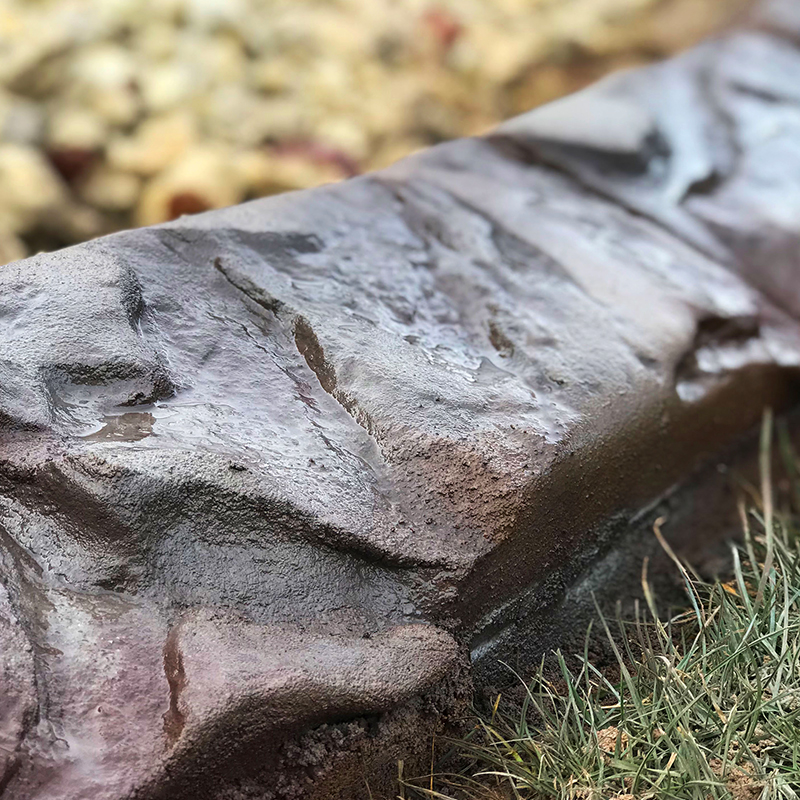
Earn More With Natural Stone.

Click to Register

Create beautiful curb with unique stamps.

Looking to sell your equipment?
Let us help.



Ready to Order Your New Curbing Trailer? Request More Info.
Give us a call at (920) 740-2218 or simply fill out the form below to learn more about getting all the tools and training to get started. We make the process easy to start earning money in landscape curbing.