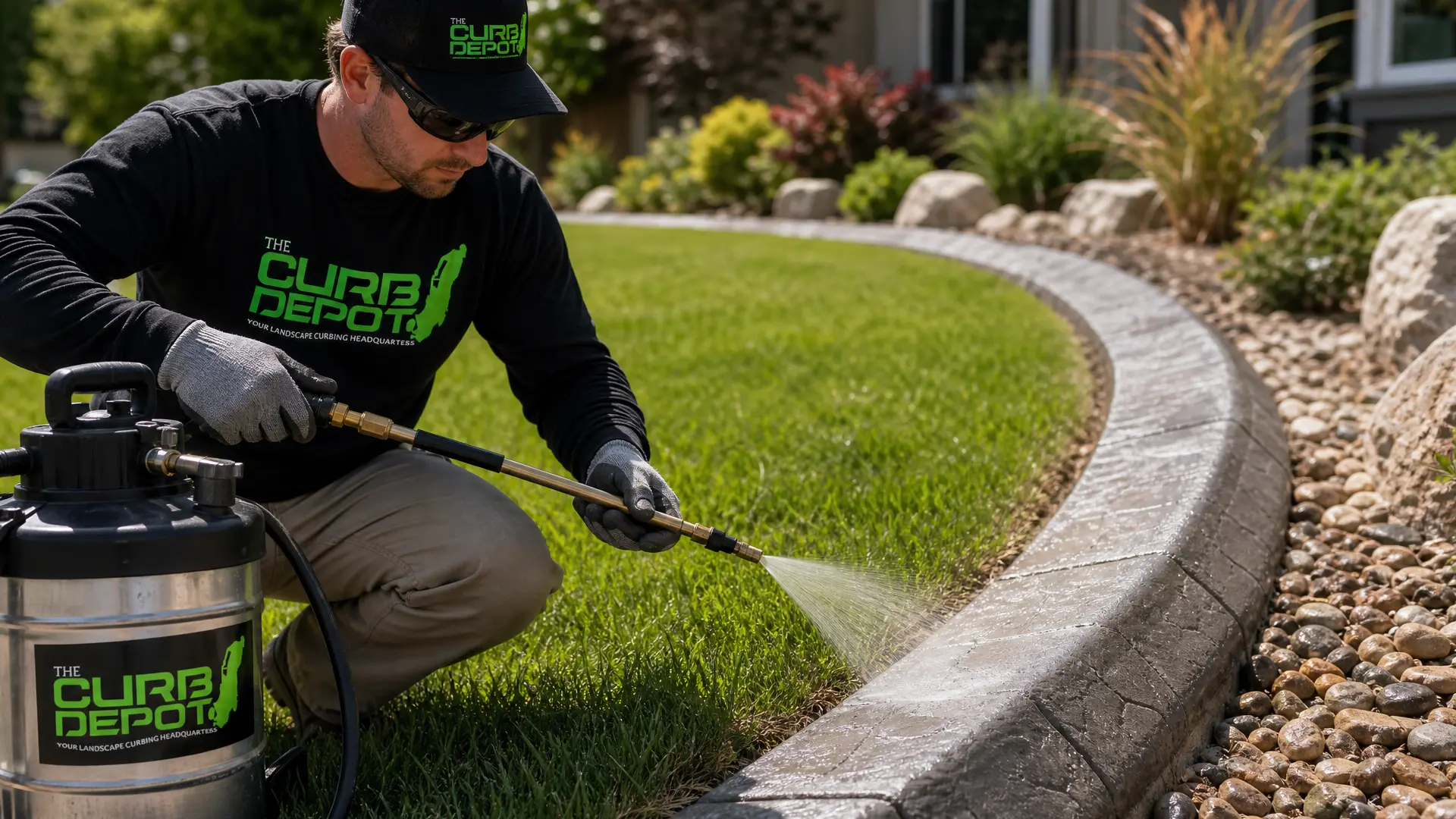
Picking the right sealer sprayer comes down to three checks: does it match your exact sealer formulation, does its tank and carrying setup fit the amount of material you actually need, and does its nozzle deliver an even, controlled fan at the coverage rate the sealer calls for. A sprayer built for concrete work is not automatically safe to use with every solvent based sealer, so compatibility has to be confirmed before capacity or nozzle choice even come into play.
Start With Sealer Compatibility, Not Just “Concrete Sprayer”
Many sprayers are marketed broadly as concrete or sealer sprayers, but that label does not guarantee compatibility with your specific product. The safest approach is to check your sealer’s technical data sheet against the sprayer manufacturer’s chemical compatibility guidance, including the wetted components the sealer will actually touch.
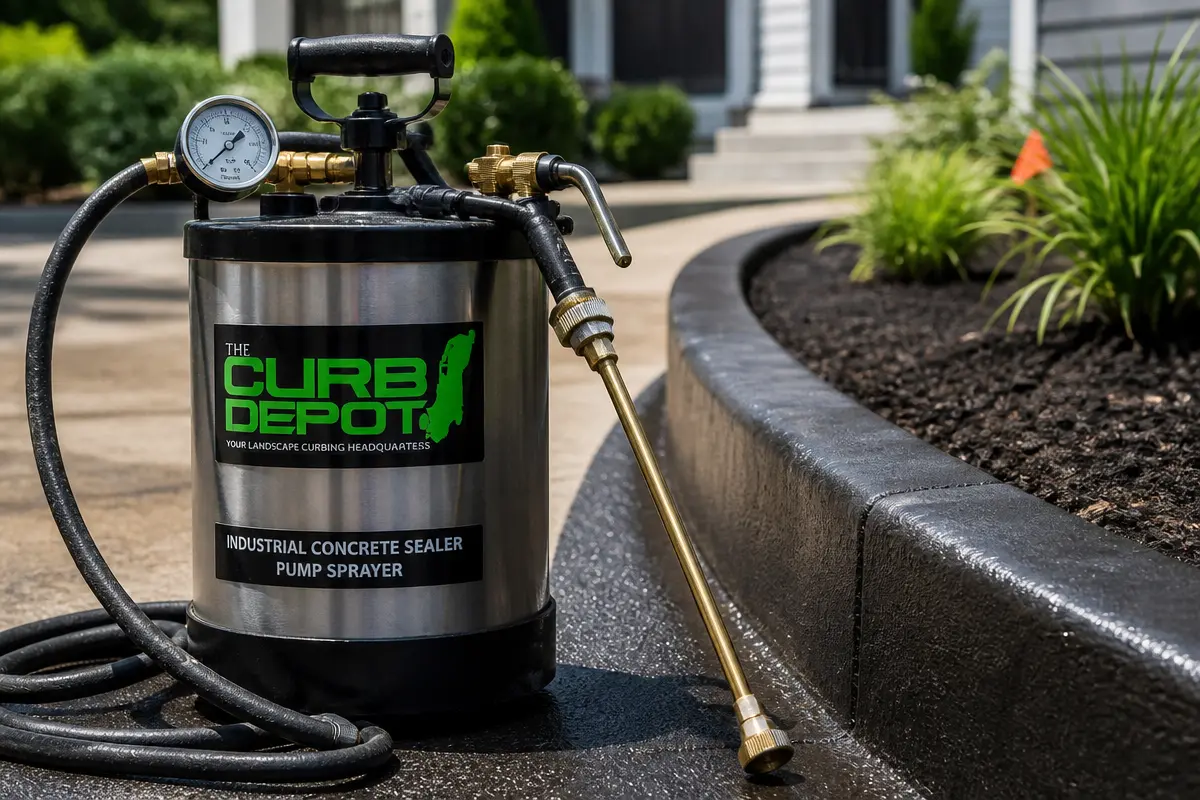
As an example of how much this can vary between similar looking equipment, Chapin’s standard 1949 Industrial Concrete Pump Sprayer specifications exclude acetone based chemicals, while Chapin’s Xtreme model is built to resist acetone containing sealer applications. Two sprayers that look nearly identical can have very different limits, which is why the formulation on the label, not the general product category, should drive the decision.
Size Capacity Around Real Coverage Demand
Once compatibility is settled, capacity planning starts with the sealer’s labeled coverage rate rather than a guess based on linear footage. A simple way to estimate what you need:
- Calculate the actual surface area being coated, not just the linear footage of the curbing.
- Divide that area by the sealer’s labeled coverage rate per gallon to get an estimated gallons per coat figure.
- Compare that number against the sprayer’s permitted fill volume and how much weight is practical to carry across the job.
For reference, the Chapin 1949 carries a 3.5 gallon tank, runs at 40 to 60 PSI, and pairs a 24 inch brass wand with a 48 inch reinforced hose. Figures like these are useful as a comparison point rather than a universal standard, since the right capacity depends on the size and number of jobs you are running between refills.
Pick a Nozzle That Holds an Even Fan
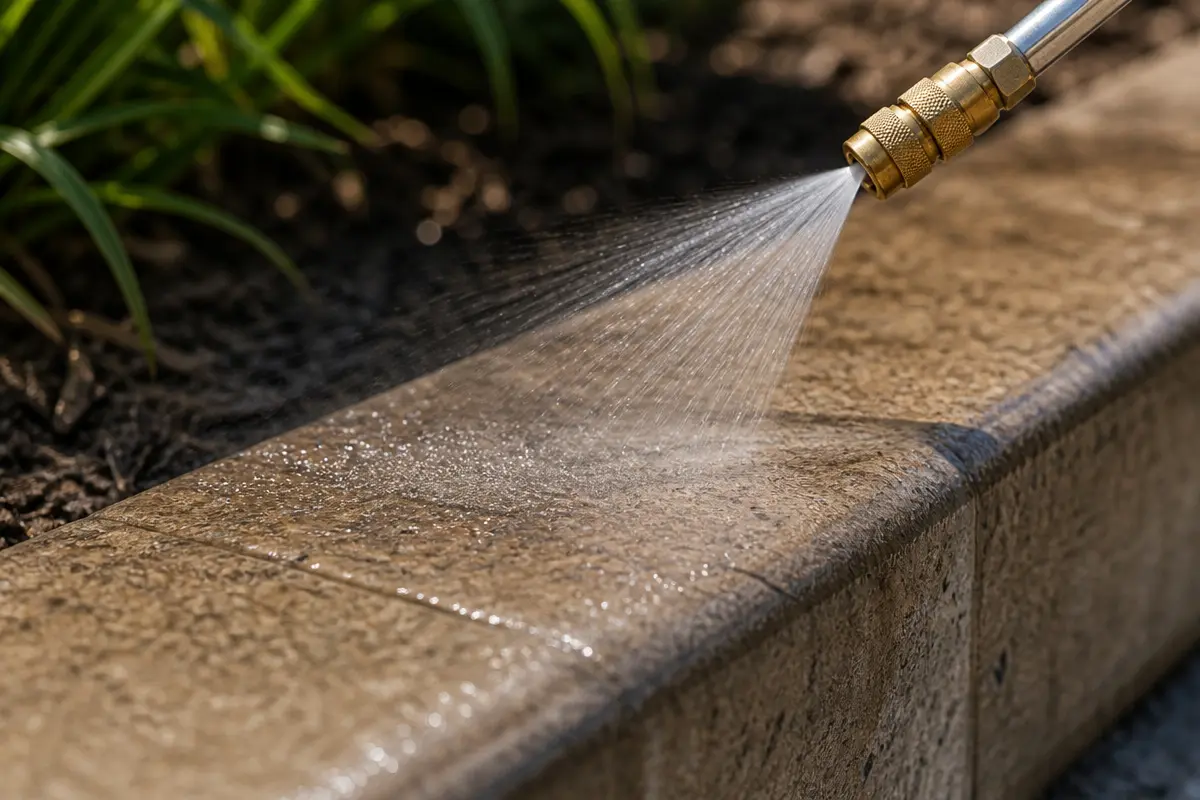
Nozzle selection affects both the finish quality and how efficiently the sealer goes down. According to the Decorative Concrete Council’s Sealer Selection and Application Guide, the goal is a fine, even fan pattern, and a common 0.5 GPM nozzle may need to be swapped for a 1 GPM nozzle when applying higher solids material. These are examples rather than fixed settings, so the sealer manufacturer’s own nozzle recommendation should always take priority.
A few signs point to a delivery problem rather than a capacity problem:
- Streaming instead of a fan pattern often means the pressure is too low or the nozzle orifice is too small.
- Heavy overlap or puddling during application can leave darker, blotchy areas once the sealer cures.
Diagnosing these symptoms first can save you from buying a bigger tank when the real issue is pressure or nozzle sizing.
Keep Ownership Costs in Mind
A sprayer is only as good as its upkeep. Running the specified cleaning agent through the discharge assembly, wand, and nozzle after each use helps prevent clogging, and water based and solvent based sealers should never be mixed through the same uncleaned equipment. Basic handling habits matter too: release pressure before opening the tank, wear eye protection, avoid spraying in windy conditions, and follow the chemical warnings on the sealer label.
Where This Fits Into a Curbing Business Package
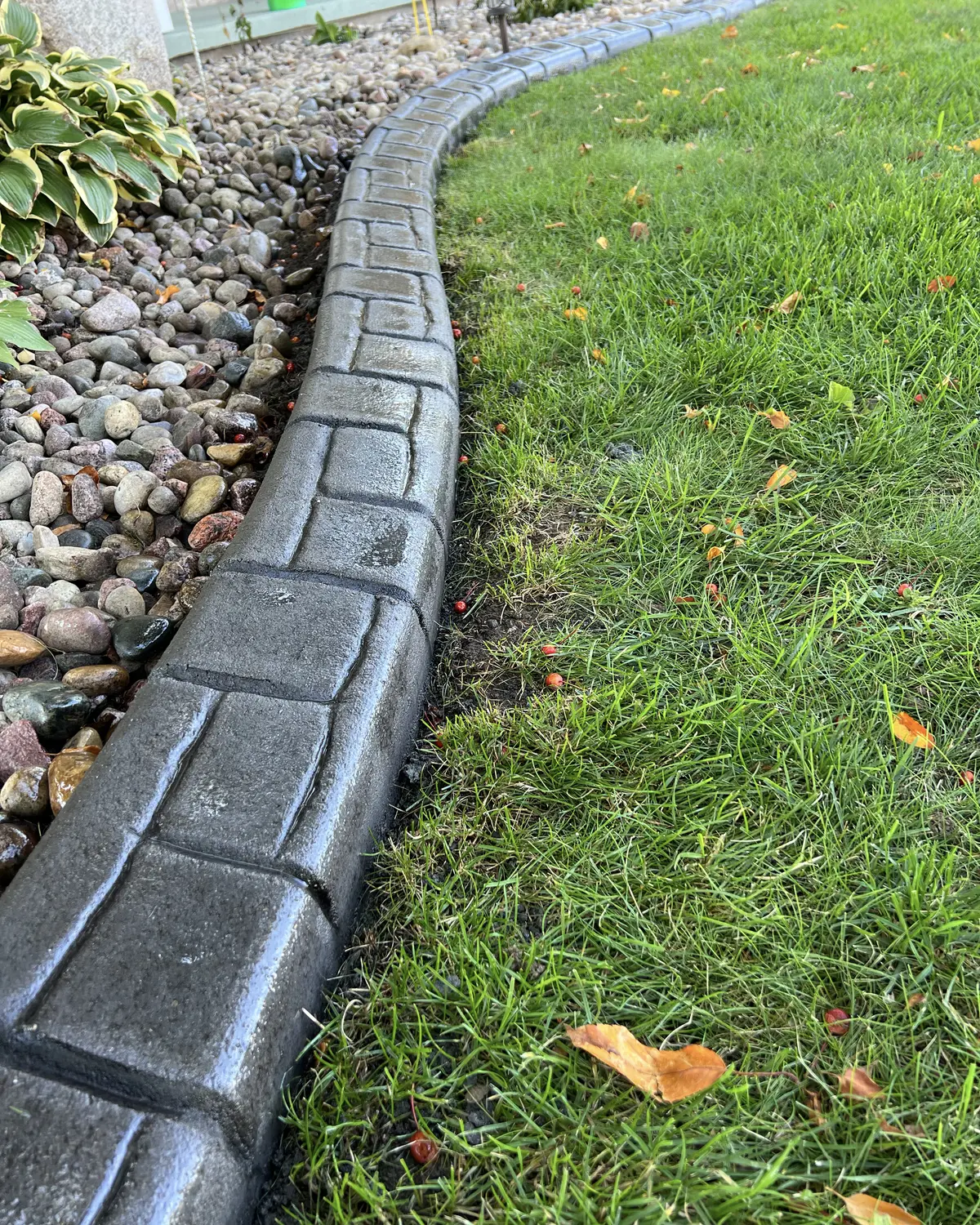
Curb Depot supplies the equipment, products, and training that contractors need to start or grow a professional landscape curbing business. Our Business Pro equipment package includes a Chapin sprayer for sealer as part of the full setup, so sealing equipment doesn’t have to be sourced separately when you build out your business through one of our packages. For hands on and video instruction that covers equipment maintenance, sealing, and cleanup, our basic curbing training is available online and in person.
Ready to Equip Your Curbing Business?
If you are weighing sealer sprayer options as part of a new or growing curbing operation, Curb Depot can walk you through equipment packages and training built for contractors in Appleton, Neenah, Menasha, Kaukauna, and the greater Fox Valley, WI area. Call us at (920) 212-2872 to talk through what fits your setup.
Earn More With Natural Stone.

Click to Register

Create beautiful curb with unique stamps.

Looking to sell your equipment?
Let us help.